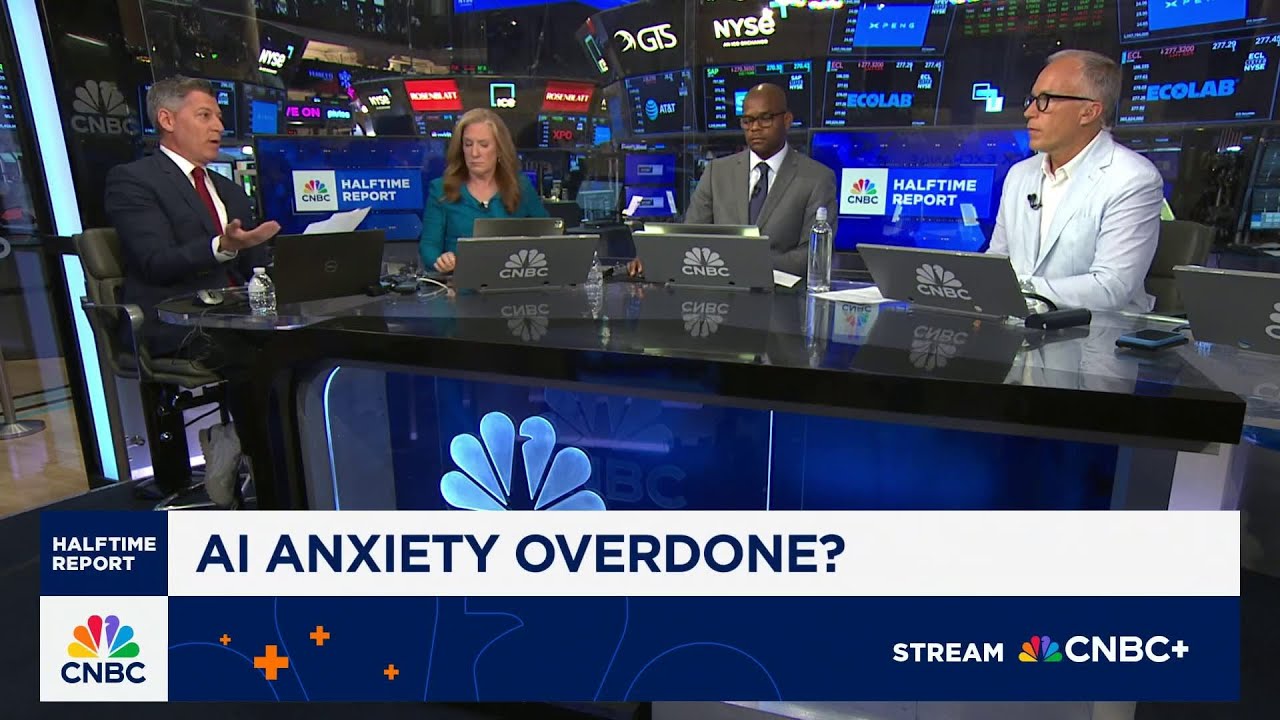
On a recent segment of CNBC’s Halftime Report, a panel of investment strategists grappled with Apple’s evolving artificial intelligence strategy, specifically debating the merits of acquiring Perplexity AI. The discussion, featuring CNBC Tech Reporter Steve Kovach, Capital Area Planning Group Managing Partner Malcolm Ethridge, and Ritholtz Wealth Management CEO Josh Brown, highlighted the divergent paths Apple could take to solidify its position in the rapidly accelerating AI landscape.
Steve Kovach opened by questioning whether the persistent rumors surrounding Apple’s interest in Perplexity AI signal a genuine intent to acquire. He posited that Apple’s current trajectory suggests a preference for licensing large language models (LLMs) from established leaders rather than a significant acquisition. “It just doesn’t sound like that’s the direction they’re going because at the same time, Scott, we’re getting reports that they want to license a large language model from one of the leaders,” Kovach stated, referencing potential partnerships with OpenAI, Anthropic, or Google. He elaborated, “Instead of buying Perplexity, which does build on top of those models, why not just license it just like Perplexity does… and do it yourself?” This strategy aligns with CEO Tim Cook’s past remarks on M&A, where he noted, “We’re very open to M&A that accelerates our roadmap. We are not stuck on a certain size company, although the ones that we have acquired thus far this year are small in nature.” This suggests Apple favors strategic, smaller acquisitions that integrate seamlessly into existing roadmaps rather than massive, foundational shifts.

Malcolm Ethridge, while acknowledging the potential excitement around an AI acquisition, offered a more tempered view. He argued that the immediate financial impact of acquiring Perplexity would be less significant than other strategic moves, such as securing a new credit card partnership. “My unpopular opinion... a partnership to replace Goldman in their credit card business is more additive to Apple’s earnings over the next 12 months than acquiring Perplexity,” Ethridge contended. He underscored the lengthy integration process involved in such a complex acquisition, estimating 12 to 36 months for Apple’s and Perplexity’s teams to align, referencing past missteps in AI rollouts across the industry.
Conversely, Josh Brown presented a bullish case for an acquisition, viewing it as a transformative event for Apple. He asserted that a Perplexity acquisition would immediately propel Apple’s stock to an all-time high, satisfying shareholders eager for a decisive AI move. “If they do it, you get a new all-time high in Apple the day they announce it,” Brown declared, emphasizing the desire among Apple shareholders for such a bold play. He stressed that bringing Perplexity’s founder and talent under Apple’s umbrella would secure an early and talented entrepreneurial force in the AI generation.
Brown further argued that buying Perplexity could be a more efficient and potentially cheaper long-term strategy than attempting to build a comparable solution internally or relying solely on fragmented partnerships. With Apple sitting on over $130 billion in cash, the financial capacity for such a deal is undeniable. While acknowledging Apple’s historical preference for internal development or smaller acquisitions, Brown highlighted the urgency and strategic imperative of securing top-tier AI talent and technology in this pivotal era. The debate ultimately crystallized the tension between Apple’s traditional, cautious approach and the aggressive, talent-driven M&A prevalent in the current AI gold rush.