

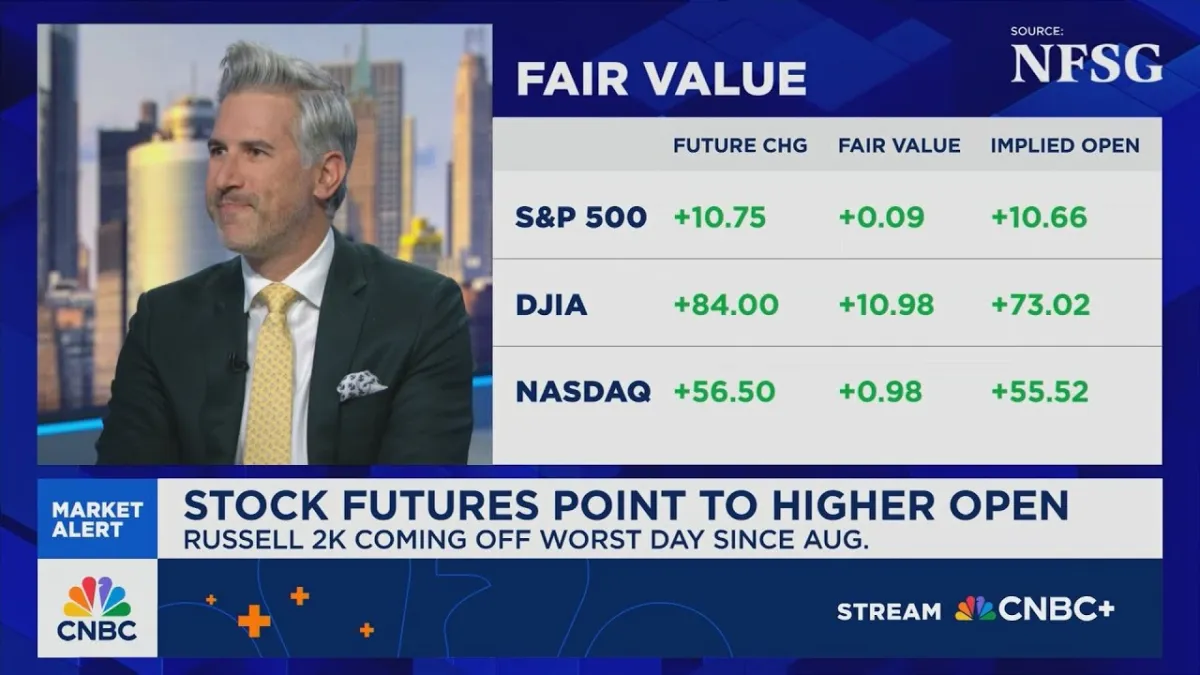
"It's hard to come up with a reason that you don't experience long-term growth here." This unequivocal statement from Douglas Boneparth, President of Bona Fide Wealth and a CNBC Council Member, encapsulates the prevailing sentiment among many leading voices in technology and finance regarding the artificial intelligence revolution. Delivered during a recent CNBC interview, Boneparth’s insights provided a nuanced commentary on the current market landscape, touching upon AI’s unwavering trajectory, the broadening of market participation, the redefinition of inflation norms, and the increasingly influential role of retail investors and private capital.
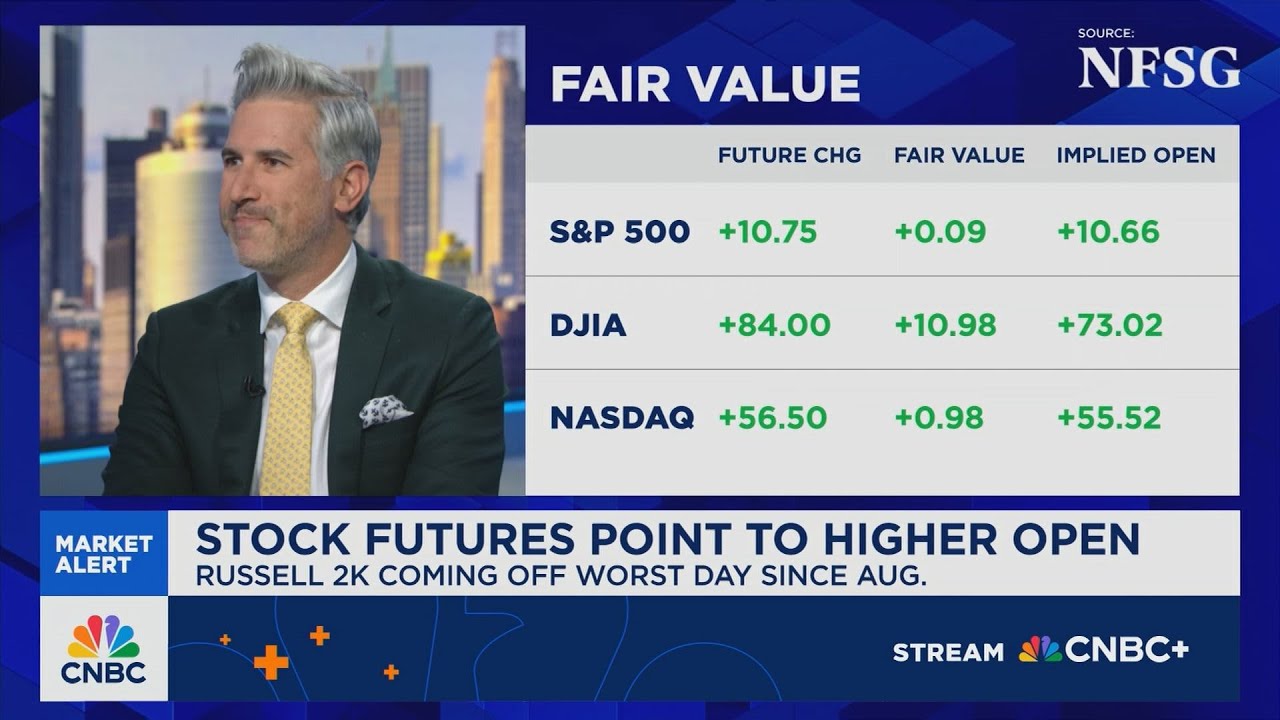
Boneparth spoke with a CNBC interviewer about the enduring strength of AI growth, retail investors' impact on markets, and the persistent validity of long-term investment strategies. His commentary arrived amidst discussions of recent market dips and the performance of bellwether tech companies, offering a grounded perspective on where capital is flowing and why. For founders, venture capitalists, and AI professionals, his analysis highlights critical macro trends and strategic considerations that extend beyond daily market volatility.
The AI revolution, a pervasive theme dominating technological discourse, is not merely a transient surge but a profound, enduring shift pointing towards sustained economic expansion. Boneparth dismissed short-term market jitters as inconsequential to the larger narrative, emphasizing that the foundational drivers of AI, from computational advancements to widespread application across sectors, are poised to generate substantial value over the coming decades. The sheer breadth of AI’s potential, spanning everything from biotech and autonomous systems to enterprise software and defense applications, suggests an inevitable trajectory of growth that dwarfs temporary fluctuations. This technological epoch demands a strategic outlook, favoring sustained investment in innovation rather than reactive responses to daily market swings.
Beyond the specific AI narrative, Boneparth observed a broadening of market participation, a departure from the highly concentrated tech gains seen in prior periods. This diversification, he suggested, is partly attributable to the Federal Reserve’s evolving monetary policy, which is perceived as creating "a little bit easier for equity investors." Furthermore, the market appears to be adjusting to a recalibrated inflationary environment. Boneparth noted, "the market [is] looking at 3% inflation as the new norm instead of 2," indicating a stabilization of expectations that could foster broader confidence across various asset classes. This shift from a two-percent target implies that investors and businesses alike are re-evaluating long-term financial planning, potentially favoring assets that can perform well in a moderately inflationary environment.
The conversation also explored the concurrent rise of safe-haven assets, such as gold and Bitcoin, prompting questions about underlying investor anxieties. Boneparth clarified that this trend often reflects a segment of investors hedging against a potentially weakening US dollar and persistent inflation, rather than a direct flight from equities. This bifurcation in investment strategies highlights a complex market psychology, where bullish equity sentiment coexists with a desire for inflation protection. For institutional investors and VCs, understanding these parallel movements is crucial for crafting resilient portfolios and assessing the macro-economic backdrop influencing their strategic decisions.