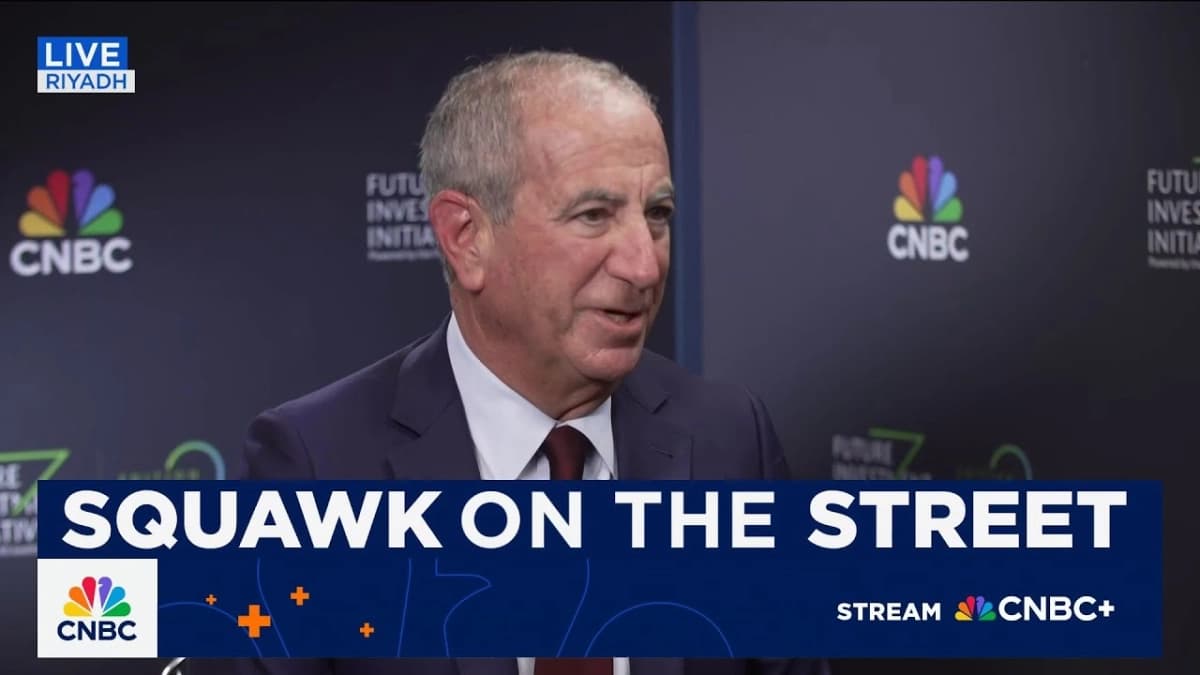
The convergence of advanced artificial intelligence and a uniquely poised global economy is setting the stage for an unprecedented era of mergers and acquisitions, fundamentally altering how companies operate and how value is created. This transformative period, characterized by both immense opportunity and inherent risks, was a central theme in Ken Moelis's discussion with CNBC's Sara Eisen at the Future Investment Initiative (FII) conference in Riyadh. Moelis, the founder and Executive Chairman of Moelis & Company, provided a sharp analysis of the shifting sands in global markets, emphasizing AI's profound impact on every company's go-to-market strategy.
Moelis highlighted the aggressive adoption of AI, particularly in regions like the Gulf. He shared insights from his conversation with the CEO of Aramco, noting their deep dive into AI. "His information... the amount of bits of information they have from drilling, think of what their proprietary knowledge is of rock formation drilling," Moelis explained, underscoring how even traditional industries are leveraging AI to develop foundational models and improve economic efficiencies. This application of AI is not merely incremental; it promises to unlock substantial value by optimizing processes and generating proprietary insights from vast datasets.
Beyond individual company initiatives, Moelis painted a picture of a market ripe for an M&A boom. He observed that "you have everything in the position you'd want it to be." This includes the Federal Reserve's anticipated shift towards lowering interest rates, a stock market at all-time highs, and private credit markets flush with capital. These macroeconomic factors combine to create an environment where capital is available and companies are incentivized to pursue strategic consolidations and expansions, spurred further by the disruptive and enabling power of AI.
Despite this bullish outlook, Moelis, drawing from 45 years of experience, injects a note of caution. "That sometimes that scares me," he admitted, alluding to the historical tendency for market exuberance to lead to pitfalls. The current environment, while promising, demands careful navigation. He stressed the importance of not "overdo[ing] it," a sentiment echoing lessons from past tech bubbles.
A significant challenge in this new landscape, particularly with AI-driven ventures, lies in valuation and financing. Moelis noted that "trillions of dollars of value is out there" in companies with immense potential but often "no cash flow yet." This disconnect necessitates highly creative financing solutions, moving beyond traditional metrics to assess future growth and technological advantage. The sheer scale of capital expenditures required to build the necessary infrastructure for AI, such as data centers, further complicates the financial equation, demanding innovative approaches to funding.
Related Reading
- Tesla's AI Ambition: Beyond the Car, a New Industrial Revolution
- Qualcomm’s Bold AI Inference Play Challenges NVIDIA Dominance
- AI Trade Hinges on Hyperscaler Capital and Revenue
For founders, venture capitalists, and AI professionals, the focus must extend beyond technological innovation to the fundamental elements of successful business. Moelis stressed that identifying winners in this evolving market comes down to "talent, business plan, [and] go-to-market strategies." He cited an AI company, Open Evidence, which he invested in early, that leverages AI to make the latest medical research accessible to doctors. This venture, he believes, "seems like a plan that has to work" because it addresses a clear need with a brilliant strategy and strong talent.
The ripple effects of AI extend to various sectors, creating new opportunities. Moelis highlighted the utility space, particularly power generation, as critical. "If AI and data centers are on everybody's mind, right behind that is power," he asserted, pointing to the immense energy demands of AI infrastructure. Additionally, he noted the "emergence of sports as the center of entertainment," indicating that sectors once considered distinct are now converging and offering fertile ground for investment and strategic deals driven by technological shifts and changing consumer habits. This intersection of technology, capital, and evolving industry dynamics defines the current market, presenting both unparalleled opportunities and the imperative for strategic prudence.