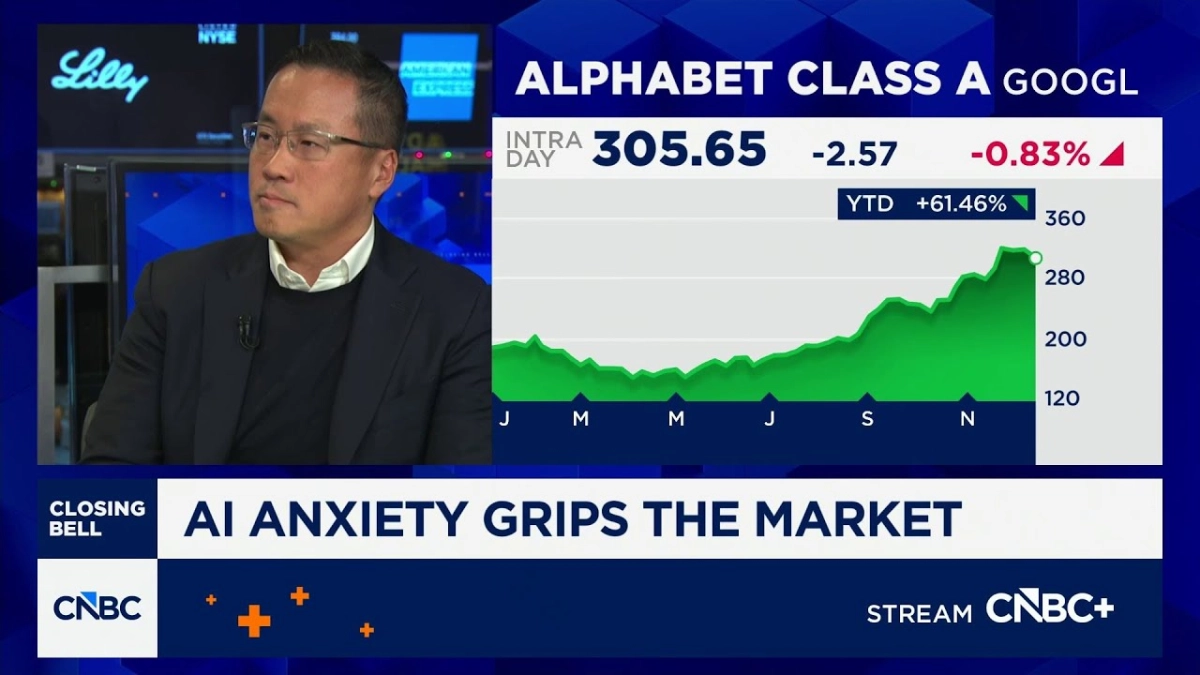
The prevailing market anxiety surrounding artificial intelligence funding, often fueled by dramatic shifts in corporate valuations and perceived vulnerabilities, is largely overstated. This was the central, reassuring message from Sung Cho, Co-head of Public Tech Investing and U.S. Fundamental Equity at Goldman Sachs Asset Management, during a recent discussion on CNBC's "Closing Bell" with Scott Wapner. Their conversation delved into the trajectory of the AI trade, the broader market outlook, and the foundational stability of the sector's capital structure, offering a nuanced perspective for founders, venture capitalists, and tech insiders navigating this transformative era.
Cho's core insight challenges the narrative of an impending AI bubble by dissecting the sources of capital fueling the current boom. He posits that the overwhelming majority of AI investment is not reliant on speculative debt, but rather on robust, internally generated cash flows from established tech giants. This distinction is critical for understanding the long-term resilience of the AI market.