

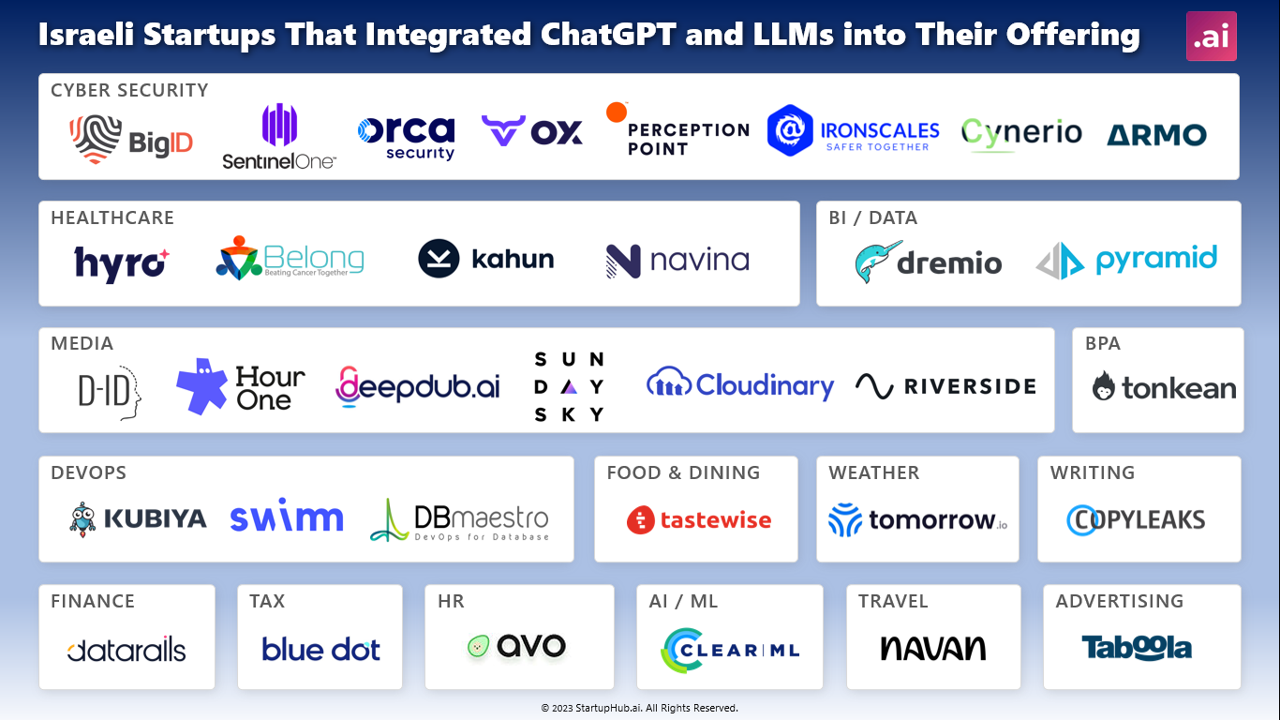
Pondering the profundity of ChatGPT has become commonplace, even among the non-tech folk. ChatGPT, OpenAI's revolutionary text-generating AI chatbot, has taken the world by storm for its capacity to write essays, generate code, and complete a multitude of tasks given only short text prompts, with responses superior to that of a human expert. It’s been hailed as the most successful consumer app ever, and it has ushered in a new era of tech, the likes of which we haven’t experienced since perhaps the internet becoming widely accessible.
As consumers first benefited from the goldrush of ChatGPT powered apps, startups and corporations are coming out of the woodwork to capitalize on this trend with native integrations. Due to this emerging trend, analysts forecast that the Generative AI market will grow at a CAGR of 58% over the next five years. By 2030, the technology is expected to contribute $15 trillion to the global economy.
While there's an evident slowdown in the global venture capital asset class, Generative AI continues to undergo robust investment activity. Microsoft invested $10 billion investment in OpenAI; Google invested $450 million in Anthropic; Microsoft, Reid Hoffman, Bill Gates, Eric Schmidt and Nvidia invested $1.5 billion in Inflection AI; and Cohere raised $270 million; and Adept raised $350 million. Israel's Generative AI ecosystem shares similar investor enthusiasm, albeit at a smaller scale, attracting a combined $257 million in 2023 (according to StartupHub.ai data).
A number of giant enterprise software companies have recently announced the integration of Generative AI into their solutions. Salesforce released AI Cloud that links its offerings including Einstein, Data Cloud, Tableau, Flow and MuleSoft to multiple LLMs. Accenture has announced a commitment of $3 billion to AI over three years to be able to offer solutions to its clients using the technology and has created a platform to allow clients access to all the main LLMs. Oracle, taking a slightly different approach, partnered with Cohere to create its own AI solution and LLMs and allow clients to create their own LLMs trained on their internal data.
The very latest advancement in the field is Nvidia's recent announcement of the wide-accessibility of its cloud-based AI supercomputing software service, DGX Cloud. Powered by thousands of virtual Nvidia GPUs, which allows organizations to remotely train large, complex LLMs and other Generative AI models without the need to operate a supercomputing data center. Amazon also introduced two language models via its Amazon Web Services, supporting customers in building bots.