Automated scientific discovery has long focused on running experiments, but true progress requires consolidating findings into theories. Ai2 has now released the Theorizer AI system, an ambitious multi-LLM framework engineered to synthesize scientific laws by reading and analyzing vast bodies of literature. This development marks a significant pivot toward automating the highest-level cognitive task in research: theory building itself.
Theorizer is not merely a sophisticated summarization tool. Instead, it identifies regularities—patterns that hold consistently across multiple studies—and expresses them as testable claims with defined scope and supporting evidence. The system outputs structured claims in the form of LAW, SCOPE, and EVIDENCE tuples, ensuring every generated statement is testable and traceable to its source material. This rigorous structure is crucial; it transforms scattered empirical findings into compact, actionable scientific hypotheses, complete with boundary conditions and specific supporting papers. For scientists struggling to get oriented in a new domain, this capability promises to compress months of manual synthesis into minutes.
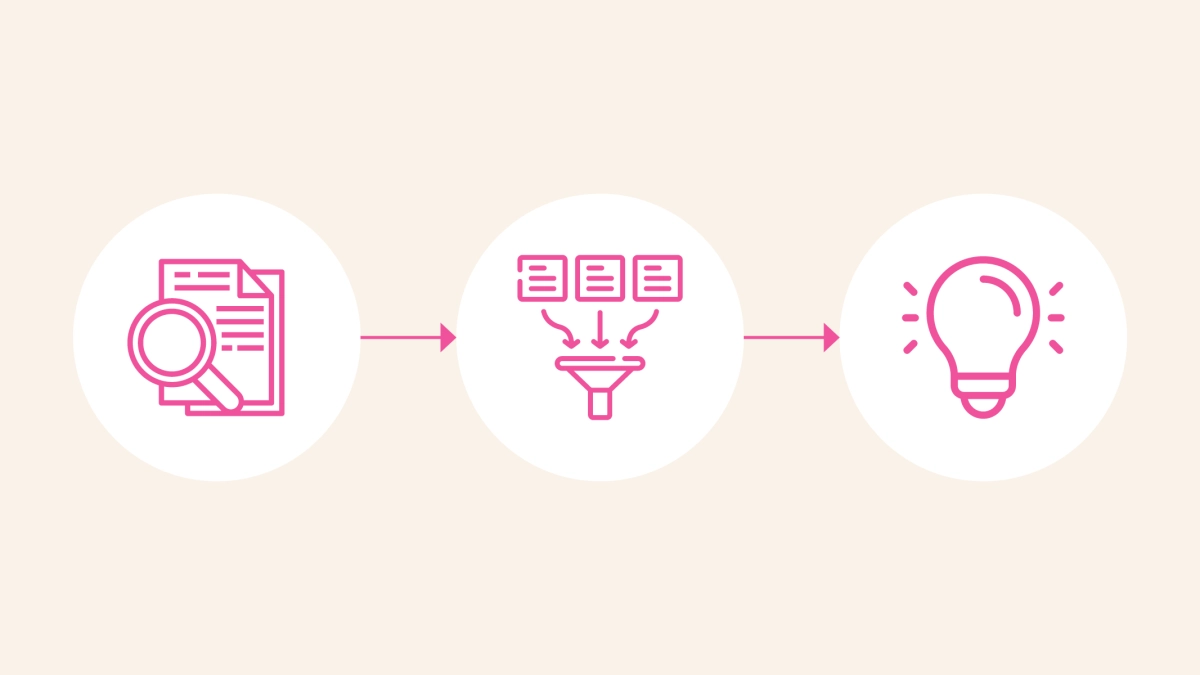
The system operates via a three-stage pipeline involving literature discovery, evidence extraction, and theory synthesis. Crucially, the evidence extraction phase uses an inexpensive model to populate a query-specific schema, gathering structured data points from up to 100 papers. This literature-supported approach is the core differentiator, yielding theories that are substantially more specific and empirically sound than those generated purely from the LLM's internal parametric knowledge. The refinement stage further improves internal consistency and filters out claims that are too close to existing, well-known statements, pushing the system toward generating novel insights.
Benchmarking the Predictive Power
Evaluating the quality of automated theories is notoriously difficult, but Theorizer employed a robust backtesting paradigm to assess predictive accuracy against subsequently published literature. According to the announcement, the literature-supported method achieved significantly higher recall (0.51 vs. 0.45) in accuracy-focused generation, meaning more of its predictions could be validated against subsequent research. This demonstrates that grounding the LLM in external, structured evidence is essential for generating claims that hold up against the future state of the field.
The gap was even more pronounced in novelty-focused generation, where literature support dramatically improved both precision (0.34 to 0.61) and recall (0.04 to 0.16). This finding is perhaps the most critical for the future of automated discovery. Parametric-only generation quickly saturates into duplicates because the model simply recycles what it knows. By forcing the Theorizer AI system to synthesize evidence from newly retrieved papers, the system explores meaningfully different parts of the hypothesis space, proving that external data is necessary to escape the LLM's knowledge echo chamber and produce genuinely new ideas.
While the results are compelling, Theorizer is not a definitive oracle; its outputs are explicitly hypotheses, not established truth. The system is also resource-intensive, requiring 15–30 minutes per query, and relies heavily on open-access papers, which currently limits its optimal application to fields like AI and NLP. Furthermore, the literature is inherently biased toward positive results, which can make surfacing contradictory evidence challenging. However, for researchers entering a new domain, the ability to synthesize thousands of findings into structured, testable theories in minutes represents a massive acceleration of the orientation phase.
The Theorizer AI system represents a critical inflection point in automated science, shifting the focus from simply executing tasks to generating high-level conceptual frameworks. As scientific knowledge continues to grow exponentially, the bottleneck is no longer data collection or computation, but synthesis and consolidation. If systems like Theorizer can reliably compress this knowledge into structured, testable laws, they will fundamentally change how human scientists interact with the literature, making the pursuit of unifying theories a collaborative effort between human insight and machine synthesis.