Visual TL;DR
AI Agents Need SpaceDriver
From the articleThe core premise of the talk is that to effectively deploy and utilize AI agents for complex and varied objectives, they require a dedicated and controlled operational space.
Traditional Environments CumbersomeDriver
From the articleTraditional computing environments can be cumbersome and insecure for AI experimentation and deployment.
Reduced Setup RequirementsEffect
From the articleThese sandboxes are described as secure, fully functional computer environments designed to empower agents to undertake a wide array of tasks with significantly reduced setup requirements.
Secure & FunctionalContext
designing for both security and broad functionality is paramount
From the articleThese sandboxes are described as secure, fully functional computer environments designed to empower agents to undertake a wide array of tasks with significantly reduced setup requirements.
Unleash AI PotentialOutcome
enables efficient deployment and utilization of AI agents
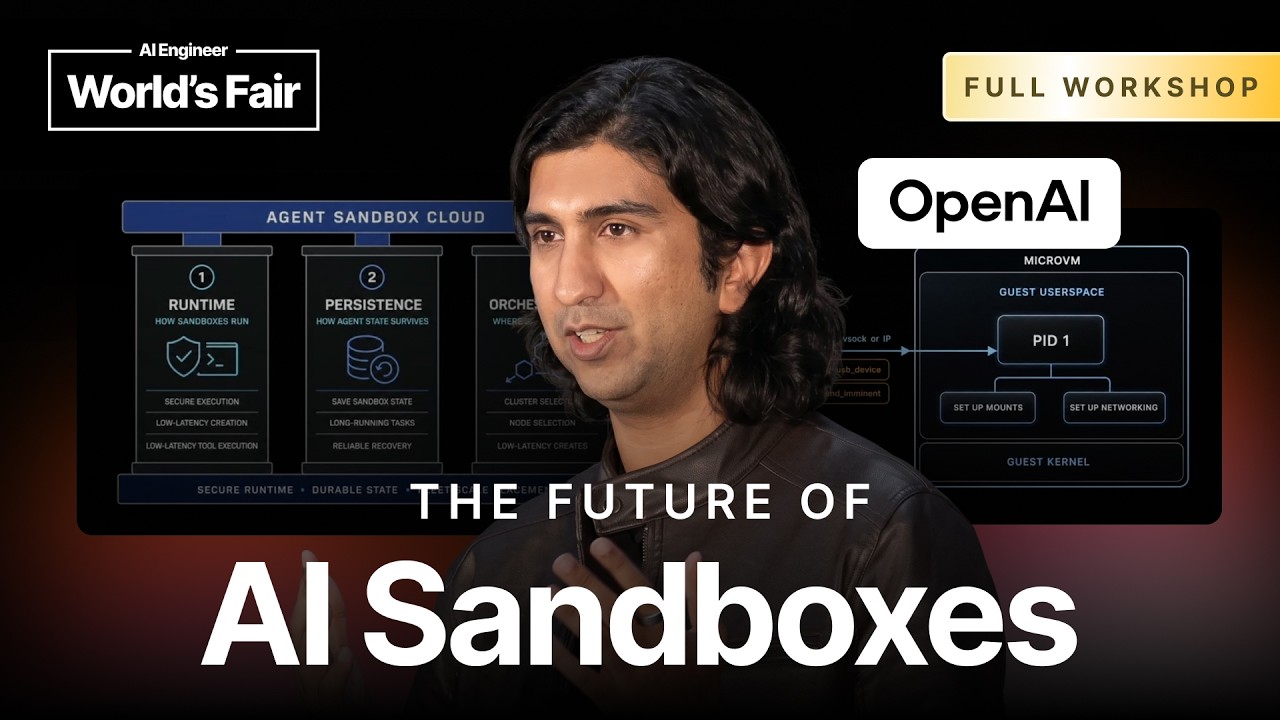
From the articleAbhishek Bhardwaj from OpenAI recently presented a talk titled "From fork() to Fleet: Designing an Agent Sandbox Cloud." The discussion centers on the critical role of sandboxes in unleashing the potential of AI agents.
Robust Cloud InfrastructureContext
From the articleBhardwaj's presentation offers insights into the architectural and design principles behind creating such a robust cloud infrastructure for AI agents.
Agent SandboxesCore
secure, fully functional computer environments for AI agents
From the article 9+ mentionsAbhishek Bhardwaj from OpenAI recently presented a talk titled "From fork() to Fleet: Designing an Agent Sandbox Cloud." The discussion centers on the critical role of sandboxes in unleashing the potential of AI agents.