

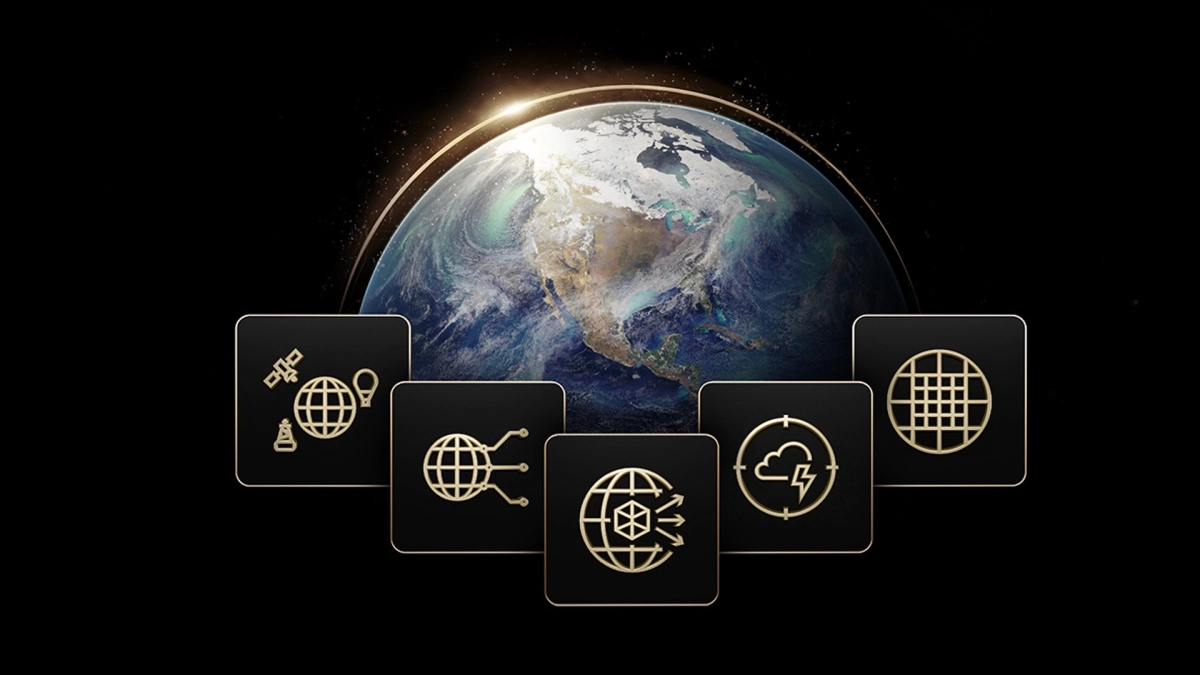
NVIDIA has formally launched the Earth-2 family of open models, positioning itself not just as a hardware provider but as the central software architect for the next generation of climate and weather intelligence. This release marks the world’s first fully open, accelerated AI software stack dedicated to weather prediction, fundamentally changing who can access and deploy high-fidelity forecasting capabilities. According to the announcement, the goal is to make weather AI accessible globally, from processing raw observation data to generating complex 15-day forecasts.
Historically, accurate weather prediction was a luxury reserved for nations and large institutions capable of running massive physics-based Numerical Weather Prediction (NWP) models on multi-million dollar supercomputers. This computational bottleneck meant high costs and slow iteration cycles, limiting application-specific forecasting. The Earth-2 framework directly addresses this by leveraging GPU acceleration and generative AI, drastically reducing the time and expense required to run complex simulations. This shift allows smaller enterprises, startups, and developing nations to deploy sophisticated forecasting systems on their own infrastructure.
The technical core of the launch rests on three new architectures: Atlas (Medium Range), StormScope (Nowcasting), and HealDA (Global Data Assimilation). StormScope, powering Earth-2 Nowcasting, is particularly disruptive because it uses generative AI trained on satellite and radar data to simulate storm dynamics directly. Crucially, NVIDIA claims this model is the first to outperform traditional physics-based models for short-term precipitation forecasting, a critical metric for severe weather response. Meanwhile, HealDA accelerates the generation of initial conditions, the snapshot of the current atmosphere, from hours on supercomputers down to seconds on GPUs, eliminating a major latency hurdle in the forecasting pipeline.
The Democratization of Climate Intelligence
The decision to make the entire stack open, including pretrained models, frameworks, and customization recipes, is a strategic move that accelerates adoption and validation within the scientific community. By providing Earth-2 Medium Range and Nowcasting openly via platforms like Hugging Face, NVIDIA ensures rapid integration and fine-tuning by third parties. This strategy has already attracted major users like TotalEnergies, The Weather Company, and the Israel Meteorological Service, who are reporting significant reductions in compute time and improved resolution compared to legacy NWP systems. The Israel Meteorological Service, for instance, reported a 90% reduction in compute time at 2.5-kilometer resolution using Earth-2 CorrDiff compared with traditional models.
The immediate beneficiaries are industries where localized, accurate, and rapid forecasting translates directly into financial risk management or operational efficiency. Energy companies like TotalEnergies and GCL are evaluating Earth-2 Nowcasting to improve short-term risk awareness for grid operations and photovoltaic prediction, where minutes and local impacts matter. GCL noted that Earth-2 provides more accurate prediction data at a lower cost than traditional NWP, significantly improving their photovoltaic power generation prediction accuracy. Similarly, financial risk firms like AXA and S&P Global Energy are leveraging models like FourCastNet and CorrDiff to generate thousands of hypothetical climate scenarios for insurance and risk assessment. This demonstrates that AI weather is moving beyond academic research and becoming a core operational tool for global commerce.