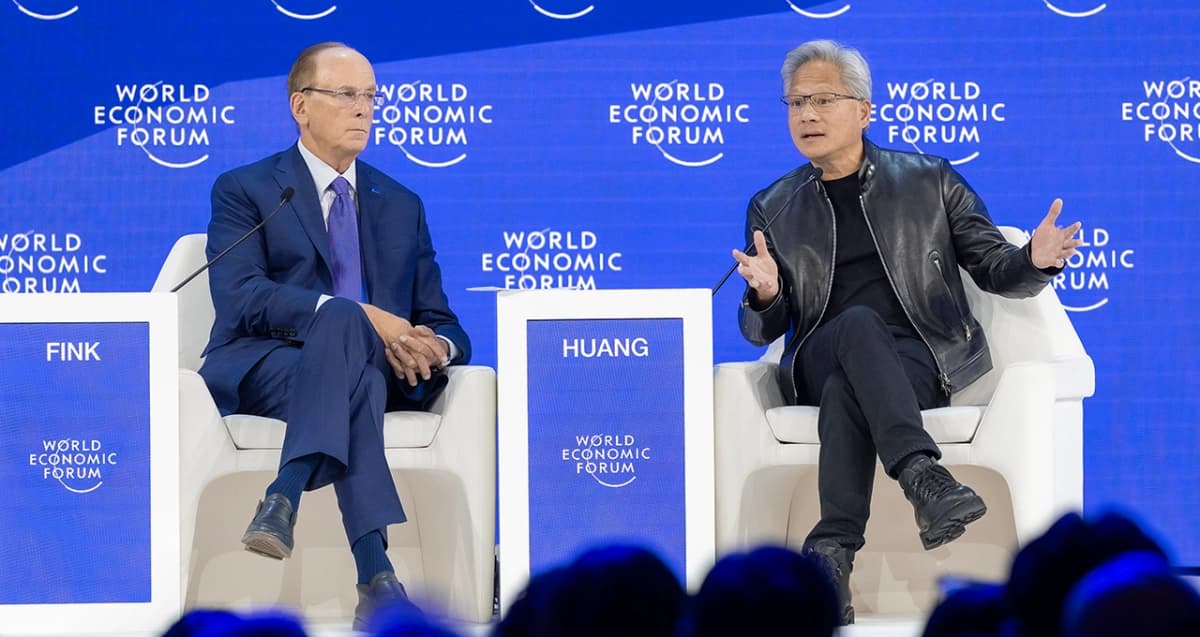
Jensen Huang has framed the current technological shift not merely as an upgrade cycle but as the largest infrastructure buildout in human history. Speaking at Davos, the NVIDIA CEO described artificial intelligence as a foundational, five-layer stack requiring massive investment across energy, computing, and application development. This perspective reframes the AI boom from a software phenomenon into a global construction and industrial imperative. According to the announcement
Huang’s "five-layer cake" analogy provides a crucial framework for understanding the capital intensity of this transition. The base layers—energy, chips, and cloud data centers—demand unprecedented physical investment before any AI model can run effectively. This means the immediate economic impact of the AI infrastructure buildout is being felt by heavy industry, construction, and advanced manufacturing, not just software engineers. The sheer scale of power generation and cooling required for hyperscale data centers validates the claim that AI is fundamentally reshaping global utility demands.
A key insight from Huang is the shift from task automation to purpose fulfillment, directly countering common fears of mass job destruction. He cited examples in radiology and nursing, where AI handles administrative tasks like charting and scanning, allowing professionals to focus on patient interaction and diagnosis. This dynamic increases productivity, leading hospitals to hire more staff, demonstrating that AI is primarily a productivity multiplier that increases demand for human expertise, rather than replacing it outright. The record venture capital flowing into AI-native companies across healthcare and manufacturing signals that the application layer is finally mature enough to build on top of these foundational capabilities.
AI as Essential National Infrastructure
Huang strongly advocated for treating AI as essential national infrastructure, comparable to roads or electricity grids. This mandate urges countries to develop localized AI capabilities using their own language and cultural data, ensuring national intelligence remains proprietary and relevant. Furthermore, he highlighted that AI’s accessibility is a powerful tool for closing technology divides, especially when fused with existing industrial strengths. This offers nations with strong manufacturing bases a unique advantage in physical AI and robotics, emphasizing that teaching AI is more important than writing it.
The consensus between Huang and BlackRock CEO Larry Fink was clear: the world is not in an AI bubble, but rather facing an investment deficit relative to the opportunity. With 2025 seeing record VC funding flowing into AI-native startups building the application layer, the demand for foundational AI infrastructure buildout will only accelerate. For global investors and policymakers, the message is unambiguous: participation in this multi-layered infrastructure buildout is mandatory to capture the coming economic benefits and ensure broad economic inclusion.