


Sim lands $7M for its open-source AI workflow builder

3 min read
Sim lands $7M for its open-source AI workflow builder

Sim, an open-source platform for building and deploying AI agents, has raised a $7M Series A funding round led by Standard Capital. The investment, which includes participation from Perplexity Fund, SV Angel, and YCombinator, signals a significant bet on the company’s visual, canvas-based approach to creating what it calls “agentic workflows.”

The company is carving out a niche in the increasingly crowded market for AI development tools. According to Sim, developers are often caught between two extremes: complex, code-intensive SDKs that offer power but demand significant engineering overhead, and simple no-code platforms that are easy to start with but quickly become restrictive. Sim aims to be the happy medium—a powerful, flexible AI workflow builder that remains accessible through a visual interface.

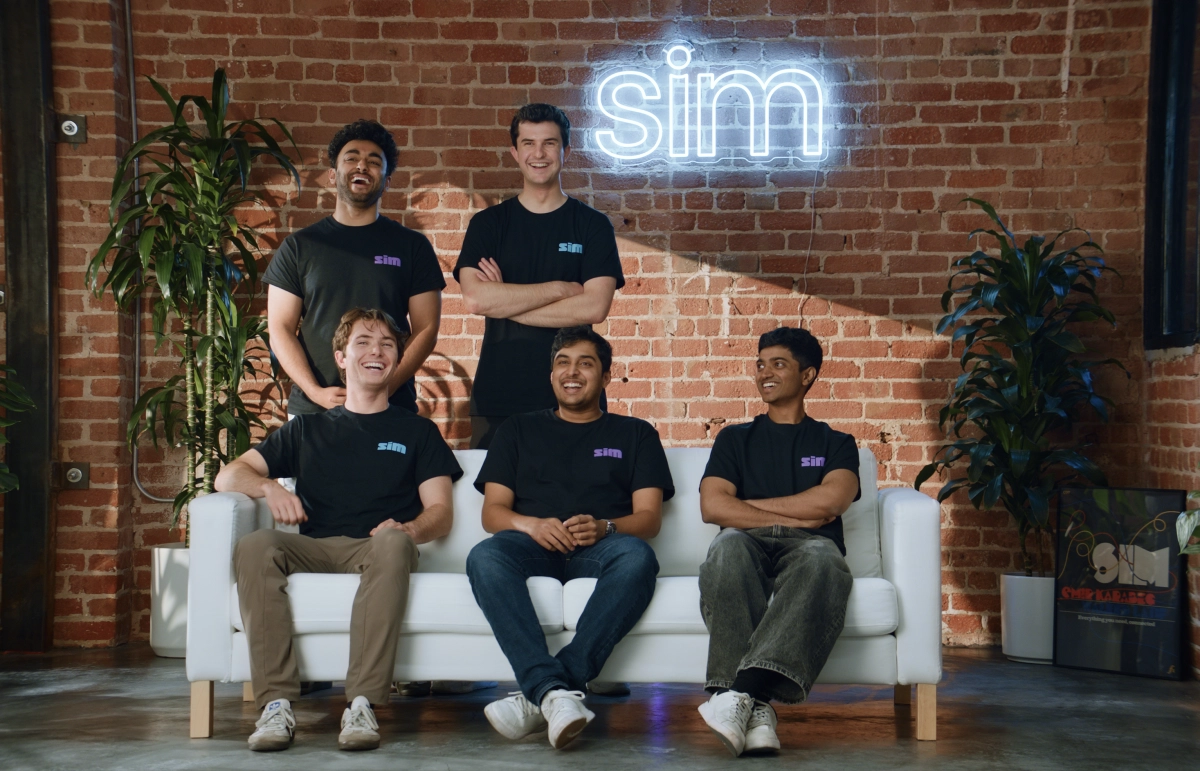
Founded earlier this year by Waleed Latif and Emir Karabeg, Sim was born from the idea of rebuilding an entire sales and marketing operation using only visual building blocks. That experiment formed the foundation of the platform, which allows users to design complex processes by connecting agents, tools, and logic blocks on a drag-and-drop canvas. This approach is designed to let teams move from prototyping to production-scale multi-agent systems without hitting a wall.

The platform also includes a “Copilot” feature that can generate nodes and fix errors from natural language prompts, further lowering the barrier to entry for building sophisticated AI applications.

Developer Traction and the Agentic Future

Sim’s commitment to being open-source from day one appears to be paying off. The project has exploded in popularity, growing from a two-person operation in a San Francisco apartment to a platform with over 18,000 GitHub stars, 60,000 developers, and more than 100 companies using it in production. The company reports it has already processed over 10 million workflows.

This grassroots adoption is fueled by the platform’s flexibility. Sim offers a cloud-hosted version but also provides multiple self-hosting options via NPM, Docker Compose, and Dev Containers. Crucially, it integrates with Ollama, allowing developers to run workflows with local AI models, a key feature for teams concerned with data privacy and cost. The extensive list of integrations—from Google Drive and Slack to Pinecone and OpenAI—positions it as a central hub for orchestrating AI-powered tasks across an organization's existing toolset.

With the new capital, Sim plans to invest heavily in its community and continue developing the platform. The company’s vision is that the next generation of software will be “agentic,” composed of specialized AI agents that can reason, retrieve information, and act on a user’s behalf. By providing the underlying infrastructure and user experience for this shift, Sim is positioning itself not just as another AI tool, but as a foundational layer for the future of automated work.