

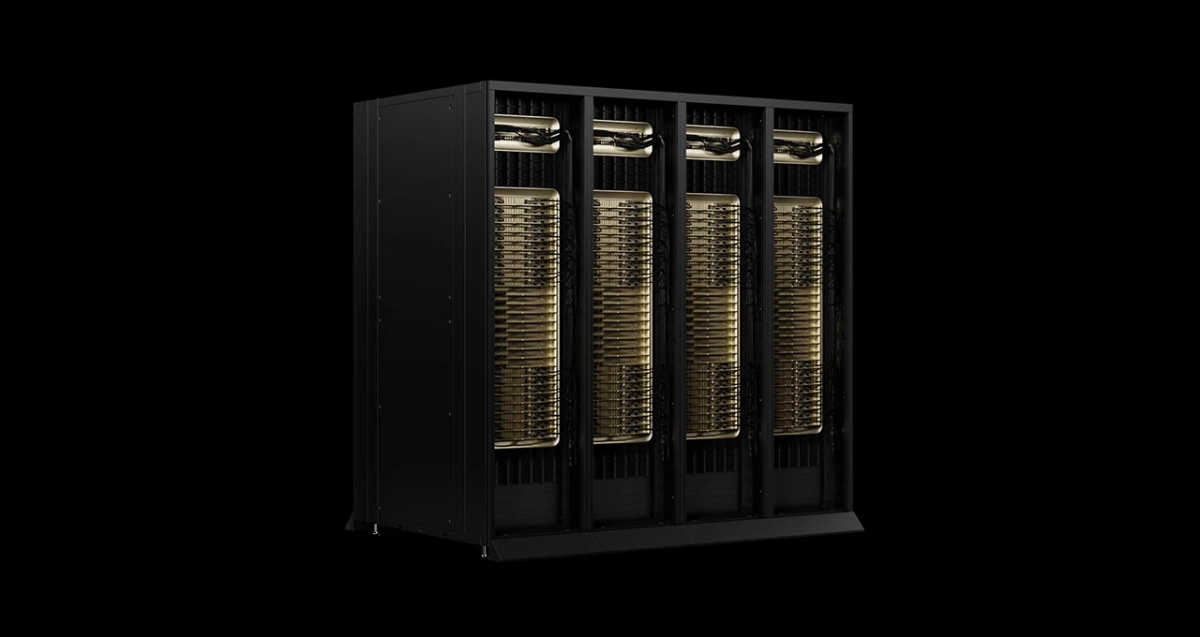
The Naval Postgraduate School (NPS) is significantly advancing its artificial intelligence capabilities, positioning itself as a critical player in the U.S. government's AI strategy. This push is underpinned by a substantial grant from NVIDIA: a DGX GB300 system, designed to accelerate AI training and research for future military leaders. The move underscores a growing imperative for defense institutions to integrate cutting-edge AI infrastructure directly into their educational and operational frameworks, moving beyond theoretical concepts to practical, secure applications.
The NVIDIA DGX GB300, coupled with NVIDIA Mission Control software, will serve over 1,500 in-resident students, 600 faculty, and thousands of external partners at NPS. According to the announcement, this powerful system is central to the new NVIDIA AI Technology Center at NPS, enabling a broad spectrum of applications from complex mission planning to autonomous systems simulations and disaster recovery. Critically, it will host an on-premises "NPS GPT," providing a private, generative AI large language model tool for enhanced data security and operational privacy. This on-premise capability is a non-negotiable for sensitive defense applications, offering a secure sandbox for innovation without compromising classified information. Such dedicated infrastructure is vital for fostering rapid, secure development in a military context.
NPS's collaboration with MITRE further illustrates the depth of this AI integration, particularly through the Advanced Simulation for Planning and Enhanced Navigation (ASPEN) framework. Developed on NVIDIA Omniverse and leveraging Isaac Sim for robotics, ASPEN creates high-fidelity digital twin environments for simulating unmanned underwater vehicle (UUV) operations. This framework incorporates real-world data from MITRE's BlueTech Lab, validating autonomous systems in challenging maritime conditions like low visibility and acoustic interference. The use of NVIDIA Jetson AGX modules at the edge for UUV computing, alongside MITRE's DGX SuperPOD for foundational model training, exemplifies NVIDIA's "three-computer solution" for developing physical AI, spanning from edge devices to enterprise data centers. This holistic approach is essential for deploying robust AI in dynamic, real-world scenarios.
Accelerating Naval Environmental Intelligence
A core application of this advanced NVIDIA Navy AI training is the acceleration of environmental modeling, crucial for naval planning and safety. The DGX GB300 will train foundational models, which then feed into NVIDIA Isaac Sim and ASPEN for detailed simulations of ocean environments. This allows for precise predictions of atmospheric, sea surface, subsurface, and seabed changes, vital for maximum mission effectiveness and crew safety. ASPEN's integration with NVIDIA fVDB further enables the efficient generation of high-fidelity digital twins, processing vast 3D datasets to create virtual representations of complex environments, including space. This capability extends to detecting anomalies, such as predicting spacecraft debris fields, showcasing the system's versatility and strategic importance beyond traditional naval operations. The ability to model and predict such diverse and critical environments offers an unparalleled strategic advantage.
The strategic investment in NVIDIA Navy AI training at NPS signifies more than just a hardware upgrade; it represents a foundational shift in how the U.S. Navy approaches AI education and operational readiness. By equipping military students with hands-on AI research opportunities and cutting-edge tools, NPS is cultivating a new generation of leaders capable of leveraging AI for national security. This initiative sets a precedent for defense institutions globally, demonstrating the critical role of advanced AI infrastructure in maintaining a technological edge and solving complex real-world challenges. The integration of NVIDIA Deep Learning Institute resources further ensures a continuous pipeline of skilled AI talent, solidifying the long-term impact of this collaboration.