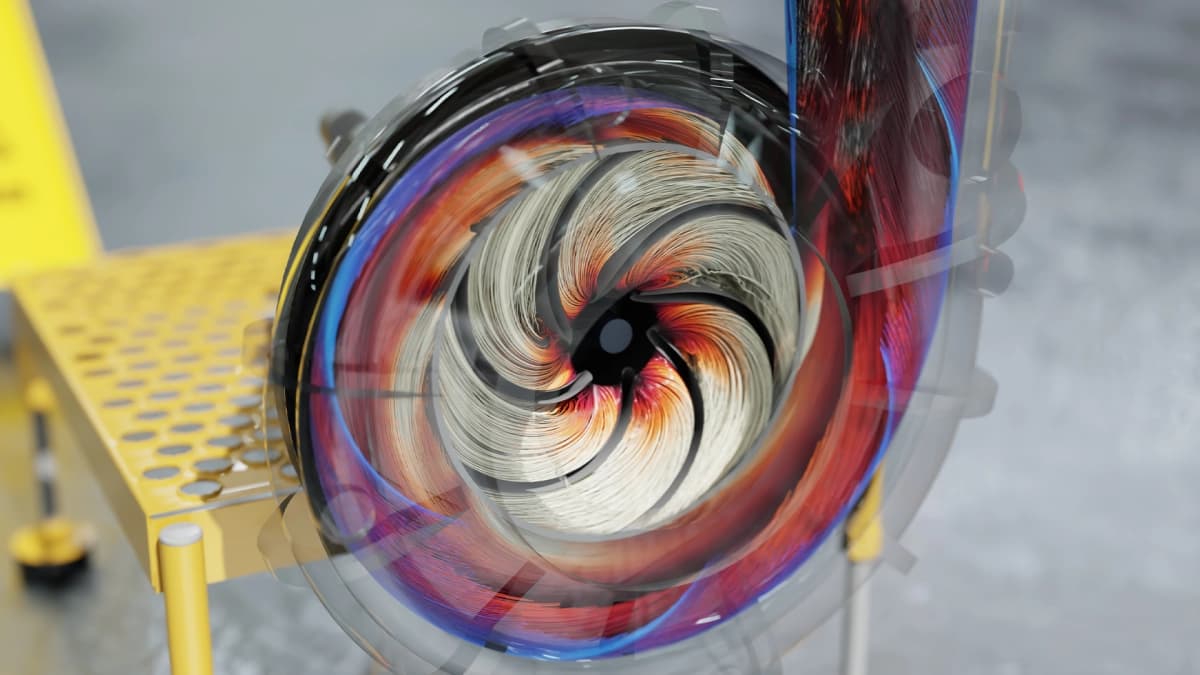
NVIDIA's PhysicsNeMo framework is fundamentally transforming engineering design, particularly in aerospace and automotive sectors. Its AI physics simulation capabilities are delivering unprecedented speedups, dramatically altering how complex physical systems are developed and optimized. This marks a significant leap in computational engineering.
The core of this revolution lies in a staggering 500x acceleration over traditional methods. This isn't merely brute-force GPU power; it's the synergistic multiplication of GPU acceleration with AI physics, specifically through highly accurate initial states for simulations. For instance, fluid simulations, notoriously computationally expensive, see a 50x speedup with GPU tools like Ansys Fluent, further amplified tenfold by PhysicsNeMo's pretrained models providing superior starting conditions. This precision at the outset drastically reduces iterative computational cost, as demonstrated by Synopsys achieving this 500x leap.
AI-Driven Design Paradigms
Such profound speedups unlock entirely new design paradigms for critical industries. Aerospace leaders like Northrop Grumman are leveraging NVIDIA AI physics simulation to rapidly explore thousands of spacecraft thruster nozzle designs, identifying optimal solutions with unprecedented efficiency. Similarly, Blue Origin employs PhysicsNeMo to train models for next-generation space vehicles, validating candidates with high-fidelity solvers. This capability moves beyond incremental improvements, enabling engineers to explore groundbreaking designs at previously inconceivable scales and accuracy.
NVIDIA's strategy extends beyond software, integrating its DoMINO NIM microservice and CUDA-X libraries within a robust ecosystem. Partners like Cadence are pushing real-time simulation in aerospace, using GPU acceleration to build vast AI training datasets and enable interactive design optimization. This holistic approach, powered by platforms like Grace Blackwell, positions NVIDIA AI physics simulation as the backbone for advanced digital twin technologies. It signifies a shift towards truly interactive, AI-powered design workflows across diverse engineering domains.
Ultimately, this isn't just about faster simulations; it's about fundamentally reshaping the engineering lifecycle. By collapsing design cycles and expanding the scope of exploration, NVIDIA AI physics simulation empowers industries to innovate at an accelerated pace. This breakthrough promises to deliver more efficient, reliable, and groundbreaking products to market faster than ever before. According to the announcement