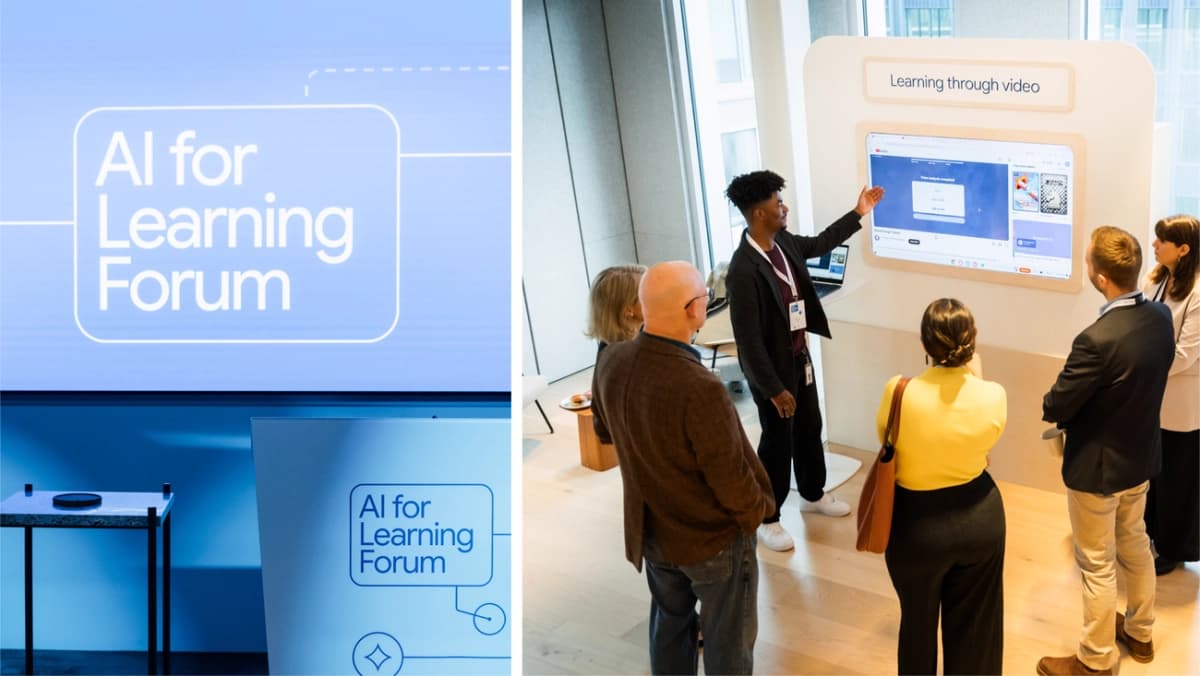
Google is intensifying its focus on AI in education, positioning artificial intelligence not as a replacement for human connection but as a powerful enhancer of learning experiences. Ben Gomes, Google’s Chief Technologist for Learning and Sustainability, recently outlined the company's vision at the Google AI for Learning Forum, emphasizing AI's potential to personalize education and alleviate teacher burdens. This strategic push signals a significant evolution in how major tech players view their role in shaping the future of pedagogy.
The core of Google's strategy hinges on AI's dual capabilities: fostering deep interaction with information and transforming content into accessible formats. For students, this translates into highly personalized learning journeys, where AI adapts material to individual needs, maintaining engagement within the "zone of proximal development." This approach promises to make complex ideas more digestible and even motivate learners by connecting concepts in meaningful ways. Critically, AI's ability to convert content into diverse formats like podcasts, videos, and mind maps could dismantle long-standing barriers for students with learning disabilities, significantly broadening access to education.
For educators, the promise of AI lies in its capacity as a sophisticated teaching assistant. Gomes highlighted how AI can automate administrative tasks, from lesson planning to activity creation, thereby freeing up teachers' valuable time. This reclaimed time allows educators to concentrate on their most impactful roles: inspiring, motivating, and fostering curiosity through direct student interaction. The industry implication is clear: AI aims to augment, not diminish, the human element in teaching, potentially addressing the global teacher shortage by reducing burnout and enhancing job satisfaction.
Navigating AI's Educational Frontier
However, the path to widespread AI adoption in education is fraught with significant challenges, which Google acknowledges. Safety and accuracy are paramount; the technology must be rigorously tested to protect young learners and prevent the propagation of misinformation or "hallucinations." The perennial concern about critical thinking skills also looms large. Google's stance is that AI should eliminate "unproductive struggle"—such as content at the wrong level or in an unengaging modality—allowing students and teachers to focus on developing higher-order thinking.
Perhaps the most critical challenge is ensuring universal participation and preventing a new digital divide. According to the announcement, Google is committed to making these AI tools accessible globally, across diverse languages, and to providing comprehensive training for teachers worldwide. This commitment is vital, as the risk of AI disproportionately benefiting only the most privileged students could exacerbate existing educational inequalities. Google's approach, grounded in learning science and pedagogical principles like managing cognitive load and stimulating curiosity (dubbed LearnLM), aims to mitigate these risks through active partnerships with educators and a transparent, evidence-based development process.
Google's long-term vision extends beyond merely enhancing current educational practices; it seeks to understand how AI will transform education to serve a world increasingly shaped by AI itself. This perspective suggests a proactive stance on curriculum development and skill acquisition for future generations. The ongoing dialogue between technologists, educators, and students is crucial for collaboratively charting this unpredictable terrain, ensuring AI aligns with the highest human goals for learning.