

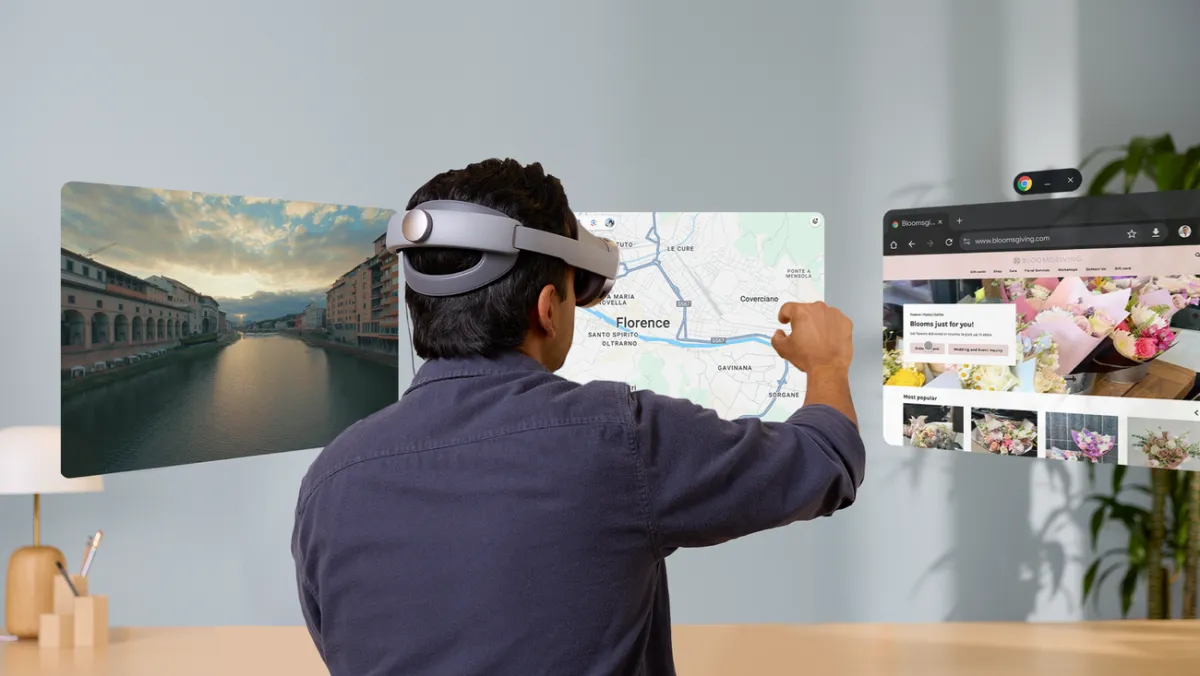
Samsung has officially unveiled the Galaxy XR, introducing the first Android XR headset and a new operating system poised to redefine the mixed reality landscape. This launch marks a significant strategic move into the burgeoning XR market, leveraging Android's vast ecosystem and Google's advanced AI capabilities to blend digital experiences seamlessly with physical surroundings. The device promises a new era for immersive computing, signaling a formidable challenge to existing players.
The core of this announcement is Android XR, an operating system designed from the ground up for next-generation headsets and glasses, emphasizing an "infinite screen" concept. According to the announcement, it immediately offers access to a rich content library, including reimagined Google apps, new XR-specific experiences from major developers like Adobe and Owlchemy Labs, and millions of existing mobile and tablet applications from Google Play. This broad app compatibility, coupled with robust support for open standards like OpenXR, WebXR, and Unity, strategically positions Android XR as a potentially developer-friendly platform, crucial for fostering a robust and diverse content pipeline beyond proprietary ecosystems. The intuitive navigation via voice, hands, and eyes further underscores a commitment to natural interaction within a flexible, expansive digital workspace, aiming to lower the barrier to entry for complex XR environments.
What truly differentiates the Android XR headset from its competitors is the deep, pervasive integration of Gemini, Google's powerful AI assistant, designed for contextual awareness. Gemini Live is engineered to understand a user's visual and contextual surroundings, enabling proactive assistance and seamless interaction across applications in real-time. This capability extends from providing instant player statistics during a live basketball highlight to offering historical facts about a landmark viewed in Google Maps, or even intelligently organizing a cluttered virtual workspace with a simple voice command. The inclusion of Circle to Search, applicable to both digital content and real-world objects, further solidifies Gemini's role as a pervasive, context-aware assistant, moving beyond simple voice commands to truly intelligent, actionable interaction that anticipates user needs.
Redefining Interaction and Productivity
The Galaxy XR showcases a compelling array of use cases that highlight the platform's versatility and potential for everyday integration. For entertainment, it transforms any room into a private theater for Google TV or YouTube, offering immersive 180/360-degree content and even converting existing 2D photos and videos into 3D memories, allowing users to "step into" their past. Exploration is reimagined through Google Maps' Immersive View, enabling users to virtually traverse global landmarks with Gemini providing instant contextual information, making virtual tourism both educational and engaging. Critically, the Android XR headset also targets productivity, enabling an infinite workspace where multiple apps can be arranged, paired with physical peripherals like keyboards and mice, or linked to a PC for a comprehensive desktop experience, supported by new creative apps like Adobe's Project Pulsar and TopHatch's Concepts.
Priced at $1799, the Galaxy XR positions itself as a premium device, directly competing with high-end XR offerings like Apple Vision Pro, though with a distinct ecosystem strategy. Samsung's role as the exclusive hardware partner for Google's Android XR platform is strategically significant, mirroring their long-standing, successful collaboration in the smartphone market. The "Explorer Pack" incentive, bundling Google AI Pro, YouTube Premium, and other content subscriptions, aims to accelerate early adoption and demonstrate the platform's immediate value proposition, mitigating the typical content drought of new XR platforms. This collaborative approach, leveraging Samsung's hardware manufacturing expertise and Google's software and AI dominance, presents a formidable challenge to existing players in the nascent XR space, potentially democratizing advanced mixed reality experiences.