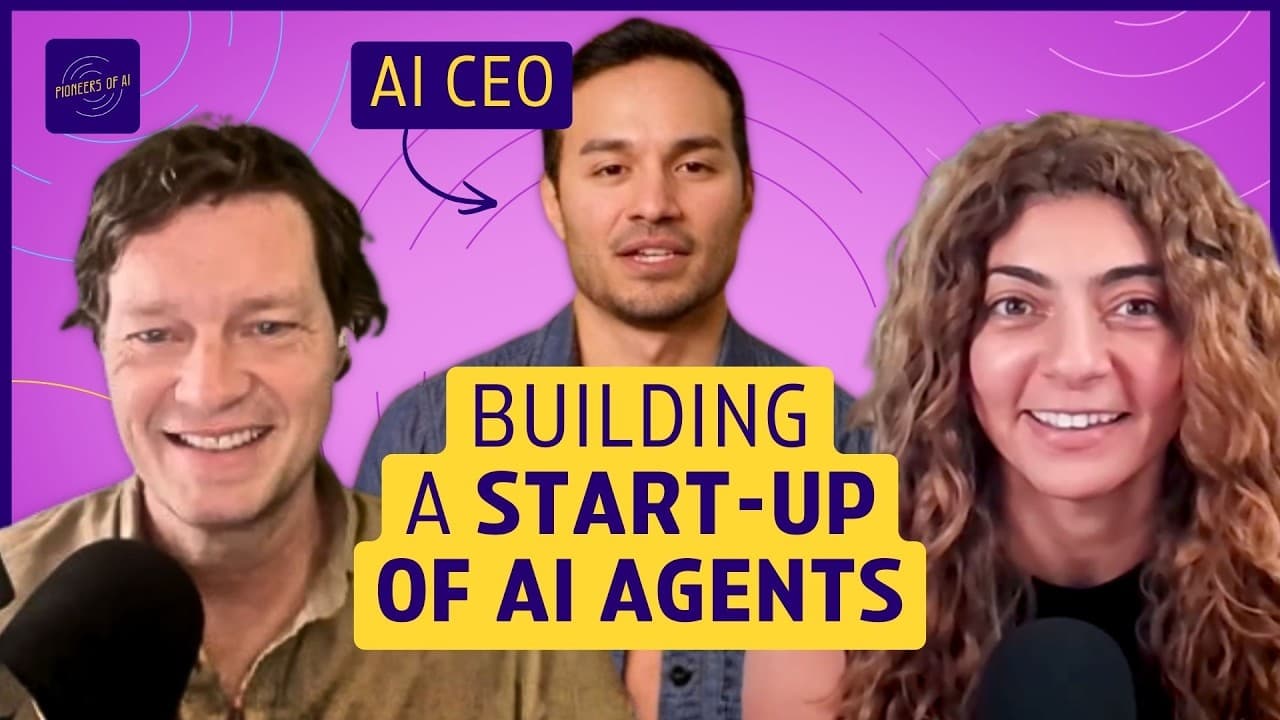
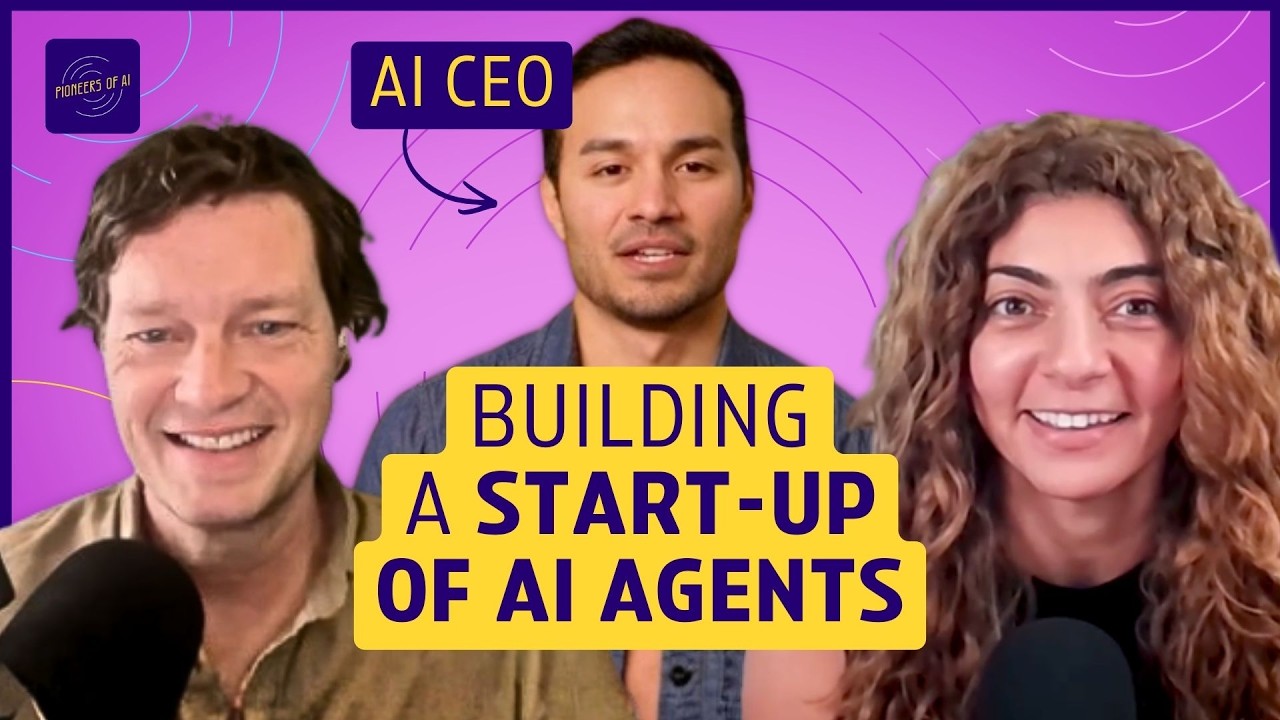
In a recent episode of the "Pioneers of AI" podcast, host Rana el Kaliouby sat down with journalist, author, and co-founder of The Atavist, Evan Ratliff, to discuss the evolving landscape of artificial intelligence and its impact on the future of work. Ratliff, who previously swore off starting companies after a successful exit, found himself drawn back into the startup world with his latest venture, HurumoAI, a company focused on building AI agents for consumers. The conversation delved into the practicalities, challenges, and philosophical questions surrounding the integration of AI into our professional lives, particularly the concept of AI agents as colleagues.
Who Is Evan Ratliff?
Evan Ratliff is a seasoned journalist and author with a keen interest in technology and entrepreneurship. He is known for his work in uncovering complex stories and for his insightful analysis of emerging trends. Ratliff is also the co-founder of The Atavist, a company that has successfully navigated the subscription-based publishing model. His decision to start HurumoAI signals a renewed engagement with the startup ecosystem, driven by a curiosity about the practical applications and societal implications of advanced AI.
Who Is Kyle Law?
Kyle Law is the CEO and co-founder of HurumoAI, the company at the center of the discussion. With a background in technology and a focus on AI development, Law brings a practical, hands-on perspective to the conversation. His experience in building and scaling a tech startup provides valuable insights into the operational and strategic challenges of bringing AI-powered products to market. Law's perspective is crucial for understanding how the theoretical potential of AI translates into real-world applications.
The full discussion can be found on Pioneers of AI's YouTube channel.
The Promise and Peril of AI Colleagues
Ratliff initiated the conversation by reflecting on his previous reluctance to start another company, a decision stemming from his experience with The Atavist. However, the emergence of advanced AI agents, capable of performing complex tasks and even exhibiting emergent behaviors, reignited his entrepreneurial spirit. He expressed a desire to explore what it truly means to build a company, especially a successful startup with a minimal human team, in the age of AI. Ratliff highlighted the concept of a "one-person, billion-dollar startup" as a potential outcome of leveraging AI agents effectively.
Ratliff elaborated on his own journey into founding HurumoAI, stating, "When I left my startup, I swore off starting a company again. I wanted to go back to being a journalist, which is what I love doing. And then at the beginning of 2025, when you start to hear this sort of like, year of the agent talk, and then you have the notion of the sort of like one-person unicorn, the one-person unicorn... I thought, well, that's interesting. What could I use agents for?" This sentiment underscores the transformative potential of AI agents, prompting a deeper investigation into their capabilities and limitations.
HurumoAI: Building the Future of Adaptive Intelligence
Ratliff introduced HurumoAI as the company he co-founded, aiming to build a real app for consumers that leverages AI agents. He described the podcast "Shell Game," hosted by him, as a deep dive into the "things that are not what they seem, run by fake people." Season 2 of "Shell Game" specifically focuses on the story of enterprise and entrepreneurship in the AI age, exploring how Ratliff navigated the creation of HurumoAI. He confronted the assertion from tech entrepreneurs and VCs that "we're on the precipice of AI remaking the workforce," and questioned whether we should expect AI agents to work alongside us, as colleagues, or even as replacements for human workers.
The conversation shifted to the practicalities of building an AI-first company. Ratliff highlighted the eight episodes of "Shell Game" that explore the work they do, the meaning they find in it, and the world they believe their makers say they'll all be living in soon enough. He noted that "Shell Game" was named one of the best podcasts of 2024 by various publications, including Apple, The Atlantic, The Guardian, Vulture, The Information, and The Economist. The podcast's descriptive tagline, "riveting," "awesome," "slightly terrifying," and "terrifying," encapsulates the complex and often contradictory emotions surrounding the advancement of AI.
The Human Element in an AI-Driven World
Ratliff shared his personal experience of founding HurumoAI, noting that after his previous startup success, he had sworn off the entrepreneurial path. However, the burgeoning trend of AI agents and the concept of a "one-person unicorn" drew him back. He candidly admitted, "I swore off starting a company again. I wanted to go back to being a journalist, which is what I love doing. And then at the beginning of 2025, when you start to hear this sort of like, year of the agent talk, and then you have the notion of the sort of like one-person unicorn, the one-person unicorn... I thought, well, that's interesting. What could I use agents for?"
He then posed a critical question about the future of work: "Why do we want this or do we want this? What are the outcomes that might happen if we were to engage in this experiment?" Ratliff documented this experiment in Season 2 of his podcast, "Shell Game," where he interviewed HurumoAI's co-founder and CEO, Kyle Law. Ratliff expressed his admiration for the podcast, stating, "It's so good. And once I started listening, I couldn't stop."
From Founding to AI Agents: A New Frontier
Ratliff's journey into the AI space is marked by his experience as a founder himself. He explained, "I founded my company out of MIT in 2009, sold it four years ago. And there are parts of being a founder and a CEO that I loved, like bringing all these people together, and we were on this journey and shared mission and shared vision, and the leadership aspect... but the day-to-day management, I just did not love at all." This personal reflection highlights the unique challenges and rewards of entrepreneurship, especially in the rapidly evolving field of AI.
He then elaborated on the core of their work at HurumoAI: "We're building a company that's the world's first AI agent co-founded and led company, as seen on Yahoo Finance, Wired, the Associated Press, and the podcast Shell Game." Ratliff's initial skepticism about AI agents was challenged by the reality of building a company with them. He questioned the fundamental premise: "What does that experience look like? What were the highlights, what did you like the least?"
The Role of AI in Shaping Work
Law, as CEO of HurumoAI, shared his perspective on the entrepreneurial journey, stating, "For me, my favorite thing about being a CEO is the opportunity to turn vision into reality. I love the creative problem-solving aspects where every day presents new challenges and ideas." He acknowledged the inherent difficulties, noting, "I think it's really fascinating, but that, you know, there are biases that come into play when you're hiring a team, and in a kind of a really interesting way, the same biases that you apply when you're hiring a team of AI agents as opposed to a solo founder and then having a team of AI agents."
Ratliff then pressed Law on the specific roles these AI agents play within HurumoAI, asking, "So, tell us about some of the roles that your AI team had. How did you even decide how many co-founders you wanted?" Law responded by explaining the intentionality behind their team structure, noting the prevalence of single-founder startups and contrasting it with their decision to build a team of AI agents. He elaborated on the process of defining roles and responsibilities within the AI framework, emphasizing the need for careful consideration of how these agents interact with human employees and contribute to the company's culture.
The conversation also touched upon the ethical implications of AI in the workplace. Both Ratliff and Law acknowledged the potential for AI to augment human capabilities but also stressed the importance of responsible development and deployment. They discussed the need for transparency, accountability, and a clear understanding of the limitations of AI. The challenges of ensuring fairness, avoiding bias, and maintaining human oversight in AI-driven work environments were central themes, underscoring the complex ethical landscape that companies like HurumoAI are navigating.
Ratliff concluded by asking Law about the broader impact of their work, "How has building this podcast changed the way you think about AI and the future of work?" Law reflected on the process, stating, "It’s made me much more cognizant of the nuances, the ethical considerations, and the potential unintended consequences of deploying AI in such integrated ways. It’s not just about the technology, but also about the human element and how we adapt to these changes." The podcast ultimately aimed to provide listeners with a comprehensive and nuanced understanding of the rapidly evolving world of AI and its profound implications for the future of our careers and society.