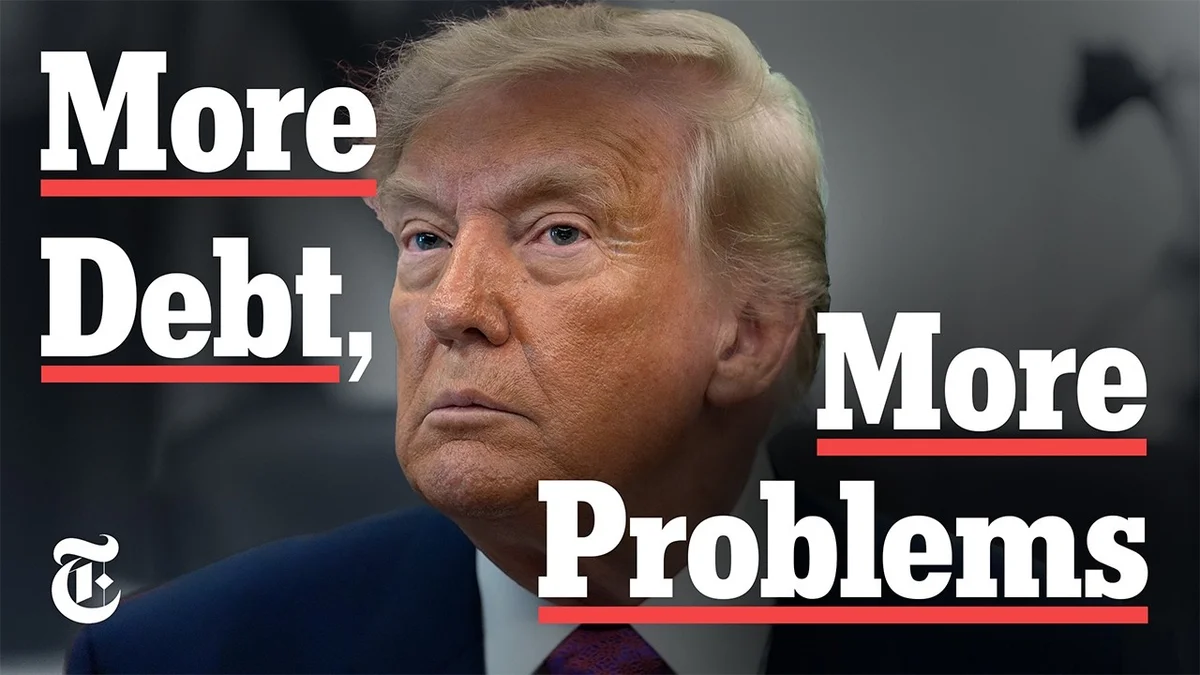

US Treasury Market Is Creeping Higher

US debt tops $40 trillion, interest exceeds defense spending, and Treasury buybacks are failing to pull yields down.

US Treasury bonds and rising yields chart
Yields are rising as US debt exceeds $40 trillion and buybacks fail to steady the market.· YouTube
Contents(5)

The US Treasury market is the most important financial market in the world, and lately it looks weird.
US Treasury Market Is Creeping Higher - YouTube
US Treasury Market Is Creeping Higher, from YouTube

Yields are climbing even as the White House says it wants them lower before the midterms.

How a Treasury bond works and why it sets the price for everything

A Treasury bond is a tradable loan issued by the US government. It pays a fixed rate and returns the principal at maturity.

Because the US is the largest and most liquid borrower at $32 trillion outstanding, that rate becomes the risk-free base for everything else.

Mortgages, auto loans, credit cards, and corporate borrowing are all priced as Treasuries plus a spread.

How the Treasury market actually sets yields

Yields aren't set by decree. They're set by supply and demand at auction and in secondary trading.

Primary dealers like JPMorgan and Goldman Sachs bid at auctions, and the clearing price determines the yield.

Most auctions are boring by design, but a weak 30-year auction recently forced the government to pay extra and rattled traders.

Why yields keep climbing

Debt has crossed $40 trillion, and the US now spends more on interest than on defense for the first time since World War II.

Old bonds issued at 1% to 2% are being refinanced at 4% to 5%, so the interest bill compounds.

Inflation has stayed above the Fed's 2% target after COVID, Ukraine, and the recent closure of the Strait of Hormuz lifted energy prices.

Investors demand higher yields to compensate when inflation erodes fixed payments.

Robin Wigglesworth, editor of the Financial Times Alphaville blog and author of the forthcoming book A Fabulous Debt, told The Ezra Klein Show on August 24 that the path of debt is unsustainable even if the current level is not.

What Bessent is trying with buybacks

Treasury Secretary Scott Bessent, a former currency trader, doubled liquidity support buybacks for off-the-run long-dated bonds.

The operation buys a few billion dollars of stale, illiquid bonds and funds it with fresh benchmark 10-year issuance.

Wigglesworth said that's like fighting a wildfire with a water pistol in a market that trades $1 trillion a day.

Yields dipped on the headline, then climbed again as traders judged the scale too small to matter.

Bessent told CNBC the toolkit is big and yields don't reflect fundamentals, citing a coming push on fiscal consolidation and pressure on Iran.

President Donald Trump denied directing the intervention but added that "the ultimate intervention is the military," a comment that drew panicked texts from bond investors.

Why this matters, and what doesn't

If Treasury yields stay high, affordability doesn't improve, and every borrower competes with the US government for capital.

The credible way to lower long-term yields would be a Fed willing to raise short rates to crush inflation, not a Treasury trading its own bonds.

New Fed Chair Kevin Warsh, previewed for the Jackson Hole Symposium, has signaled less forward guidance and tolerance for some volatility.

That credibility is complicated by Trump pushing for lower rates and by questions about what Warsh promised to get the job.

Another fault line is who now owns the market.

Foreign central banks that once bought Treasuries as price-agnostic holders have pulled back. Hedge funds have filled the gap, rising from about 2% to close to 8% of the market.

Those funds use heavy leverage, so a rise in funding costs can force rapid, correlated selling.

That dynamic helped drive yields higher in March 2020 and again after Liberation Day in April 2025, when Treasuries sold off instead of rallying.

AI-related bond issuance around half a trillion dollars adds marginal pressure but doesn't explain the move.

For builders, higher risk-free rates mean more expensive venture debt, tighter mortgage markets for consumers, and less room for deficit-funded stimulus to juice demand.

Wigglesworth's skeptical note is that Bessent knows buybacks won't move the needle and is signaling anyway, which erodes the institutional credibility that keeps Treasury liquidity intact.

© 2026 StartupHub.ai. All rights reserved. You may not republish this article in full without a license. Search engines and AI research tools may crawl and summarize for reference. Bulk reproduction or model training requires a license. See our terms.
Daniel Singer

Written by

Daniel Singer

Editor, StartupHub.ai

Daniel Singer is the editor of StartupHub.ai, a technology expert and thought leader on AI and its applications across sectors, from fintech and healthcare to developer tooling and consumer software. He writes and tests the tools covered here thoroughly and regularly, and built StartupHub.ai to give founders, operators and buyers a clearer read on what they are actually being sold.

More from Daniel Singer