

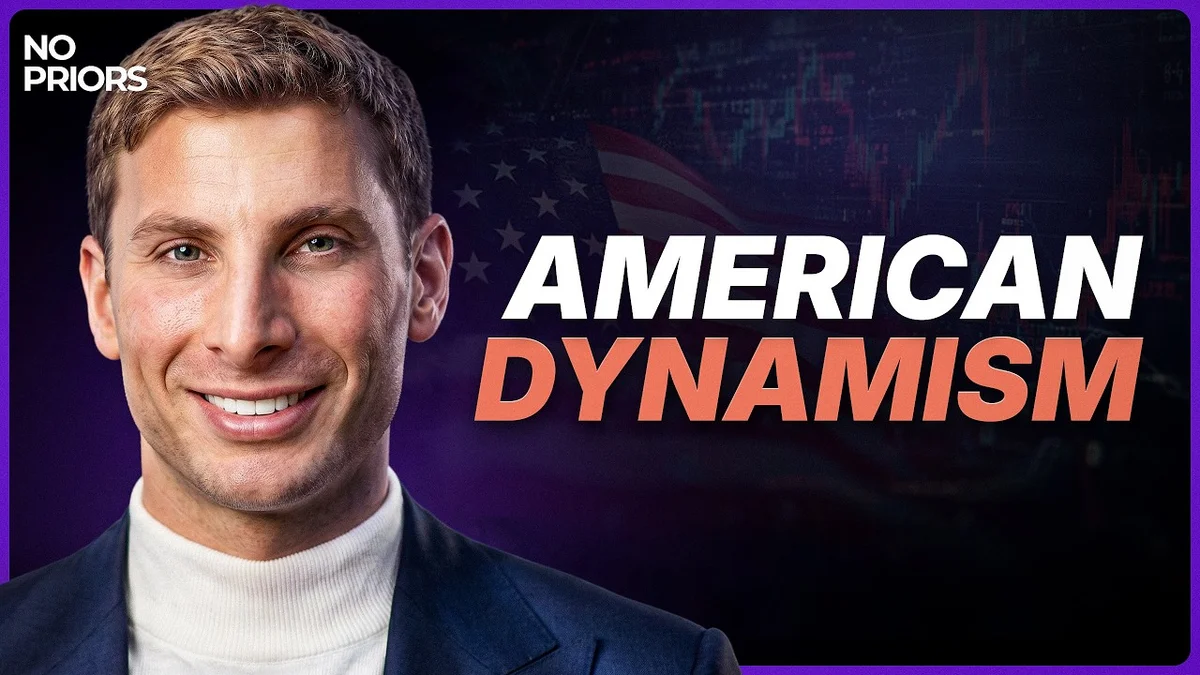
Trump Admin's Tech Strategy with Jacob Helberg

Jacob Helberg, U.S. Under Secretary of State for Economic Affairs, discusses Pax Silica, an initiative to secure AI supply chains through international private sector collaboration.

Jacob Helberg speaking at a podcast recording
Image credit: No Priors Podcast· NoPriors
Visual TL;DR
Geopolitical VulnerabilitiesDriver
From the article 4 mentionsThe initiative, dubbed "Pax Silica," aims to build a resilient and distributed network for AI development, moving beyond the current geopolitical vulnerabilities that heavily rely on a limited number of nations, most notably China.
Pax Silica InitiativeContext
multinational effort for AI supply chain ecosystem
From the article 4 mentionsThe initiative, dubbed "Pax Silica," aims to build a resilient and distributed network for AI development, moving beyond the current geopolitical vulnerabilities that heavily rely on a limited number of nations, most notably China.
Private Sector DrivenContext
From the article 3 mentionsHelberg detailed Pax Silica as a super ambitious, multinational effort designed to create an AI supply chain ecosystem that is not government-run, but rather driven by the private sector.
14 Countries InvolvedContext
fostering collaboration and investment across nations
From the article 2 mentionsThis initiative currently involves 14 countries, with the goal of fostering collaboration and investment in the critical elements needed for AI advancement.
Secure AI Supply ChainsEffect
building a resilient and distributed network for AI
From the article 5 mentionsBy partnering with countries that possess unique strengths and resources, the initiative seeks to create a diversified and secure supply chain that benefits all participants.
Strategic PartnershipContext
approach to international tech collaboration and investment
From the articleHelberg highlighted the strategic importance of securing a diverse and reliable supply of critical minerals and manufacturing capabilities essential for AI technologies.
Leverage Private StrengthsContext
utilizing private sector capabilities for AI advancement
Resilient AI NetworkOutcome
goal of a distributed and secure AI development
From the article 2 mentionsThe initiative aims to reduce reliance on single points of failure and build a more robust and resilient global network, thereby mitigating risks associated with geopolitical instability and trade disruptions.
Contents(4)

In a recent discussion on the podcast "No Priors," Jacob Helberg, the U.S. Under Secretary of State for Economic Affairs, offered a candid look into the Trump administration's tech strategy, particularly focusing on the critical issue of securing global AI supply chains. The initiative, dubbed "Pax Silica," aims to build a resilient and distributed network for AI development, moving beyond the current geopolitical vulnerabilities that heavily rely on a limited number of nations, most notably China.

Trump Admin's Tech Strategy with Jacob Helberg - NoPriors
Trump Admin's Tech Strategy with Jacob Helberg, from NoPriors

Understanding Pax Silica

Helberg detailed Pax Silica as a super ambitious, multinational effort designed to create an AI supply chain ecosystem that is not government-run, but rather driven by the private sector. This initiative currently involves 14 countries, with the goal of fostering collaboration and investment in the critical elements needed for AI advancement. The strategy emphasizes securing access to vital inputs, ranging from advanced materials to specialized manufacturing capabilities, ensuring that the United States and its allies can maintain a competitive edge in the rapidly evolving AI landscape.

Leveraging Private Sector Strengths

A core tenet of the Pax Silica strategy, as explained by Helberg, is to harness the dynamism and efficiency of the private sector. Rather than having the government directly manage production or development, the administration's approach is to create an environment where companies can thrive and innovate. This involves identifying key vulnerabilities in the current supply chain, particularly concerning the concentration of manufacturing and resource extraction in geopolitical rivals, and then working with the private sector to build alternative, more secure pathways.

Addressing Geopolitical Challenges

Helberg highlighted the strategic importance of securing a diverse and reliable supply of critical minerals and manufacturing capabilities essential for AI technologies. He noted that while many focus on chips, the AI supply chain encompasses a much broader range of inputs, from rare earth magnets to advanced materials used in sensors and actuators. The initiative aims to reduce reliance on single points of failure and build a more robust and resilient global network, thereby mitigating risks associated with geopolitical instability and trade disruptions.

A Strategic Partnership Approach

The discussion also touched upon the collaborative nature of Pax Silica, emphasizing the importance of working with allies to achieve these ambitious goals. By partnering with countries that possess unique strengths and resources, the initiative seeks to create a diversified and secure supply chain that benefits all participants. This approach acknowledges the interconnectedness of the global economy and the need for international cooperation to address complex technological and geopolitical challenges.

© 2026 StartupHub.ai. All rights reserved. You may not republish this article in full without a license. Search engines and AI research tools may crawl and summarize for reference. Bulk reproduction or model training requires a license. See our terms.
Daniel Singer

Written by

Daniel Singer

Editor, StartupHub.ai

Daniel Singer is the editor of StartupHub.ai, a technology expert and thought leader on AI and its applications across sectors, from fintech and healthcare to developer tooling and consumer software. He writes and tests the tools covered here thoroughly and regularly, and built StartupHub.ai to give founders, operators and buyers a clearer read on what they are actually being sold.

More from Daniel Singer