

Travis Kalanick on Uber's Past and Future

Travis Kalanick reflects on his time at Uber, fundraising strategies, the missed partnership with a16z, and his new ventures in stealth mode.

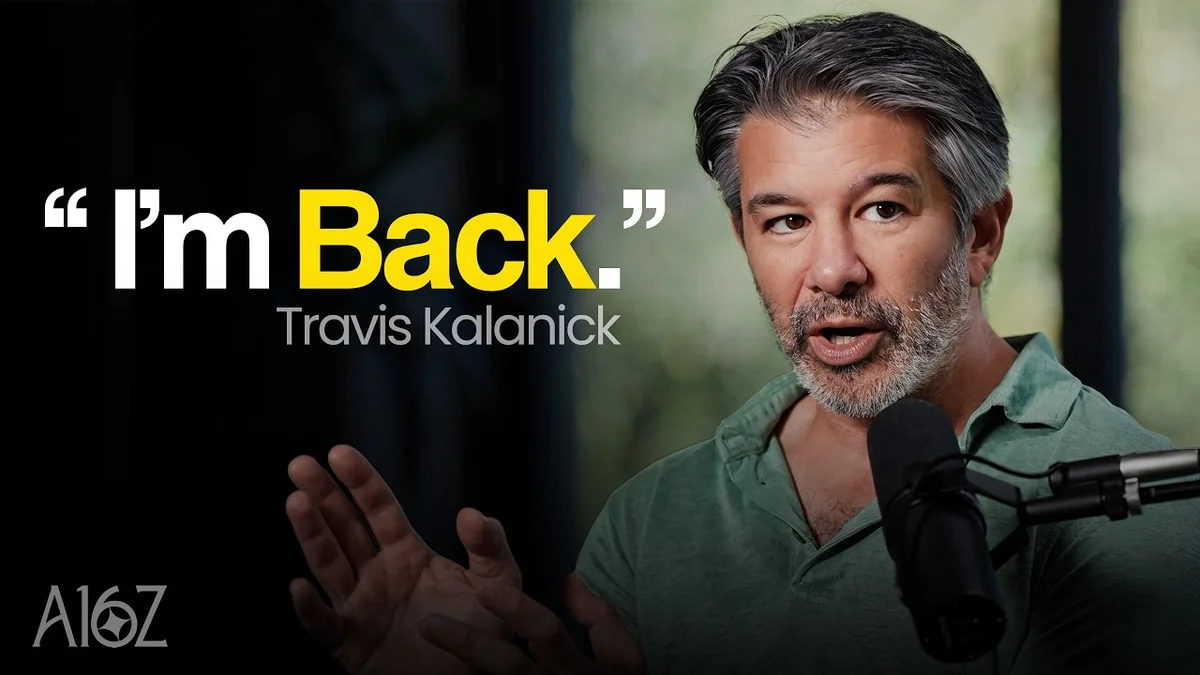
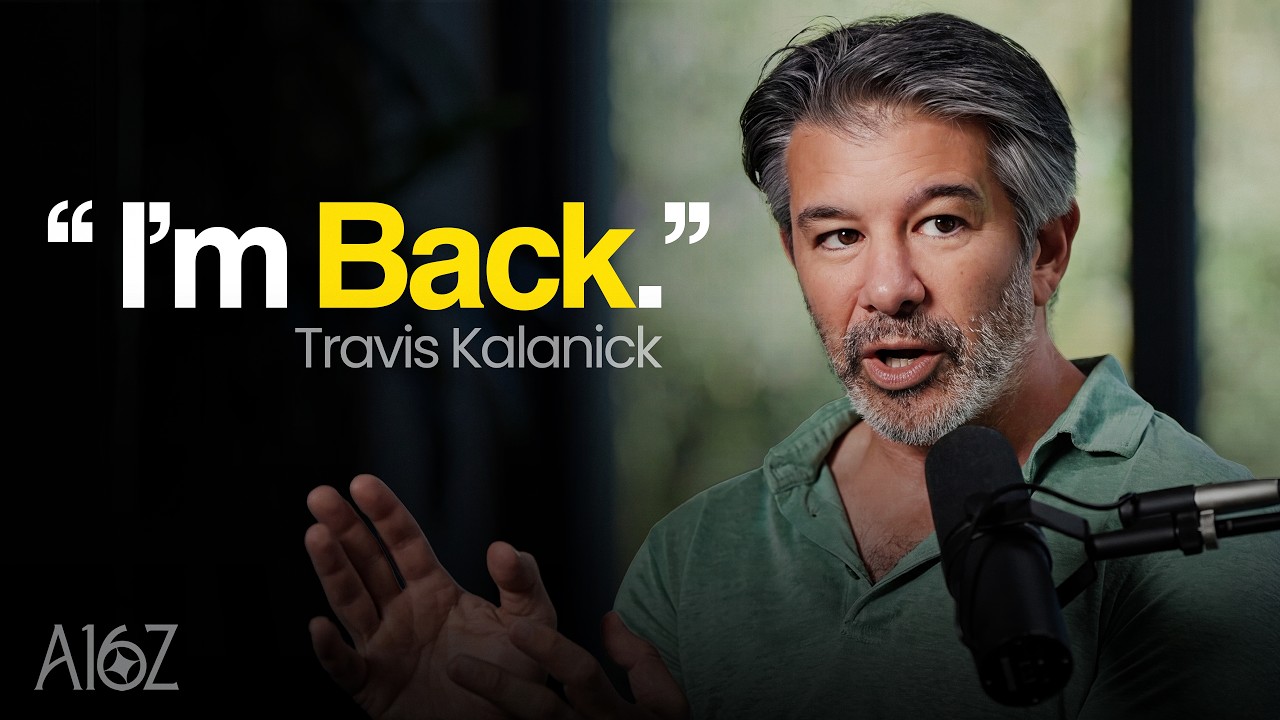
Travis Kalanick speaking in a podcast setting
a16z
Visual TL;DR
Uber's Tumultuous PeriodDriver
Kalanick describes 2017 as 'hell,' facing lawsuits and stepping down as CEO
From the articleIn a recent episode of 'The a16z Show,' co-founder of Uber, Travis Kalanick, sat down with a16z partners to discuss his entrepreneurial journey, including the tumultuous period at Uber and his subsequent ventures.
Entrepreneurial DriveContext
From the article 4 mentionsDespite the challenges, Kalanick emphasized the entrepreneurial drive to "build again," highlighting that the 'why' behind a startup is more crucial than its starting point.
Missed a16z PartnershipDriver
Kalanick reflects on a potential different trajectory with a16z on board
Kalanick's New VenturesEffect
post-Uber, Kalanick is in 'stealth mode' with new entrepreneurial projects
From the article 9+ mentionsIn a recent episode of 'The a16z Show,' co-founder of Uber, Travis Kalanick, sat down with a16z partners to discuss his entrepreneurial journey, including the tumultuous period at Uber and his subsequent ventures.
Desire to Keep PlayingContext
one of the rare individuals who made money and still wants to build
From the articleHe also noted that he is "one of the very rare guys who made as much money as he did and wanted to keep playing."
Future FocusOutcome
Kalanick continues his journey, driven by the power of entrepreneurship
Contents(4)

In a recent episode of 'The a16z Show,' co-founder of Uber, Travis Kalanick, sat down with a16z partners to discuss his entrepreneurial journey, including the tumultuous period at Uber and his subsequent ventures.

Travis Kalanick on Uber's Past and Future - a16z
Travis Kalanick on Uber's Past and Future, a16z

The Uber Rollercoaster: From Founding to Fallout

Kalanick began by acknowledging the difficult year Uber faced in 2017, marked by his own stepping down as CEO and numerous lawsuits. He posited that the company's trajectory might have been different if key figures like Ben or Marc had been on the board. He candidly described the period as being "in this hell," dealing with legal battles and the constant worry that accompanied them.

Despite the challenges, Kalanick emphasized the entrepreneurial drive to "build again," highlighting that the 'why' behind a startup is more crucial than its starting point. He also noted that he is "one of the very rare guys who made as much money as he did and wanted to keep playing."

Fundraising Tactics and a Missed Partnership

Recounting Uber's Series B fundraising in 2011, Kalanick detailed his aggressive "winner takes all auction" strategy. He described using an "uncapped anchor" approach to drive up valuations, a tactic he admitted was "a little crass" but effective in his early entrepreneurial mindset. He recounted a specific instance where a potential deal with Andreessen Horowitz (a16z) was set at a $375 million pre-money valuation, nearly reaching $400 million before Yuri Milner's potential involvement fell through.

However, a significant point of discussion was the near-partnership with Mark and Ben in 2011. Kalanick blamed Mark for the deal falling apart, while Ben took self-blame, but Kalanick ultimately stated, "it was all on us." He directly linked Uber's 2017 consequences to not having Mark on the board, referencing the common Silicon Valley adage, "If you know, you know."

Ben, in response, offered a different recollection of the fundraising event. He remembered Kalanick's impressive pitch but recalled giving the deal to his colleagues, Mark and John O. Ferrell, due to his own board seat commitments. Ben expressed regret over losing the deal, stating, "I regret I can't tell you how long because like so that was the beginning of my torture on on this thing. So I was like, 'Fuck, I know we should do that deal. We lost a deal.'"

The Return of the King: Post-Uber Ventures

The conversation then shifted to Kalanick's post-Uber endeavors, particularly CloudKitchens, now known as ATOMS. He explained how the idea emerged from observing "dark kitchens" in 2015 and his friend's vision for a multi-tenant approach to delivery-only kitchen locations. Kalanick saw the potential to "do to the kitchen what Uber did to the car," aiming for preparation and delivery efficiency that approaches grocery store costs.

He also touched upon the concept of "atoms-based computing," contrasting it with the digital world and emphasizing the complexity and innovation involved in digitizing manufacturing and real estate. Kalanick highlighted how his framework for this started at Uber, treating "atoms like bits."

Stealth Mode and the Power of Entrepreneurship

Kalanick discussed the decision to build ATOMS in stealth, a move driven by the desire to avoid the negative publicity that plagued Uber. This "super hard mode" approach meant recruiting and operating without public scrutiny. He noted that while stealth allowed the team to build without external noise, it also presented challenges in recruitment and customer acquisition.

The conversation also delved into the nature of great entrepreneurs, with Kalanick emphasizing that regardless of the idea, it's the entrepreneur's ability to execute that truly matters. He drew parallels to figures like Elon Musk, highlighting his unique drive in building companies like Tesla and SpaceX. Kalanick concluded by stating that his business is "to invest in that kind of very very special individual. And they're super rare."

© 2026 StartupHub.ai. All rights reserved. You may not republish this article in full without a license. Search engines and AI research tools may crawl and summarize for reference. Bulk reproduction or model training requires a license. See our terms.
Daniel Singer

Written by

Daniel Singer

Editor, StartupHub.ai

Daniel Singer is the editor of StartupHub.ai, a technology expert and thought leader on AI and its applications across sectors, from fintech and healthcare to developer tooling and consumer software. He writes and tests the tools covered here thoroughly and regularly, and built StartupHub.ai to give founders, operators and buyers a clearer read on what they are actually being sold.