

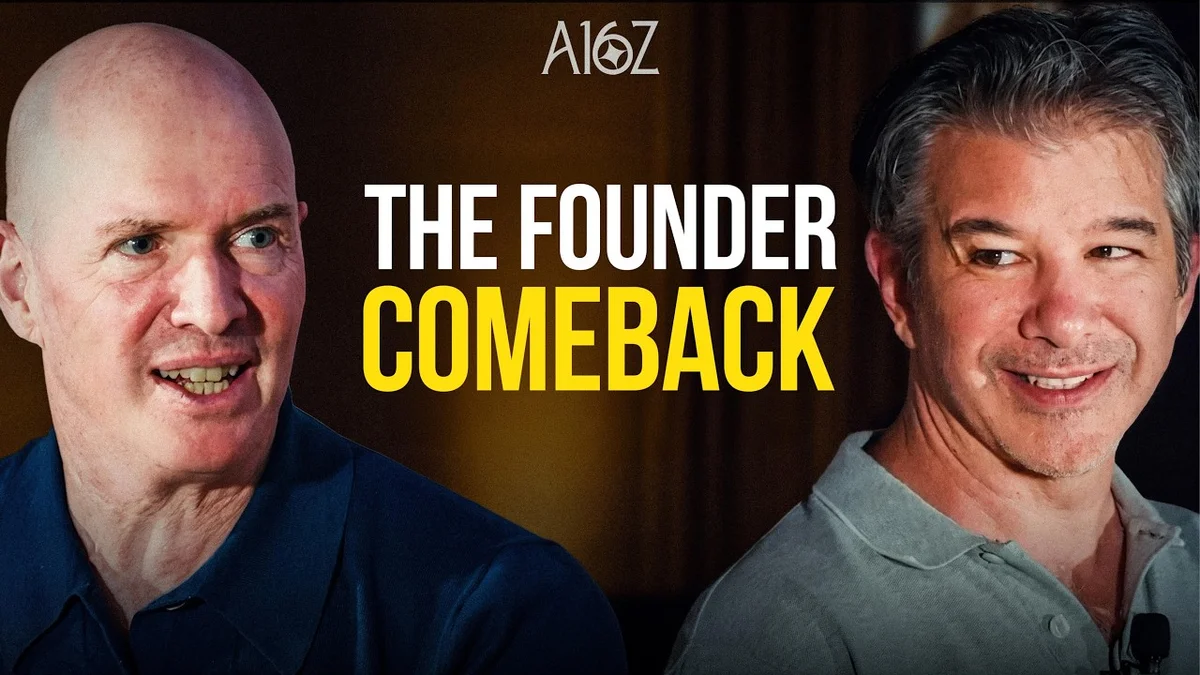
Travis Kalanick on "Industrial AI" and the Future

Travis Kalanick discusses his new ventures in "Industrial AI," focusing on automating physical industries like food, mining, and transport.

Travis Kalanick speaking on stage with a screen behind him showing industrial imagery
a16z
Visual TL;DR
Kalanick's New FocusCore
Travis Kalanick now automating physical industries with "Industrial AI"
From the article 8 mentionsFormer Uber CEO Travis Kalanick is back in the startup world, but this time with a focus on what he calls "Industrial AI." In a recent discussion, Kalanick outlined his vision for "Atoms" companies, which aim to automate operations across entire industrial sectors by integrating software, sensors, robotics, and artificial intelligence.
Digitizing Physical WorldContext
From the article 2 mentionsKalanick, who previously led Uber's efforts to digitize transportation, explained his core thesis of "digitizing the physical world, bits to atoms." He drew a parallel between the fundamental building blocks of the digital world, bits, and the physical world's atoms.
Atoms-Based ComputersCore
new ventures focused on manufacturing, real estate, and transport as atoms
From the article 2 mentionsHis new ventures are focused on these "atoms-based computers."
Automate Trillion-Dollar IndustriesEffect
aims to automate operations across entire industrial sectors like food and mining
From the articleKalanick emphasized that these are not niche markets; rather, they represent "multiple trillion-dollar industries that are going to get automated." While digital AI's impact on the enterprise is widely discussed, Kalanick highlighted the immense scale of these physical industries.
Integrate AI & RoboticsCore
integrating software, sensors, robotics, and artificial intelligence for automation
From the article 2 mentionsThis involves robotic production of food at an estimated cost of $6-8 per meal, coupled with robotic logistics and the necessary industrial real estate.
Resistance to ChangeDriver
acknowledges significant challenges and resistance to change in established industries
From the article 4 mentionsKalanick also addressed the inherent challenge of driving change, which he termed the "final boss", resistance to change.
Progress MachinesOutcome
lessons from Uber applied to building "progress machines" in physical sectors
From the article 2 mentionsHe contrasted this with his current approach, where he aims to build "progress machines" by discovering "valuable unknown truths." He emphasized the importance of resilience and the ability to keep getting back up after setbacks, a quality he believes is essential for successful entrepreneurship.

Contents(6)

Former Uber CEO Travis Kalanick is back in the startup world, but this time with a focus on what he calls "Industrial AI." In a recent discussion, Kalanick outlined his vision for "Atoms" companies, which aim to automate operations across entire industrial sectors by integrating software, sensors, robotics, and artificial intelligence.

StartupHub data

Companies working on this

Profiles of the companies named in this story, with funding and a one-liner from our database.

Uber
$82.0B
Global mobility platform offering ride-sharing, delivery, and logistics services.
Travis Kalanick on "Industrial AI" and the Future - a16z
Travis Kalanick on "Industrial AI" and the Future, from a16z

Digitizing the Physical World: Atoms vs. Bits

Kalanick, who previously led Uber's efforts to digitize transportation, explained his core thesis of "digitizing the physical world, bits to atoms." He drew a parallel between the fundamental building blocks of the digital world, bits, and the physical world's atoms. In the digital realm, he noted, CPUs manipulate bits, storage stores bits, and networks move bits. For the physical world, he posited analogous components: manufacturing manipulates atoms, real estate stores atoms, and transport moves atoms. His new ventures are focused on these "atoms-based computers."

Automation Across Trillion-Dollar Industries

Kalanick emphasized that these are not niche markets; rather, they represent "multiple trillion-dollar industries that are going to get automated." While digital AI's impact on the enterprise is widely discussed, Kalanick highlighted the immense scale of these physical industries. He sees a "new industrial age" emerging, reminiscent of the second industrial revolution, which will see the automation of everything from food production and delivery to mining and transport.

Atoms in Action: Food, Mining, and Transport

The discussion touched upon several key areas where Atoms is making inroads:

  • Food Computers: The goal is to make meal preparation and delivery so efficient that it approaches the cost of grocery shopping. This involves robotic production of food at an estimated cost of $6-8 per meal, coupled with robotic logistics and the necessary industrial real estate.
  • Atoms Mining: Focused on making mining operations more productive and safer, Kalanick highlighted the importance of automating the extraction and processing of raw materials. He drew a parallel between digitized storage in computing and land in mining, and between networks moving bits and transport systems moving rocks.
  • Atoms Transport: Described as "wheelbase for robots," this area focuses on creating specialized machines for industrial-scale tasks. Kalanick stressed that autonomy is a critical platform that must be developed in-house, opening up opportunities in various sectors beyond ride-sharing, such as food delivery, parcel delivery, trucking, and off-road autonomy.

The 'Final Boss': Resistance to Change

Kalanick also addressed the inherent challenge of driving change, which he termed the "final boss", resistance to change. He drew historical parallels to the second industrial revolution, citing figures like Henry Frick and the Edison vs. Westinghouse rivalry over direct current vs. alternating current. He noted that even when ideas are superior, overcoming established systems and human inertia requires significant effort. He drew a parallel to the Uber driver protests in Europe as an example of this resistance to disruptive change.

Lessons from Uber and the Future of "Progress Machines"

Reflecting on his time at Uber, Kalanick mentioned that while he was proud of the company's achievements, he had to operate with a certain level of caution due to the intense scrutiny. He contrasted this with his current approach, where he aims to build "progress machines" by discovering "valuable unknown truths." He emphasized the importance of resilience and the ability to keep getting back up after setbacks, a quality he believes is essential for successful entrepreneurship.

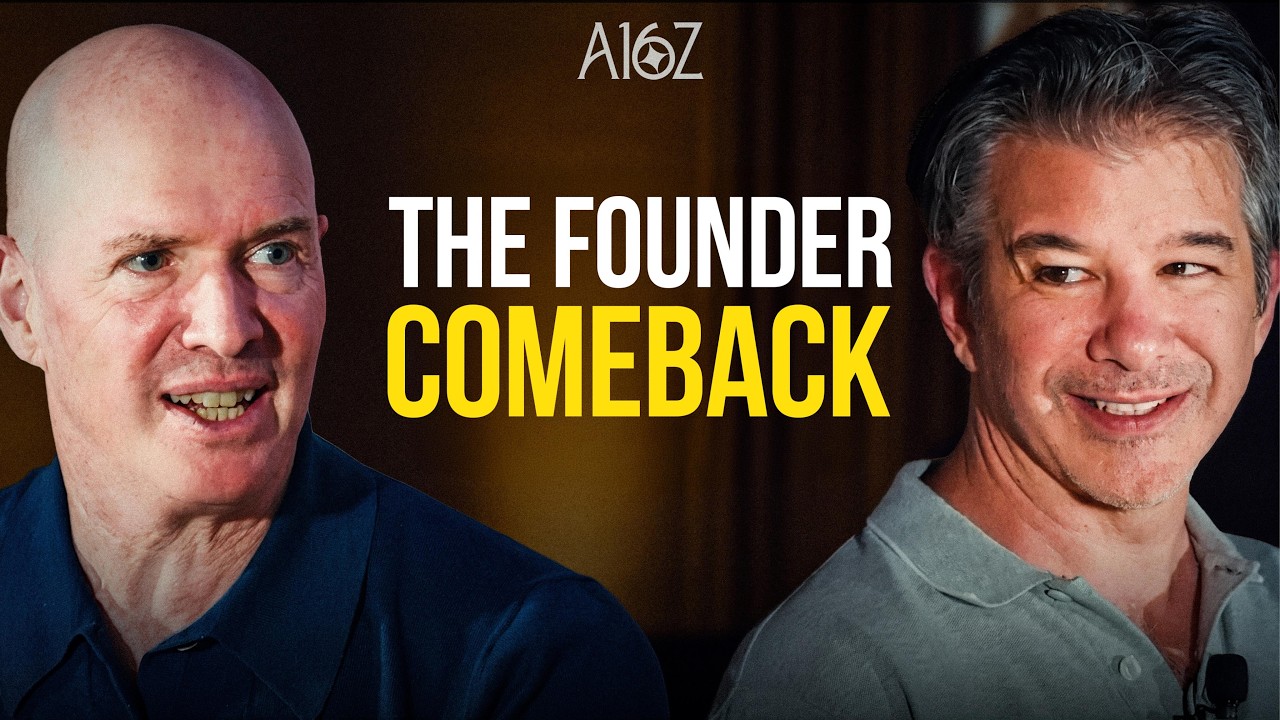
The conversation also touched upon the evolving media landscape and the importance of being able to communicate ideas freely, a change he attributes in part to figures like Elon Musk's acquisition of Twitter. Kalanick concluded by underscoring the need for entrepreneurs to be "steelied" and "hardcore," drawing inspiration from historical figures who drove monumental change.

© 2026 StartupHub.ai. All rights reserved. You may not republish this article in full without a license. Search engines and AI research tools may crawl and summarize for reference. Bulk reproduction or model training requires a license. See our terms.
Daniel Singer

Written by

Daniel Singer

Editor, StartupHub.ai

Daniel Singer is the editor of StartupHub.ai, a technology expert and thought leader on AI and its applications across sectors, from fintech and healthcare to developer tooling and consumer software. He writes and tests the tools covered here thoroughly and regularly, and built StartupHub.ai to give founders, operators and buyers a clearer read on what they are actually being sold.

More from Daniel Singer