

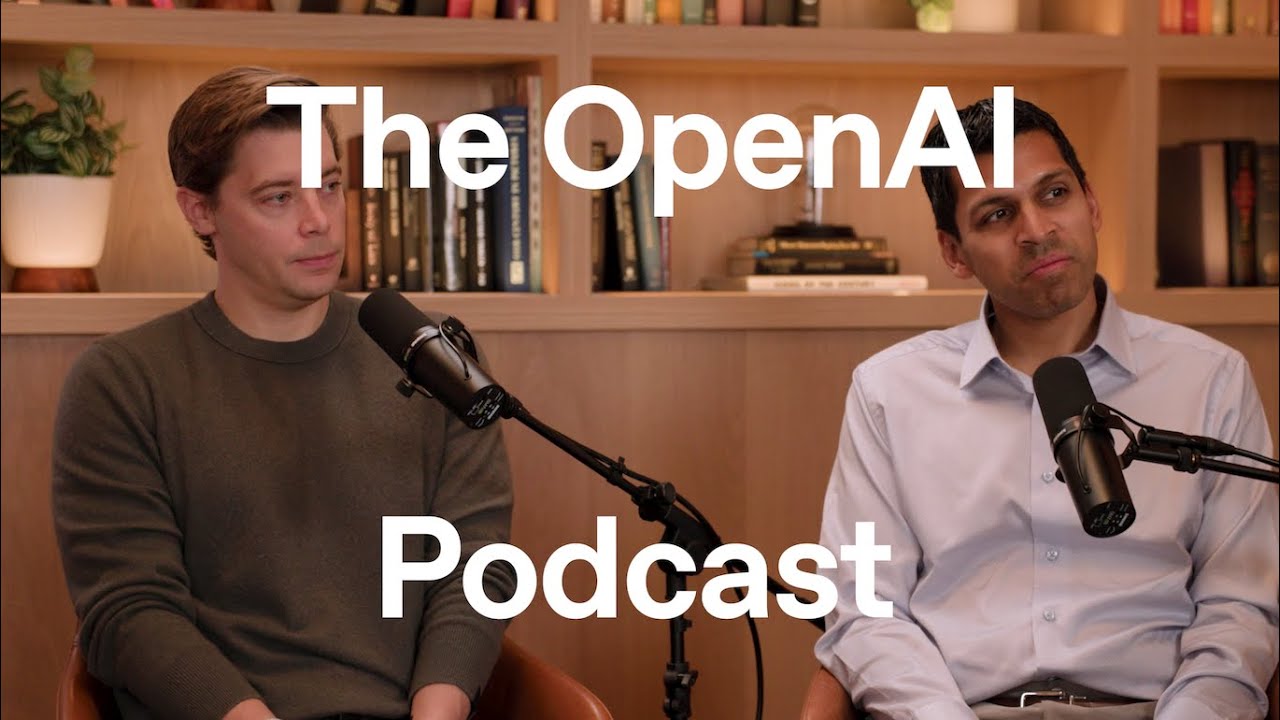
"The future has arrived more quickly than any of us could have imagined," remarked Ronnie Chatterji, OpenAI's Chief Economist, underscoring the rapid and profound shift brought about by artificial intelligence. On the OpenAI Podcast, Chatterji and Brad Lightcap, the company's Chief Operating Officer, joined Andrew Mayne to delve into AI's sweeping impact across jobs, growth, software, science, small business, and education. Their discussion illuminated how AI is not merely an incremental technological advancement but a fundamental reordering of economic and societal structures.
The genesis of ChatGPT in November 2022 marked a pivotal moment. Lightcap noted, "ChatGPT in November '22 was kind of the pivotal moment and it was the first time that we really saw AI used at scale." This product's conversational interface transformed perception, moving AI from a developer's playground to a widely accessible tool. This accessibility unleashed an unforeseen wave of adoption, shifting the focus from pure research to real-world deployment.
OpenAI views AI as an unparalleled enabler. As Chatterji put it, individuals now "have the world's smartest brain at their fingertips to solve hard problems." This powerful augmentation extends beyond the highly technical, empowering even those without deep subject matter sophistication. Lightcap emphasized this, stating, "The world is rate-limited by talent, by people." AI is fundamentally changing this, allowing small teams to achieve monumental leverage, accelerating progress in fields from software engineering to scientific discovery.
The implications for the global workforce are equally profound. As AI shoulders more cognitive burdens, traditional skill sets are being re-evaluated. Emotional intelligence, critical thinking, and the ability to formulate novel ideas are ascending in value. This paradigm shift necessitates a re-evaluation of educational systems, focusing on fostering uniquely human capabilities.
Chatterji's role as Chief Economist highlights OpenAI's commitment to understanding and navigating these broad economic shifts. His work involves developing forecasts and communicating AI's impacts globally, from established markets to emerging economies where AI could dramatically improve lives, such as in agriculture. This external focus underscores a proactive approach to the technology's widespread integration. The rapid adoption of AI is not without its anxieties, but OpenAI posits that the opportunities for enhanced productivity and expanded participation in the economy are immense. The ability to command powerful AI agents to tackle complex workflows, from sales funnels to drug discovery processes, promises a future where human ingenuity is amplified, not replaced.