

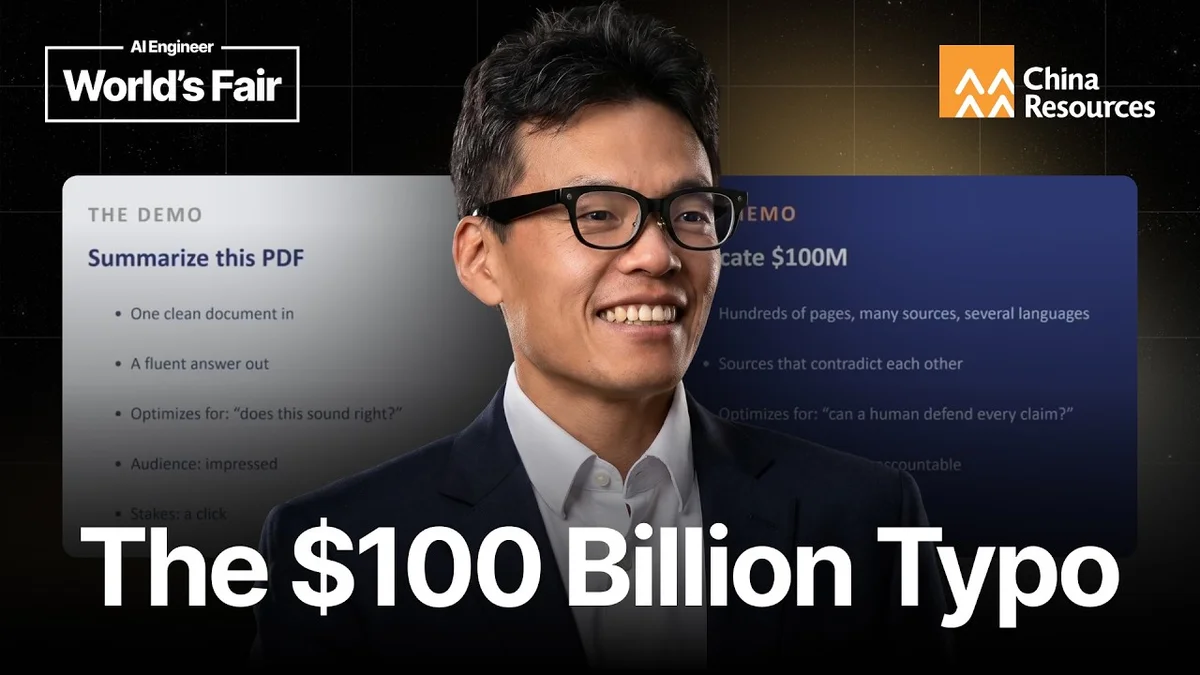
Shawn Chan: Build for the Memo, Not the Demo

Shawn Chan of China Resources Holdings advises companies to prioritize strategic rationale over flashy demonstrations when making significant investments.

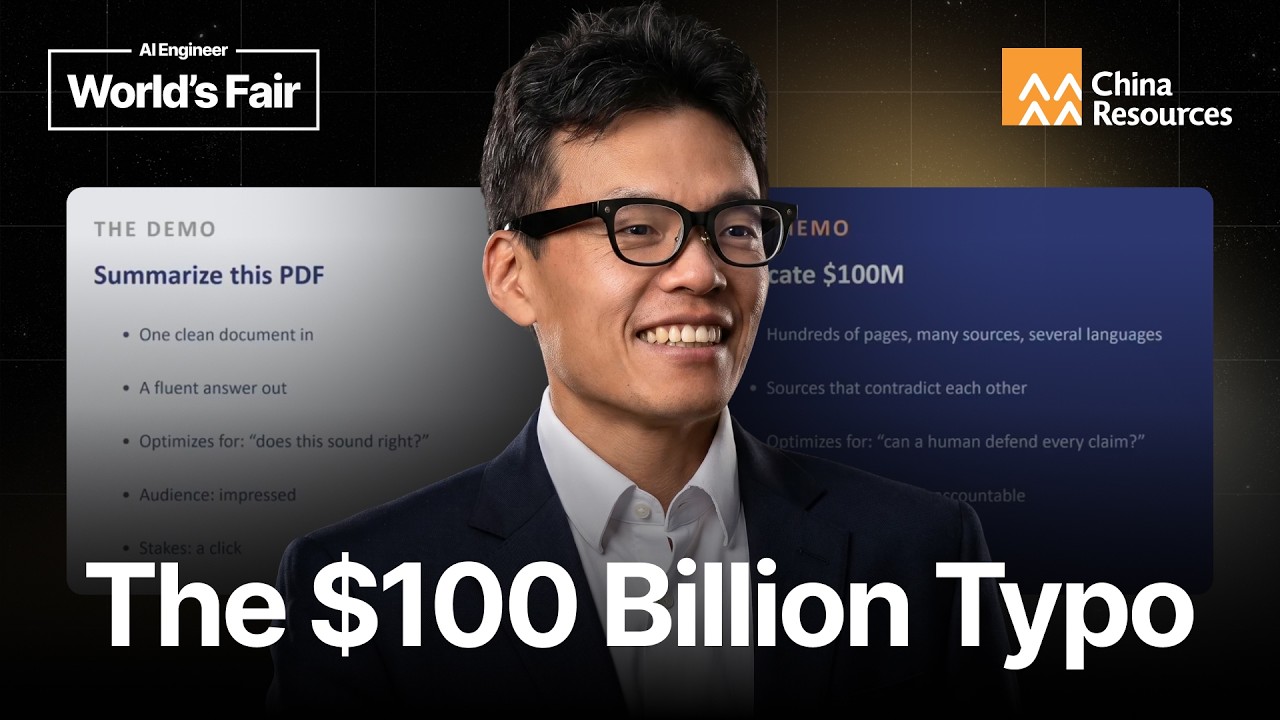
Shawn Chan speaking at a presentation about investment strategy.
AI Engineer
Visual TL;DR
Shawn ChanCore
From the article 7 mentionsShawn Chan, a seasoned decision-maker with fifteen years and approximately 200 investments under his belt at China Resources Holdings, offers a critical perspective on this process.
Corporate Investment DecisionsContext
From the article 5 mentionsIn the high-stakes world of corporate finance, where decisions can involve hundreds of millions of dollars, the guiding principle for allocating capital is paramount.
Focus on 'Demo'Driver
common tendency to prioritize visually impressive, short-term demonstrations
From the article 7 mentionsInstead of chasing the next impressive feature for a demo, teams should focus on building core functionalities that address fundamental user needs and market demands.
Build for the MemoContext
From the article 9 mentionsHis core thesis, articulated in a recent presentation, is to "Build for the Memo, Not the Demo." This philosophy challenges the common tendency to focus on visually impressive, short-term demonstrations when the true value lies in the underlying strategic rationale and long-term viability.
Strategic RationaleEffect
underlying strategic justification and long-term viability of investments
From the article 9+ mentionsThe principle of building for the memo means that every investment, every expenditure, should be rooted in a clear, well-articulated strategic rationale.
Investment ImplicationsEffect
guides how companies should approach significant capital allocation
From the article 8 mentionsChan’s advice has significant implications for both investors and company leadership.
Sustainable ValueOutcome
building lasting value over flashy, short-lived demonstrations
From the article 4 mentionsCompanies that prioritize the "demo" risk investing heavily in initiatives that may not deliver sustainable value or align with their core objectives.
Contents(5)

In the high-stakes world of corporate finance, where decisions can involve hundreds of millions of dollars, the guiding principle for allocating capital is paramount. Shawn Chan, a seasoned decision-maker with fifteen years and approximately 200 investments under his belt at China Resources Holdings, offers a critical perspective on this process. His core thesis, articulated in a recent presentation, is to "Build for the Memo, Not the Demo." This philosophy challenges the common tendency to focus on visually impressive, short-term demonstrations when the true value lies in the underlying strategic rationale and long-term viability.

Shawn Chan: Build for the Memo, Not the Demo - AI Engineer
Shawn Chan: Build for the Memo, Not the Demo, AI Engineer

Who Is Shawn Chan

Shawn Chan is a key figure in corporate investment and decision-making at China Resources Holdings. With a career spanning fifteen years, he has been instrumental in evaluating and approving substantial financial commitments, reportedly around 200 significant investment decisions. His role places him at the nexus of strategic planning and financial execution, requiring a deep understanding of a company's objectives and its ability to achieve them through investment. Chan’s experience offers a practical, battle-tested view on what truly drives successful long-term corporate growth and value creation.

The "Memo" Versus the "Demo"

Chan’s central argument revolves around the distinction between the "memo" and the "demo." The "memo" represents the foundational business case, the strategic justification, and the long-term plan that underpins an investment decision. It details market analysis, financial projections, operational feasibility, and alignment with overarching company goals. This is the document that withstands scrutiny and forms the basis for significant, sustained commitment.

Conversely, the "demo" refers to a superficial, often visually appealing, presentation designed to impress in the short term. While demonstrations can be useful for illustrating a concept or a product’s immediate functionality, Chan argues they are insufficient as the primary basis for major financial commitments. A slick demo might mask underlying weaknesses in the business model, scalability challenges, or a lack of strategic fit. Companies that prioritize the "demo" risk investing heavily in initiatives that may not deliver sustainable value or align with their core objectives.

Prioritizing Strategic Rationale

The principle of building for the memo means that every investment, every expenditure, should be rooted in a clear, well-articulated strategic rationale. This involves rigorous due diligence, a deep understanding of the market, and a realistic assessment of the company's capabilities. When a company is contemplating spending $100 million, the decision-makers must be convinced by the comprehensive business case presented in the memo, not just by a polished presentation of a product's immediate features.

This approach encourages a culture of strategic thinking and long-term planning. It pushes teams to thoroughly vet their ideas, anticipate challenges, and build robust foundations. For startups and established companies alike, this means focusing on the substance of their proposals: how they will solve a real problem, how they will capture market share sustainably, and how they will generate long-term returns. StartupHub.ai data indicates that companies with strong strategic alignment and clear business cases, like MEMO which raised $30M in 2024, often demonstrate greater resilience and potential for growth compared to those solely focused on immediate product showcases.

Implications for Investment and Development

Chan’s advice has significant implications for both investors and company leadership. Investors, when evaluating opportunities, should look beyond the immediate appeal of a demo and delve into the strategic memo. They need to understand the "why" behind the ask and the "how" of the proposed execution. For company leaders, it means fostering an environment where thorough strategic planning and data-driven decision-making are valued above all else.

This philosophy also impacts product development. Instead of chasing the next impressive feature for a demo, teams should focus on building core functionalities that address fundamental user needs and market demands. The "memo" should guide the development roadmap, ensuring that every feature contributes to the overarching strategic objectives. This disciplined approach helps prevent wasted resources on initiatives that may look good on stage but fail to deliver lasting business impact.

Building Sustainable Value

Ultimately, building for the memo is about building sustainable value. It’s about making decisions that are sound not just for the next quarter, but for the next decade. It requires discipline, a commitment to rigorous analysis, and a clear vision of the future. Shawn Chan's perspective serves as a vital reminder that in the complex world of corporate finance and strategic investment, substance and long-term strategy will always triumph over superficial presentation.

© 2026 StartupHub.ai. All rights reserved. You may not republish this article in full without a license. Search engines and AI research tools may crawl and summarize for reference. Bulk reproduction or model training requires a license. See our terms.
Daniel Singer

Written by

Daniel Singer

Editor, StartupHub.ai

Daniel Singer is the editor of StartupHub.ai, a technology expert and thought leader on AI and its applications across sectors, from fintech and healthcare to developer tooling and consumer software. He writes and tests the tools covered here thoroughly and regularly, and built StartupHub.ai to give founders, operators and buyers a clearer read on what they are actually being sold.