


Semiconductor Multiples Are Unremarkable

Semiconductor stocks are trading at average multiples despite record AI-driven growth, reflecting investor concerns about industry cyclicality and future supply gluts.

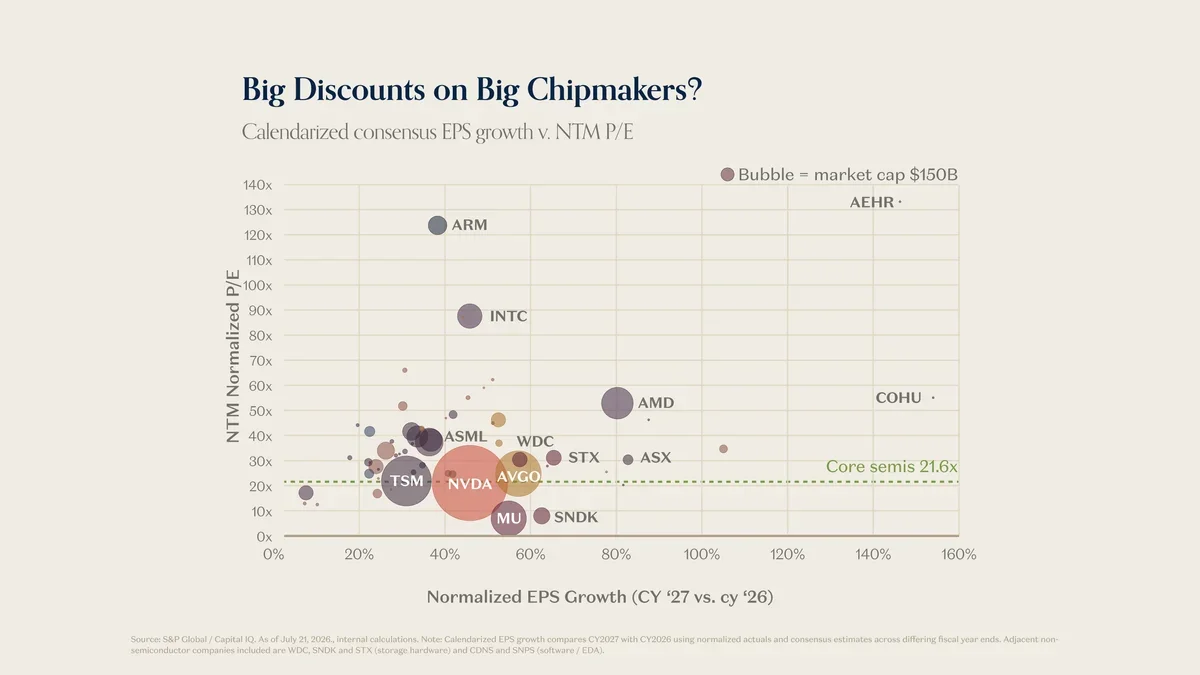
A chart showing semiconductor stock multiples compared to historical averages and the healthcare sector.
Semiconductor multiples are near 10-year averages, despite AI-driven growth.· a16z Blog
Visual TL;DR
AI BoomDriver
unprecedented demand for computational infrastructure, driving historic growth for chipmakers
From the article 2 mentionsThe semiconductor sector, propelled by the AI boom, is experiencing unprecedented demand.
Cyclical FearsDriver
investor concerns about industry cyclicality and future supply gluts persist
From the articleInvestors anticipate a downturn following the current peak, a common pattern in cyclical sectors.
Record GrowthEffect
nearly half of S&P 500's expected earnings growth from semiconductor sector
From the article 5 mentionsHyperscalers are investing heavily in computational infrastructure, driving historic growth and pricing power for chipmakers.
Hyperscaler InvestmentCore
heavy investment in computational infrastructure fuels chip demand and pricing power
From the articleHyperscalers are investing heavily in computational infrastructure, driving historic growth and pricing power for chipmakers.
Average MultiplesOutcome
forward P/E ratios around 10-year average, comparable to healthcare sector
From the article 4 mentionsHowever, this stellar performance hasn't translated into significantly elevated investor multiples.
Submerged ValuationsOutcome
major players trading at or below industry average despite 20-60% earnings growth
From the articleThis valuation disconnect is detailed in analysis from a16z Blog.
Micron ExampleContext
memory chip manufacturer projected for nearly 60% year-over-year earnings growth
From the article 2 mentionsMicron, a key memory chip manufacturer, exemplifies this trend.

The semiconductor sector, propelled by the AI boom, is experiencing unprecedented demand. Hyperscalers are investing heavily in computational infrastructure, driving historic growth and pricing power for chipmakers. This surge accounts for nearly half of the S&P 500's expected earnings growth.

However, this stellar performance hasn't translated into significantly elevated investor multiples. Semiconductor sector forward P/E ratios are hovering around their 10-year average, approximately 21x, a figure comparable to the traditionally steady healthcare sector. This valuation disconnect is detailed in analysis from a16z Blog.

Submerged Valuations Amidst Growth

Beneath the aggregate numbers, the situation is even more striking. Major semiconductor players are trading at or below the industry average, even with consensus analyst expectations for earnings growth ranging from 20% to 60%. Micron, a key memory chip manufacturer, exemplifies this trend. Analysts project nearly 60% year-over-year earnings growth for the company, yet it traded at a mere 6x earnings as of July 21, the lowest among its peers.

This is particularly puzzling given the widely acknowledged bottleneck in memory supply. The disconnect suggests investor skepticism about the sustainability of the current boom.

Cyclical Fears Overshadow AI Hype

The primary driver of this caution is the semiconductor industry's inherent cyclicality. Investors anticipate a downturn following the current peak, a common pattern in cyclical sectors. This historical context often leads companies to avoid aggressive capacity expansion, fearing that new supply will come online just as demand wanes, creating a glut.

Memory, specifically, faces additional headwinds. While current pricing power is exceptionally strong, with Micron's gross margins tripling their five-year average, the market questions how long this can last. Customers are actively pursuing memory efficiency, further clouding the long-term demand outlook.

Despite analyst optimism for sustained growth, the market remains unconvinced about the duration of the current semiconductor upswing.

© 2026 StartupHub.ai. All rights reserved. You may not republish this article in full without a license. Search engines and AI research tools may crawl and summarize for reference. Bulk reproduction or model training requires a license. See our terms.
Daniel Singer

Written by

Daniel Singer

Editor, StartupHub.ai

Daniel Singer is the editor of StartupHub.ai, a technology expert and thought leader on AI and its applications across sectors, from fintech and healthcare to developer tooling and consumer software. He writes and tests the tools covered here thoroughly and regularly, and built StartupHub.ai to give founders, operators and buyers a clearer read on what they are actually being sold.

More from Daniel Singer