

Robots.txt Evolves for AI Crawlers

Robots.txt is now essential for controlling AI crawlers like GPTBot, impacting data access and AI model training.

9 min read
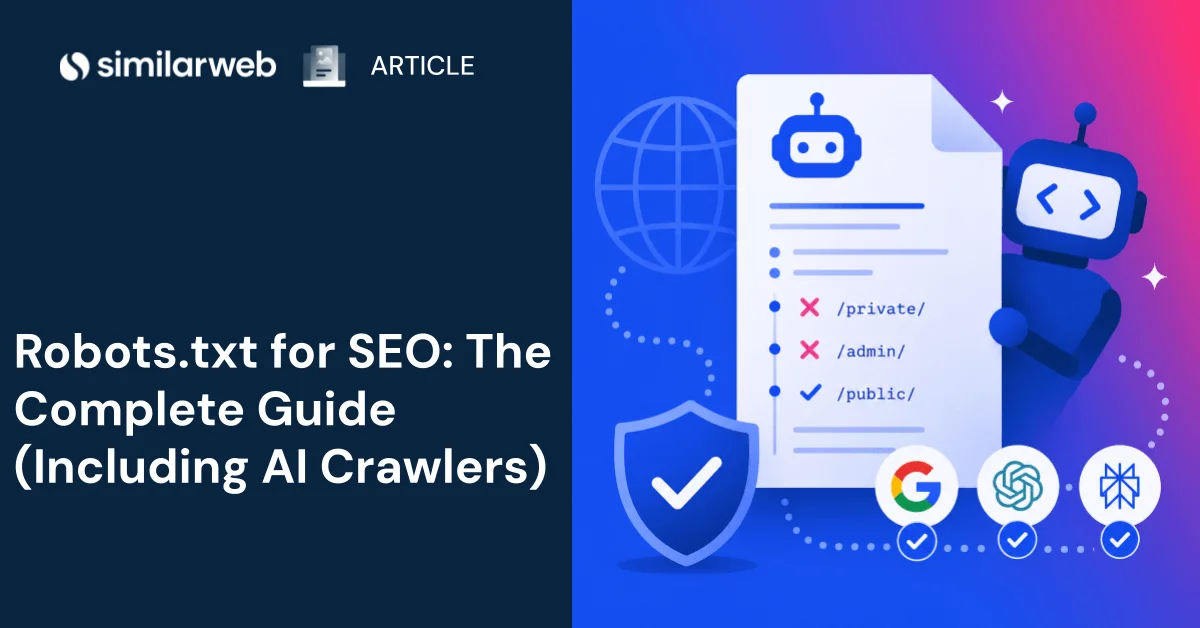
Illustration of a robots.txt file being modified to block AI bots.
Similarweb

Visual TL;DR. Rise of AI Crawlers drives Robots.txt Evolves. Robots.txt Evolves enables Control AI Access. Control AI Access influences Impacts AI Training. Robots.txt Evolves becomes Business Decision. Traditional Use evolves from Robots.txt Evolves. Implement Directives how to Control AI Access. Control AI Access ensures Data Access Control.

  1. Rise of AI Crawlers: new class of AI crawlers like GPTBot and ClaudeBot emerged since 2023
  2. Robots.txt Evolves: no longer just for traditional search engine bots like Googlebot
  3. Control AI Access: essential for dictating which pages AI models can crawl and avoid
  4. Impacts AI Training: profound implications for how AI models are trained using web content
  5. Business Decision: transforms robots.txt from SEO tool into crucial content control decision
  6. Traditional Use: historically managed crawl budgets and kept sensitive areas off search results
  7. Implement Directives: placed in website's root directory, instructs bots which pages to crawl
  8. Data Access Control: crucial for managing what data AI crawlers can access from websites
Visual TL;DR
Visual TL;DR, startuphub.ai Rise of AI Crawlers drives Robots.txt Evolves. Robots.txt Evolves enables Control AI Access. Control AI Access influences Impacts AI Training. Robots.txt Evolves becomes Business Decision drives enables influences becomes Rise of AI Crawlers Robots.txt Evolves Control AI Access Impacts AI Training Business Decision From startuphub.ai · The publishers behind this format
Visual TL;DR, startuphub.ai Rise of AI Crawlers drives Robots.txt Evolves. Robots.txt Evolves enables Control AI Access. Control AI Access influences Impacts AI Training. Robots.txt Evolves becomes Business Decision drives enables influences becomes Rise of AICrawlers Robots.txtEvolves Control AI Access Impacts AITraining Business Decision From startuphub.ai · The publishers behind this format
Visual TL;DR, startuphub.ai Rise of AI Crawlers drives Robots.txt Evolves. Robots.txt Evolves enables Control AI Access. Control AI Access influences Impacts AI Training. Robots.txt Evolves becomes Business Decision drives enables influences becomes Rise of AI Crawlers new class of AI crawlers like GPTBot andClaudeBot emerged since 2023 Robots.txt Evolves no longer just for traditional searchengine bots like Googlebot Control AI Access essential for dictating which pages AImodels can crawl and avoid Impacts AI Training profound implications for how AI modelsare trained using web content Business Decision transforms robots.txt from SEO tool intocrucial content control decision From startuphub.ai · The publishers behind this format
Visual TL;DR, startuphub.ai Rise of AI Crawlers drives Robots.txt Evolves. Robots.txt Evolves enables Control AI Access. Control AI Access influences Impacts AI Training. Robots.txt Evolves becomes Business Decision drives enables influences becomes Rise of AICrawlers new class of AIcrawlers likeGPTBot and… Robots.txtEvolves no longer just fortraditional searchengine bots like… Control AI Access essential fordictating whichpages AI models can… Impacts AITraining profoundimplications forhow AI models are… Business Decision transformsrobots.txt from SEOtool into crucial… From startuphub.ai · The publishers behind this format
Visual TL;DR, startuphub.ai Rise of AI Crawlers drives Robots.txt Evolves. Robots.txt Evolves enables Control AI Access. Control AI Access influences Impacts AI Training. Robots.txt Evolves becomes Business Decision. Traditional Use evolves from Robots.txt Evolves. Implement Directives how to Control AI Access. Control AI Access ensures Data Access Control drives enables influences becomes evolves from how to ensures Rise of AI Crawlers new class of AI crawlers like GPTBot andClaudeBot emerged since 2023 Robots.txt Evolves no longer just for traditional searchengine bots like Googlebot Control AI Access essential for dictating which pages AImodels can crawl and avoid Impacts AI Training profound implications for how AI modelsare trained using web content Business Decision transforms robots.txt from SEO tool intocrucial content control decision Traditional Use historically managed crawl budgets andkept sensitive areas off search results Implement Directives placed in website's root directory,instructs bots which pages to crawl Data Access Control crucial for managing what data AI crawlerscan access from websites From startuphub.ai · The publishers behind this format
Visual TL;DR, startuphub.ai Rise of AI Crawlers drives Robots.txt Evolves. Robots.txt Evolves enables Control AI Access. Control AI Access influences Impacts AI Training. Robots.txt Evolves becomes Business Decision. Traditional Use evolves from Robots.txt Evolves. Implement Directives how to Control AI Access. Control AI Access ensures Data Access Control drives enables influences becomes evolves from how to ensures Rise of AICrawlers new class of AIcrawlers likeGPTBot and… Robots.txtEvolves no longer just fortraditional searchengine bots like… Control AI Access essential fordictating whichpages AI models can… Impacts AITraining profoundimplications forhow AI models are… Business Decision transformsrobots.txt from SEOtool into crucial… Traditional Use historicallymanaged crawlbudgets and kept… ImplementDirectives placed in website'sroot directory,instructs bots… Data AccessControl crucial formanaging what dataAI crawlers can… From startuphub.ai · The publishers behind this format

The humble robots.txt file, a small text document dictating search engine access to a website, is no longer just for traditional bots. Since 2023, a new class of AI crawlers, including OpenAI's GPTBot and Anthropic's ClaudeBot, have entered the digital arena, and they too adhere to these directives. This shift transforms robots.txt from a simple SEO tool into a crucial business decision point for content control, as detailed by Similarweb. The implications for how AI models are trained and how web content is accessed are profound.

For decades, robots.txt has served as the gatekeeper for search engine optimization (SEO). Placed in a website's root directory, it instructs bots which pages to crawl and which to avoid. This is vital for managing crawl budgets, preventing duplicate content issues, and keeping sensitive areas like admin panels off search results pages. Without a robots.txt file, search engines like Googlebot will attempt to crawl everything, potentially wasting resources on low-value pages.

The Rise of AI Crawlers

The landscape shifted significantly in 2023 with the advent of AI-powered crawlers. Companies like OpenAI, Anthropic, and Perplexity have deployed bots specifically designed to gather data for training their large language models. These include GPTBot, ClaudeBot, PerplexityBot, and Google's own Google-Extended, which controls Gemini training data. These AI crawlers, alongside existing search bots, now navigate the web, making decisions based on robots.txt instructions.

This presents a new challenge. Some organizations are actively blocking these AI crawlers to protect proprietary data used for training. Others, conversely, want to ensure they aren't accidentally blocking legitimate AI research bots. StartupHub.ai data shows that while Google has a strong score of 74/100 in this evolving space, competitors like Apple (83/100) and Amazon (81/100) are also major players in web crawling and data management.

Understanding Robots.txt Directives

The core of robots.txt lies in its directives. The `User-agent` field specifies which bot the rules apply to, with `` acting as a wildcard for all bots. `Disallow:` tells bots which paths or files to avoid, while `Allow:` can override a `Disallow` for specific subdirectories. For instance, a site might disallow an entire `/private/` directory but allow access to `/private/press-releases/`. Comments, denoted by `#`, offer human-readable explanations.

It's important to note that robots.txt directives are advisory, not absolute enforcement. A page disallowed in robots.txt might still appear in search results if linked to externally. To guarantee a page is not indexed, webmasters must use a `noindex` meta tag within the HTML `` or an `X-Robots-Tag` HTTP header.

Implementing and Testing

Creating a robots.txt file is straightforward. It's a plain text file uploaded to the website's root directory. For WordPress users, SEO plugins like Yoast or AIOSEO offer built-in editors. Testing is crucial. Google Search Console provides a robots.txt tester, and the URL Inspection tool can verify if a specific page is being blocked.

The syntax supports wildcards like `` (matching any sequence of characters) and `$` (anchoring a rule to the end of a URL). This allows for granular control, such as blocking all PDF files (`/.pdf$`) or query parameters (`/search?`).

Why This Matters for Startups and Enterprises

The integration of AI crawlers into the robots.txt framework has significant implications. For AI development companies, understanding which sites are open to crawling is vital for data acquisition. For businesses, it's about data sovereignty and brand protection. Accidentally blocking AI crawlers could mean missing out on potential visibility in AI-powered search interfaces. Conversely, allowing unrestricted crawling could lead to proprietary information being used to train competitor AI models or appear in AI-generated summaries without consent.

This evolving dynamic underscores the need for proactive website management. Businesses must consider their data strategy in relation to AI development. The ability to control AI bot access via robots.txt is a powerful, albeit simple, tool in this ongoing data governance challenge. Many WordPress SEO plugins now offer simple toggles to block AI bots, but these often lack nuance, blocking all AI crawlers indiscriminately. A more tailored approach, specifying user agents like GPTBot or ClaudeBot, offers greater control. The choice between blocking AI training bots and allowing content retrieval bots for AI-powered search features is a complex one, requiring careful consideration of business goals and data privacy.

The management of AI crawlers is becoming as critical as traditional SEO. As AI continues to reshape how information is accessed and processed, the control mechanisms like robots.txt will play an increasingly important role.

© 2026 StartupHub.ai. All rights reserved. Do not enter, scrape, copy, reproduce, or republish this article in whole or in part. Use as input to AI training, fine-tuning, retrieval-augmented generation, or any machine-learning system is prohibited without written license. Substantially-similar derivative works will be pursued to the fullest extent of applicable copyright, database, and computer-misuse laws. See our terms.