

OpenAI's Stephanie Anani on AI Multiplying Workforce Impact

OpenAI's Stephanie Anani explains how AI, like GPT-5.5, multiplies workforce impact by automating tasks and enhancing financial analysis.

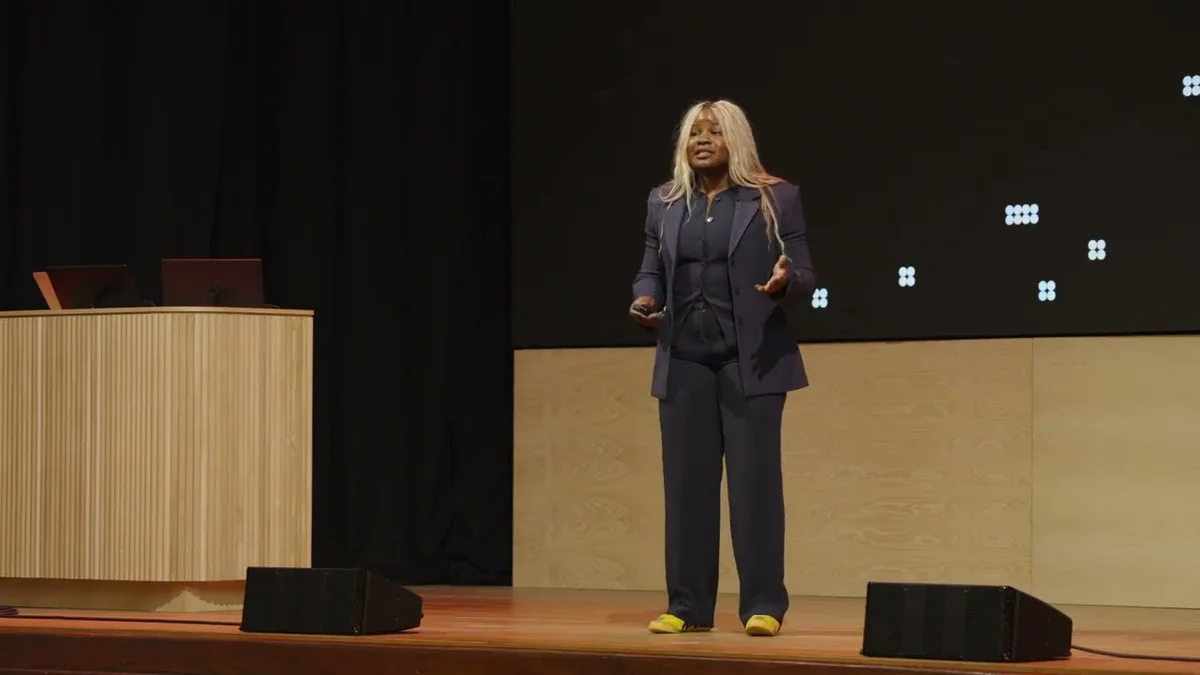
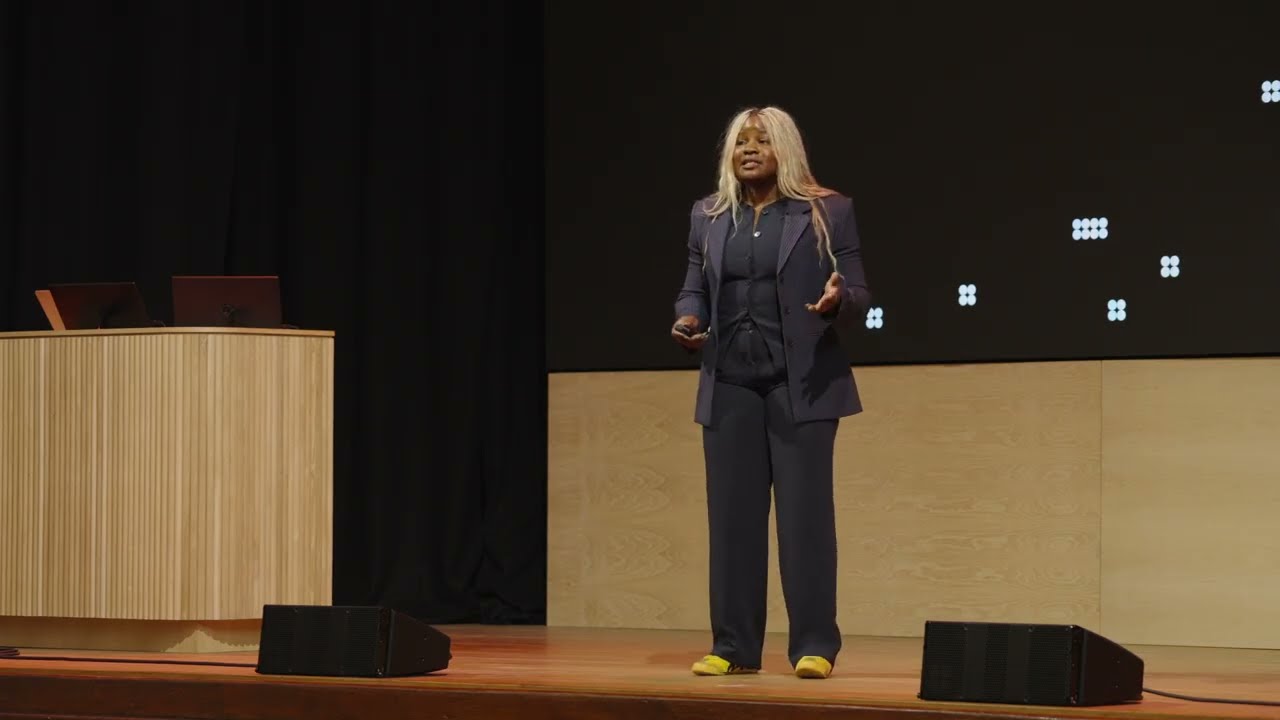
Stephanie Anani speaking on stage with 'Multiply workforce impact' title slide.
OpenAI Youtube
Visual TL;DR
AI Multiplying Workforce ImpactContext
Stephanie Anani explains how AI multiplies workforce impact
From the article 2 mentionsStephanie Anani, a Solutions Engineer at OpenAI, recently discussed how artificial intelligence can multiply workforce impact, particularly within the financial sector.
Automating Tedious WorkDriver
AI automates repetitive tasks freeing up human employees
Empowering EmployeesEffect
Enables employees to perform new functions previously unfeasible
From the article 3 mentionsHer presentation highlighted how AI tools, such as those developed by OpenAI, can automate repetitive tasks, freeing up human employees to focus on more strategic and value-driving activities.
OpenAI Models (GPT-5.5)Core
Leveraging advanced AI models like GPT-5.5 for enhanced capabilities
From the article 2 mentionsAnani also touched upon the advancements in OpenAI's models, referencing benchmarks like the 'OpenAI Banker Bench.' This demonstrated the increasing performance of models like GPT-5, GPT-5.2, GPT-5.4, and GPT-5.5, with GPT-5.5 achieving a score of 0.885, indicating its state-of-the-art capabilities in financial tasks compared to other models, including 'Opus 4.6'.
Strategic PartnerOutcome
AI becomes a strategic partner for businesses and their workforce
From the article 2 mentionsInstead, it augments human capabilities, freeing up valuable time for strategic decision-making and critical analysis.
Financial Services Case StudyEffect
AI enhances financial analysis and operations within financial services
From the articleThe presentation then transitioned to a practical demonstration using financial services.
Contents(6)

Stephanie Anani, a Solutions Engineer at OpenAI, recently discussed how artificial intelligence can multiply workforce impact, particularly within the financial sector. Her presentation highlighted how AI tools, such as those developed by OpenAI, can automate repetitive tasks, freeing up human employees to focus on more strategic and value-driving activities.

Stephanie Anani: Empowering the Workforce with AI

Anani, who works closely with OpenAI's large enterprise clients, shared insights into how AI is transforming daily operations. She emphasized that AI's true value lies not just in speeding up existing tasks but in enabling employees to perform entirely new functions that were previously unfeasible due to time or complexity constraints.

The full discussion can be found on OpenAI Youtube's YouTube channel.

Multiplying workforce impact: Stephanie Anani, Solutions Engineer, OpenAI - OpenAI Youtube
Multiplying workforce impact: Stephanie Anani, Solutions Engineer, OpenAI, from OpenAI Youtube

AI's Role in Automating Tedious Work

The core of Anani's message revolved around the concept of AI as a force multiplier. She illustrated this by showing common workplace tasks that are time-consuming and repetitive, such as searching policies, reconciling data, formatting reports, and running compliance checks. AI, she explained, can automate these processes, allowing individuals to dedicate more time to critical thinking and decision-making.

A survey Anani cited revealed that 75% of ChatGPT Enterprise users reported that AI helped them accomplish tasks they couldn't do before. This statistic underscores AI's potential to expand capabilities beyond mere efficiency gains.

Enhancing Workforce Impact with Key Differentiators

Anani outlined five key dimensions through which AI multiplies employee impact: more context, deep research, shareable skills, intelligence everywhere, and governance and control. These elements collectively contribute to a more informed and capable workforce.

AI in Financial Services: A Case Study

The presentation then transitioned to a practical demonstration using financial services. Anani showcased how OpenAI's models can be integrated into workflows, specifically highlighting the ability to perform deep research and analysis directly within spreadsheets. She demonstrated how a prompt could be used to generate an investment dossier for a company, leveraging various data sources and then creating a three-statement financial model.

The process involved using a 'Blossom Bank' skill to generate a research report and a valuation workbook. Anani highlighted that this AI-driven approach significantly reduces the time required for such analyses, transforming hours or days of work into mere minutes. The output included not only raw data but also insights into key decision points and valuation outcomes.

The Evolution of OpenAI Models

Anani also touched upon the advancements in OpenAI's models, referencing benchmarks like the 'OpenAI Banker Bench.' This demonstrated the increasing performance of models like GPT-5, GPT-5.2, GPT-5.4, and GPT-5.5, with GPT-5.5 achieving a score of 0.885, indicating its state-of-the-art capabilities in financial tasks compared to other models, including 'Opus 4.6'.

The ability to embed AI directly into tools like Excel, as shown, allows users to interact with their data in natural language. This integration streamlines complex processes such as financial modeling, scenario analysis, and the creation of investment committee presentations.

Conclusion: AI as a Strategic Partner

Anani concluded by emphasizing that while AI automates tasks, it does not replace the need for human judgment. Instead, it augments human capabilities, freeing up valuable time for strategic decision-making and critical analysis. By integrating AI into core business processes, organizations can multiply their workforce's impact, driving greater value and achieving objectives more efficiently.

© 2026 StartupHub.ai. All rights reserved. You may not republish this article in full without a license. Search engines and AI research tools may crawl and summarize for reference. Bulk reproduction or model training requires a license. See our terms.
Daniel Singer

Written by

Daniel Singer

Editor, StartupHub.ai

Daniel Singer is the editor of StartupHub.ai, a technology expert and thought leader on AI and its applications across sectors, from fintech and healthcare to developer tooling and consumer software. He writes and tests the tools covered here thoroughly and regularly, and built StartupHub.ai to give founders, operators and buyers a clearer read on what they are actually being sold.