

OpenAI's DALL-E 3 Enhances Image Generation with New Aspect Ratios

OpenAI's DALL-E 3 now offers greater control over image dimensions, supporting various aspect ratios and higher resolutions, including 360-degree panoramas.

3 min read
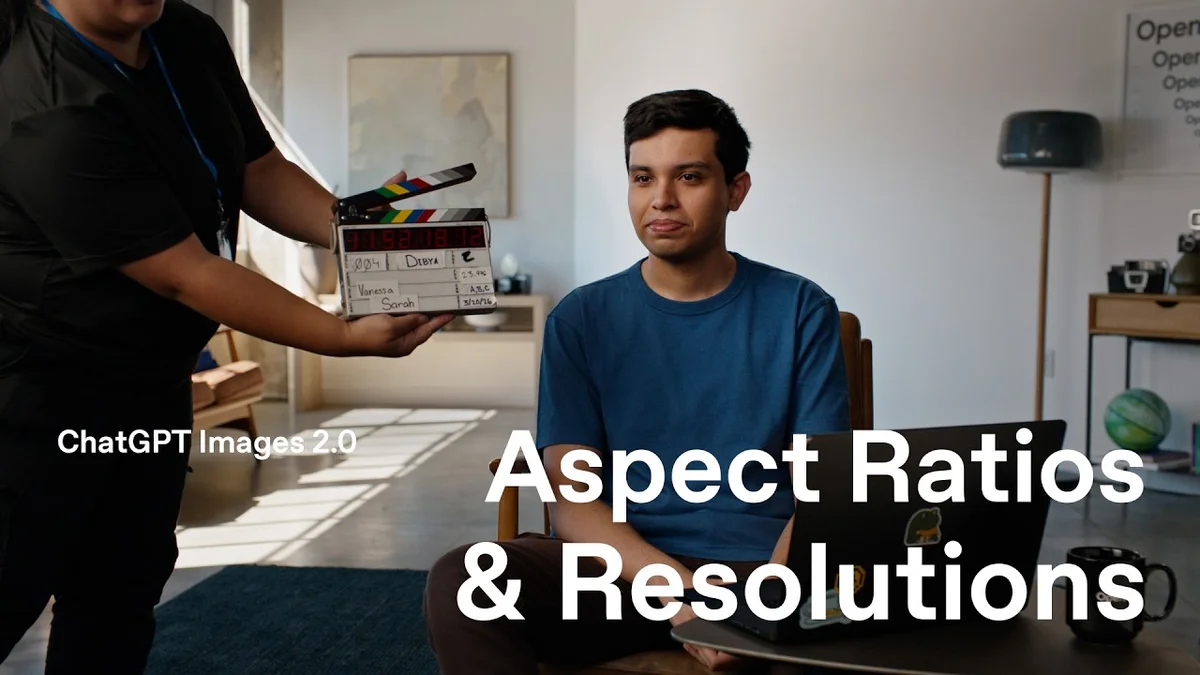
Researcher Dibya demonstrates OpenAI's DALL-E 3 image generation capabilities on a laptop.
Image credit: OpenAI· OpenAI Youtube

OpenAI is pushing the boundaries of AI-driven image generation with its latest iteration of DALL-E. A recent demonstration, featuring researcher Dibya, highlights significant upgrades to the model's capabilities, particularly in its handling of aspect ratios and resolutions. This advancement means users have greater flexibility to create images tailored precisely to their needs, whether for social media, presentations, or artistic endeavors.

Meet the Innovator

The discussion is led by Dibya, a researcher at OpenAI who works on the image generation team. His role involves pushing the capabilities of models like DALL-E to better serve user needs and explore new creative avenues. His insights provide a direct look into the practical applications and technical refinements of OpenAI's image synthesis technology.

The full discussion can be found on OpenAI Youtube's YouTube channel.
Related startups

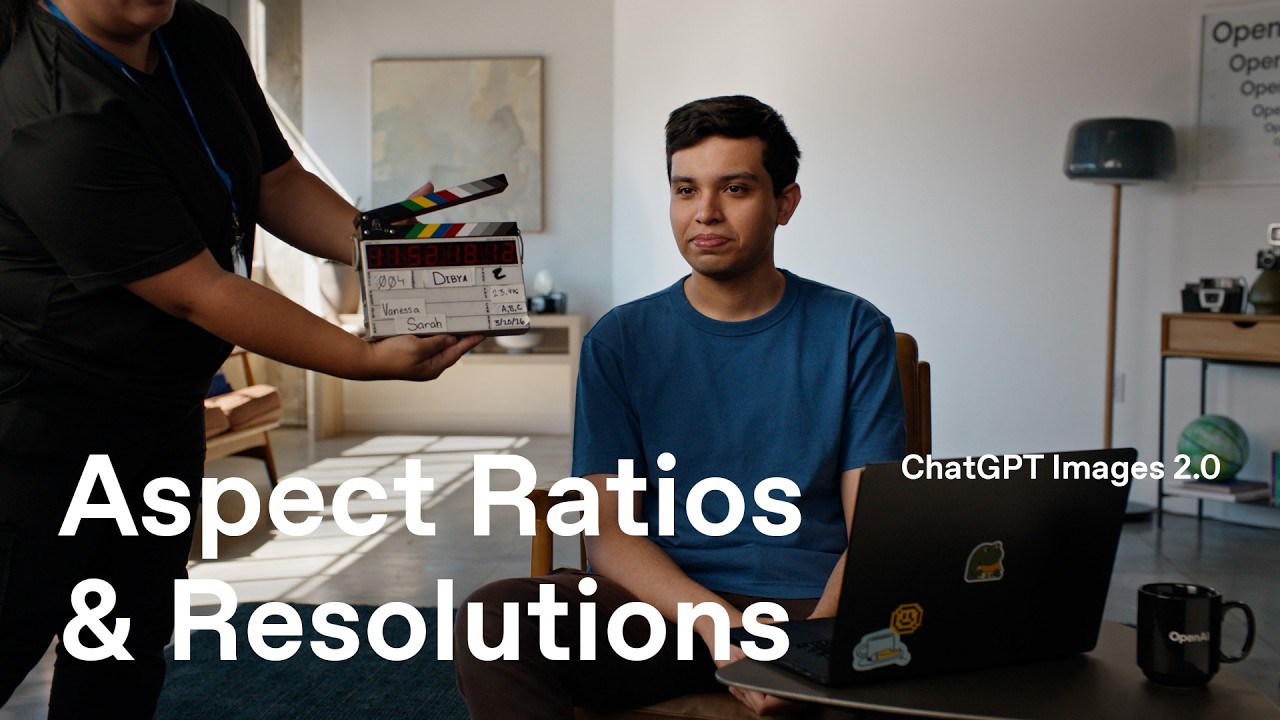
Aspect Ratios & Resolution with ChatGPT Images 2.0 - OpenAI Youtube
Aspect Ratios & Resolution with ChatGPT Images 2.0 — from OpenAI Youtube

Beyond Square: New Aspect Ratios and Resolutions

Previously, AI image generators often defaulted to square outputs, limiting their utility for various platforms. Dibya explains that DALL-E 3 addresses this limitation by offering a range of aspect ratios, from portrait and landscape to square. "Users have the flexibility to really get what they need out of the new image and model," Dibya states. This means more accurate and contextually appropriate image generation for diverse use cases.

Furthermore, the model now supports higher resolutions, with users able to request images up to 2K. Dibya demonstrates this by generating a detailed poster about the layers of the ocean. He notes that while previous models might have struggled with legibility at lower resolutions, "the new image and model can output a range of different width and height of the image." This enhanced detail is crucial for educational materials and any application where clarity is paramount.

The improvement in understanding prompts is also a key highlight. Dibya shows how the model can now interpret requests for specific aspect ratios, such as a 3:1 poster. "The model understands what aspect ratio would be suitable based on the prompt," he explains. This nuanced understanding ensures that the generated images align closely with user intent, reducing the need for extensive post-generation editing.

Crafting Immersive Visuals: 360-Degree Panoramas

One of the most impressive new features demonstrated is DALL-E 3's ability to generate 360-degree panoramas. Dibya prompts the model to create a panorama taken from the top of Half Dome in Yosemite National Park. The resulting image is a seamless, high-quality panoramic view. "The model understands that it needs to generate it in roughly a two-by-one ratio because that's what most 360-degree panoramas are," he elaborates. The model's success in generating a convincing panorama with matching edges showcases its sophisticated spatial understanding and stitching capabilities.

Dibya emphasizes the quality of the output, stating, "This looks really good. This looks really cool." He points out that the seams where the image is stitched together are almost imperceptible, a testament to the model's advanced rendering and compositing abilities. This feature opens up exciting possibilities for virtual tours, immersive content, and creative visual storytelling.

The ability to generate such complex and dimensionally specific images indicates a significant leap forward for AI image generation. DALL-E 3's enhanced control over aspect ratios, resolutions, and creative formats like panoramas positions it as a powerful tool for creators and developers alike.

© 2026 StartupHub.ai. All rights reserved. Do not enter, scrape, copy, reproduce, or republish this article in whole or in part. Use as input to AI training, fine-tuning, retrieval-augmented generation, or any machine-learning system is prohibited without written license. Substantially-similar derivative works will be pursued to the fullest extent of applicable copyright, database, and computer-misuse laws. See our terms.