


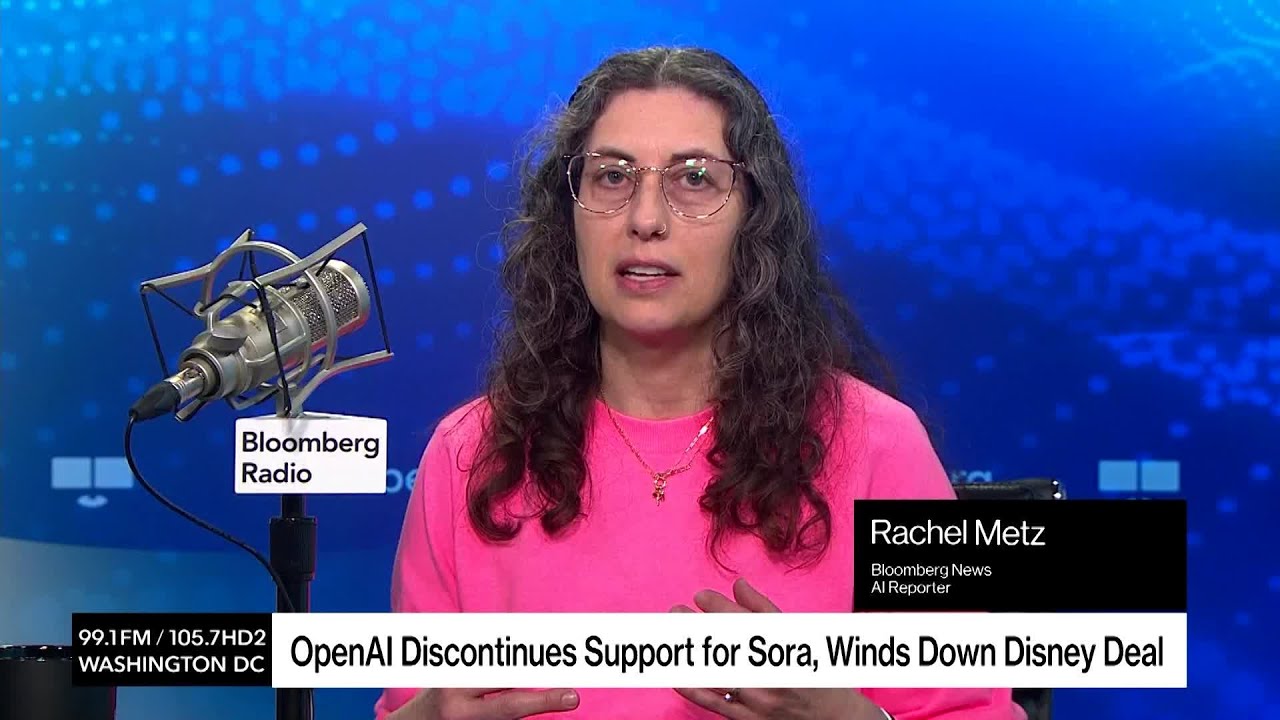
In a significant shift in strategy, OpenAI has announced it will discontinue support for its Sora video generation model and is winding down its partnership with Disney that involved licensing Sora's capabilities. This move signals a pivot towards prioritizing OpenAI's core AI products, particularly those with clearer paths to monetization and broader market applicability, such as its popular ChatGPT conversational AI and its AI-powered coding assistant.
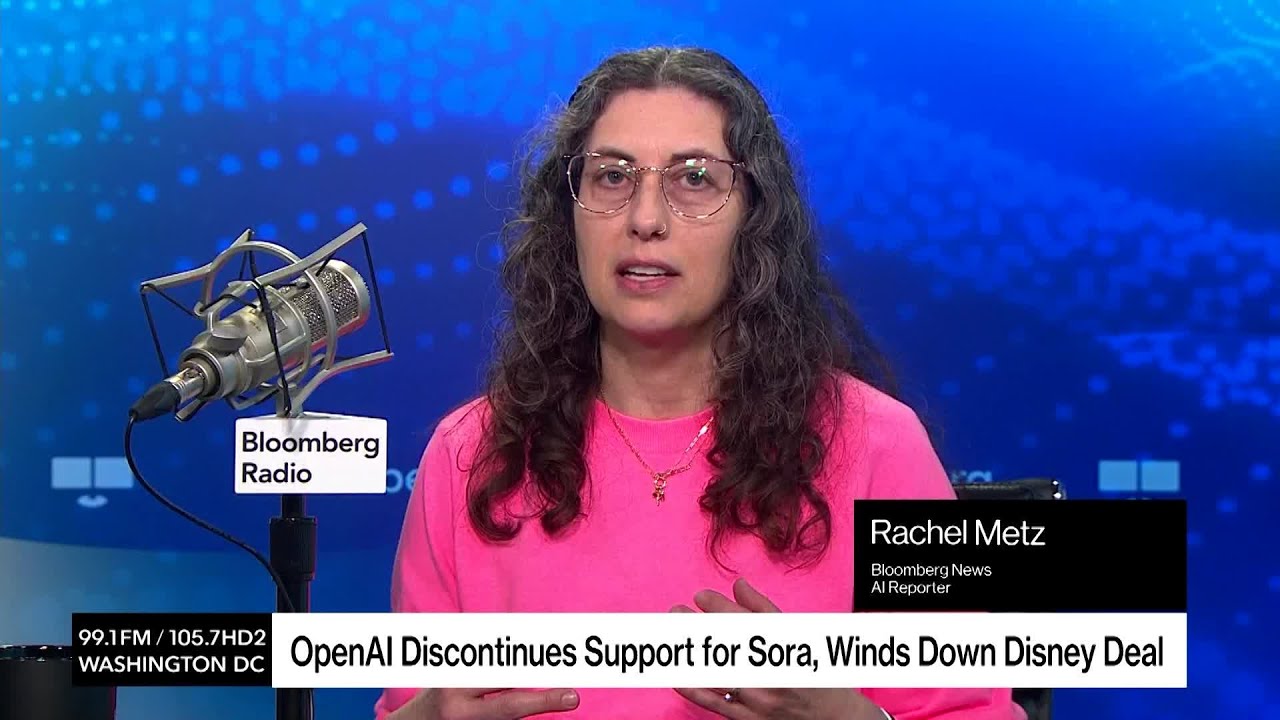
Rachel Metz, an AI Reporter for Bloomberg News, discussed these developments, highlighting the underlying reasons for the change. Metz explained that the decision stems from the immense computational resources required to build and run advanced AI models like Sora. She stated, "The fact of the matter is generating video is computationally very, very hungry. And if we need compute, let's put it toward other things." This implies that OpenAI is reallocating its substantial computing power and research efforts to areas where it sees a more immediate and sustainable return on investment.
OpenAI's Strategic Realignment
Metz elaborated on OpenAI's broader strategy, noting that the company is attempting to simplify its product portfolio and focus on areas with proven demand and revenue potential. "OpenAI is trying to simplify what has become a pretty vast portfolio of different kinds of AI products, and if there is one thing that OpenAI has not quite nailed down is how people are going to pay for and pay over time for these products," Metz observed. The company's exploration into various AI applications, from image generation to video synthesis, has been broad, but the path to profitability for some of these cutting-edge technologies remains less clear.
The full discussion can be found on Bloomberg Podcast's YouTube channel.
The discontinuation of Sora support and the dissolution of the Disney partnership suggest that the initial vision for Sora may have been too ambitious or too resource-intensive for its current stage of development and market readiness. While the AI-generated videos showcased by OpenAI were visually impressive, the practical application and cost-effectiveness for widespread use by companies like Disney were likely key factors in the decision to cease support.