

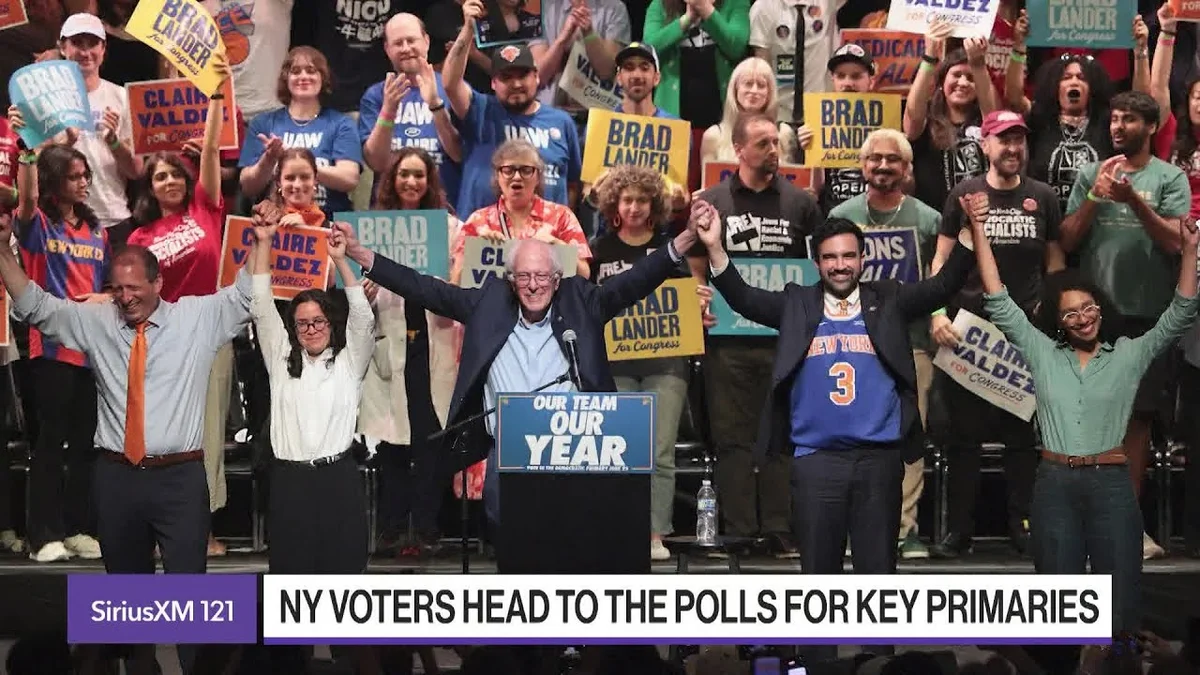
NY Democrats Split on Age, AI, and Israel as Primaries Loom

New York City Democrats are divided over candidate age, AI regulation, and Israel policy as key primaries approach, reflecting broader party tensions.

Split screen showing a news anchor and a guest speaker discussing political issues.
Bloomberg Podcast
Visual TL;DR
NY Dem Primaries LoomDriver
key primaries approaching in New York City
Candidate Age DebateContext
voters weigh experience versus fresh perspectives
From the article 2 mentionsThe splits are manifesting across several critical issues, including the age of candidates, the burgeoning field of artificial intelligence, and the complex geopolitical situation concerning Israel.
AI DivideContext
opportunity versus regulation for artificial intelligence
From the articleThis generational divide is playing out in primary races across the city, influencing campaign strategies and voter engagement.
Israel Policy SplitContext
divergent views on complex geopolitical situation
From the article 2 mentionsDivergent opinions on foreign policy, particularly regarding support for Israel and the humanitarian situation in Gaza, are becoming increasingly prominent.
State Government RoleContext
government's role in the AI era debated
From the article 3 mentionsDaniel Squadron, co-founder of The States Project, discusses his book The Fourth Branch: How State Government Can Save Our Union.
Internal Party TensionsOutcome
reflecting broader national Democratic Party challenges
From the article 2 mentionsNew York City is heading to the polls for key primaries, revealing significant internal divisions within the Democratic Party.
Shaping Election DynamicsEffect
these divisions influence campaign strategies and voter engagement
From the articleThese internal party dynamics are shaping the electoral landscape and providing a glimpse into the broader challenges facing the Democratic Party nationwide.
Contents(5)

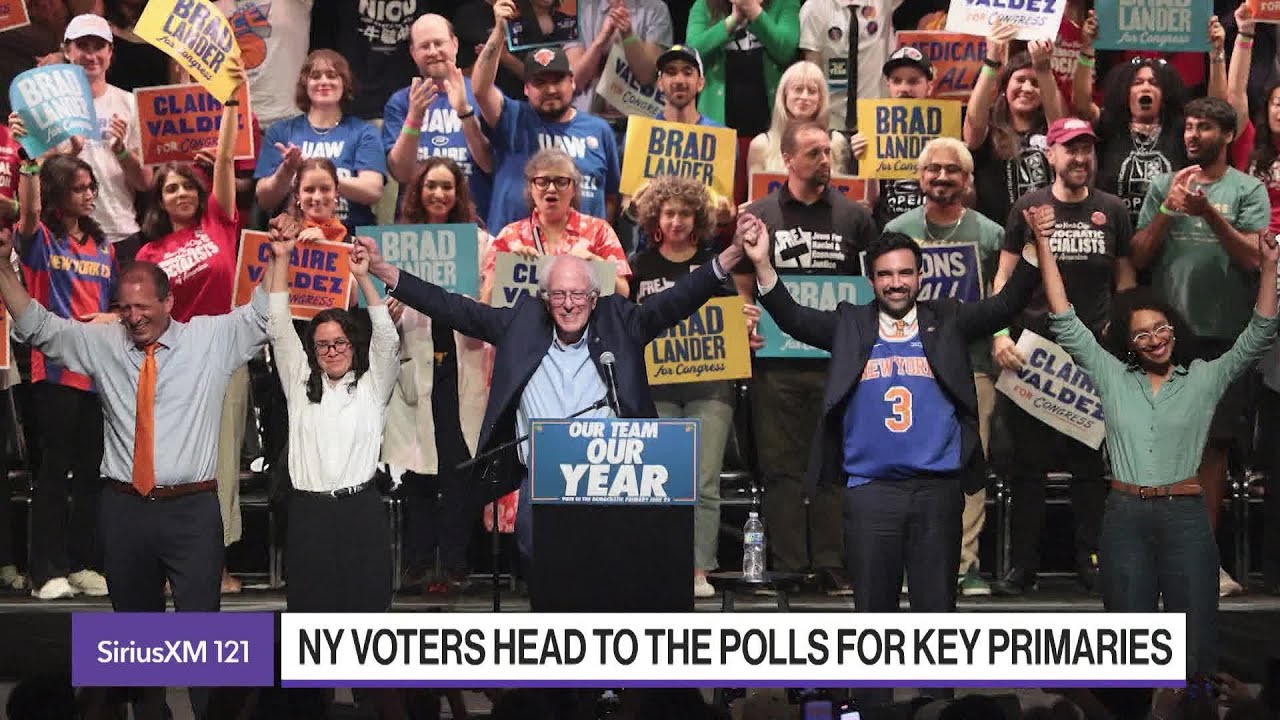
New York City is heading to the polls for key primaries, revealing significant internal divisions within the Democratic Party. The splits are manifesting across several critical issues, including the age of candidates, the burgeoning field of artificial intelligence, and the complex geopolitical situation concerning Israel. These internal party dynamics are shaping the electoral landscape and providing a glimpse into the broader challenges facing the Democratic Party nationwide.

Candidate Age and Experience

A significant point of contention within the Democratic Party revolves around the age and experience of its candidates. Voters are grappling with whether to prioritize established figures with long track records or to embrace younger voices who may bring fresh perspectives. This generational divide is playing out in primary races across the city, influencing campaign strategies and voter engagement.

The AI Divide: Opportunity vs. Regulation

The rapid advancement of artificial intelligence presents another area of division. While many see AI as a powerful engine for economic growth and innovation, a growing segment of the party is calling for robust regulation to address potential ethical concerns, job displacement, and bias. This tension between fostering technological progress and ensuring responsible development is a key theme in the current political discourse.

The full discussion can be found on Bloomberg Podcast's YouTube channel.

NYC Heads to Polls With Democrats Split Over Age, AI, Israel - Bloomberg Podcast
NYC Heads to Polls With Democrats Split Over Age, AI, Israel, from Bloomberg Podcast

Divergent Views on Israel Policy

The ongoing conflict in the Middle East and its implications for Israel have also created fissures within the Democratic Party. Divergent opinions on foreign policy, particularly regarding support for Israel and the humanitarian situation in Gaza, are becoming increasingly prominent. These differing viewpoints are influencing how candidates approach the issue and how they connect with a diverse electorate.

The Role of State Government in the AI Era

Daniel Squadron, co-founder of The States Project, discusses his book The Fourth Branch: How State Government Can Save Our Union. He posits that state governments are crucial in navigating complex issues like AI regulation. Squadron argues that the decentralized nature of state governance allows for more tailored and responsive policy-making, which is essential for addressing the multifaceted challenges posed by AI. He notes that the debate around AI regulation is not solely a federal matter but requires innovative approaches at the state level to balance technological advancement with societal needs.

Squadron's perspective highlights a broader trend: the increasing importance of state-level policy in shaping national trends. As the federal government grapples with the complexities of AI, states are emerging as laboratories for innovation and regulation. The success of these state-led initiatives could set precedents for national policy, influencing how artificial intelligence is developed and deployed across the country.

Election Dynamics in New York

In New York City, these divisions are playing out in real-time as voters head to the polls. The primaries are not just about choosing candidates but also about defining the party's core values and priorities. The outcomes of these races will likely signal the direction the Democratic Party intends to take on issues ranging from economic policy to foreign relations, with AI regulation emerging as a significant, yet complex, factor in this evolving political climate.

© 2026 StartupHub.ai. All rights reserved. You may not republish this article in full without a license. Search engines and AI research tools may crawl and summarize for reference. Bulk reproduction or model training requires a license. See our terms.
Daniel Singer

Written by

Daniel Singer

Editor, StartupHub.ai

Daniel Singer is the editor of StartupHub.ai, a technology expert and thought leader on AI and its applications across sectors, from fintech and healthcare to developer tooling and consumer software. He writes and tests the tools covered here thoroughly and regularly, and built StartupHub.ai to give founders, operators and buyers a clearer read on what they are actually being sold.