

Netflix CPTO on AI's Impact on Tech Roles

Netflix CPTO Elizabeth Stone discusses the impact of AI on tech roles, emphasizing the continued importance of specialized skills and the rise of systems thinking.

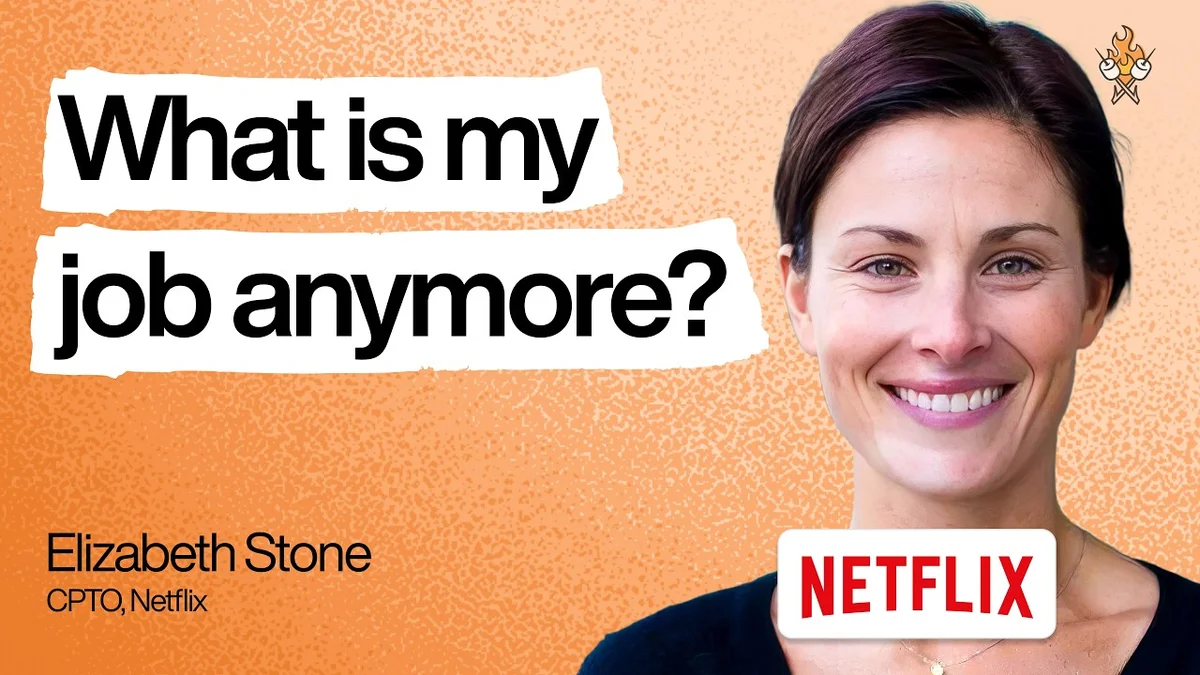
Elizabeth Stone, Netflix CPTO, speaking on a podcast.
Elizabeth Stone, Chief Product and Technology Officer at Netflix.· Lenny's Podcast
Visual TL;DR
AI 'Storming Phase'Driver
From the article 2 mentionsStone acknowledged the current "storming phase" many industries are experiencing as transformative technologies like Generative AI emerge, leading to questions about evolving job responsibilities.
Netflix Culture EnduresContext
company's enduring culture of high performance and freedom fosters AI fluency
From the article 2 mentionsStone drew parallels between Netflix's early culture deck, emphasizing high agency, autonomy, and talent density, and the operating principles of top AI labs today.
Role FluidityEffect
AI empowers individuals across functions, blurring traditional PM, design, and engineering roles
From the article 3 mentionsStone noted that while AI empowers individuals across different functions, allowing PMs to ship code, designers to write PRDs, and engineers to product, this fluidity can also lead to confusion and frustration about one's specific role.
AI Broader ImpactOutcome
AI's influence extends beyond prototyping, impacting all aspects of product and tech
From the articleBeyond prototyping and coding, Stone highlighted AI's significant impact in data analysis and content production at Netflix.
Specialized Skills RemainContext
functional expertise is not obsolete, but exploration and prototyping are highly valued
Systems Thinkers RiseOutcome
ability to connect disparate parts and understand complex interactions becomes crucial
From the article 2 mentionsIn the context of AI, Stone identified a growing need for "systems thinkers", individuals who can look across business domains and abstract them into building blocks.
Adaptability KeyContext
individuals must embrace continuous learning and evolve with changing technological landscapes
From the articleAI is being used to distill vast amounts of information, identify key metrics, and uncover insights from decades of experiments and consumer research.
Contents(6)

In a recent conversation, Elizabeth Stone, Netflix's Chief Product and Technology Officer, offered a nuanced perspective on how artificial intelligence is reshaping product and technology roles. Stone acknowledged the current "storming phase" many industries are experiencing as transformative technologies like Generative AI emerge, leading to questions about evolving job responsibilities.

StartupHub data

Companies working on this

Profiles of the companies named in this story, with funding and a one-liner from our database.

Netflix
$4.7B
The world's leading streaming entertainment service.
Generative AI
A broad category of AI models that create new content, including text, images, and code.
Netflix CPTO on AI's Impact on Tech Roles - Lenny's Podcast
Netflix CPTO on AI's Impact on Tech Roles, from Lenny's Podcast

The AI 'Storming Phase' and Role Fluidity

Stone noted that while AI empowers individuals across different functions, allowing PMs to ship code, designers to write PRDs, and engineers to product, this fluidity can also lead to confusion and frustration about one's specific role. She likened this period to the "storming phase" that new technologies trigger before a "forming phase" is established. While she doesn't believe AI means everyone should be doing everything, she emphasized the value of exploration and prototyping.

"I don't think it makes the functional expertise obsolete," Stone stated. "I think it means that teams have to be more comfortable with maybe this helps us move faster in a certain direction." She stressed the importance of clarity on data sources, guardrails for production code, and understanding when to trust AI outputs versus when human review is necessary. Crucially, humans remain accountable for the outcomes, regardless of AI's involvement.

Maintaining Craft Excellence in an AI-Augmented World

Addressing the question of whether specialized functions will disappear if everyone becomes a "builder," Stone asserted that "craft excellence" in disciplines like engineering, data science, and design is not going away. She highlighted that great engineering, data science, and creativity remain scarce, even as AI tools make certain tasks more accessible.

"I still find great engineering to be scarce. Great data science to be scarce. Great creativity to be scarce," Stone remarked. "So I, yes, some things are easier, but that hasn't dissolved in my mind."

The Rise of Systems Thinkers and Adaptability

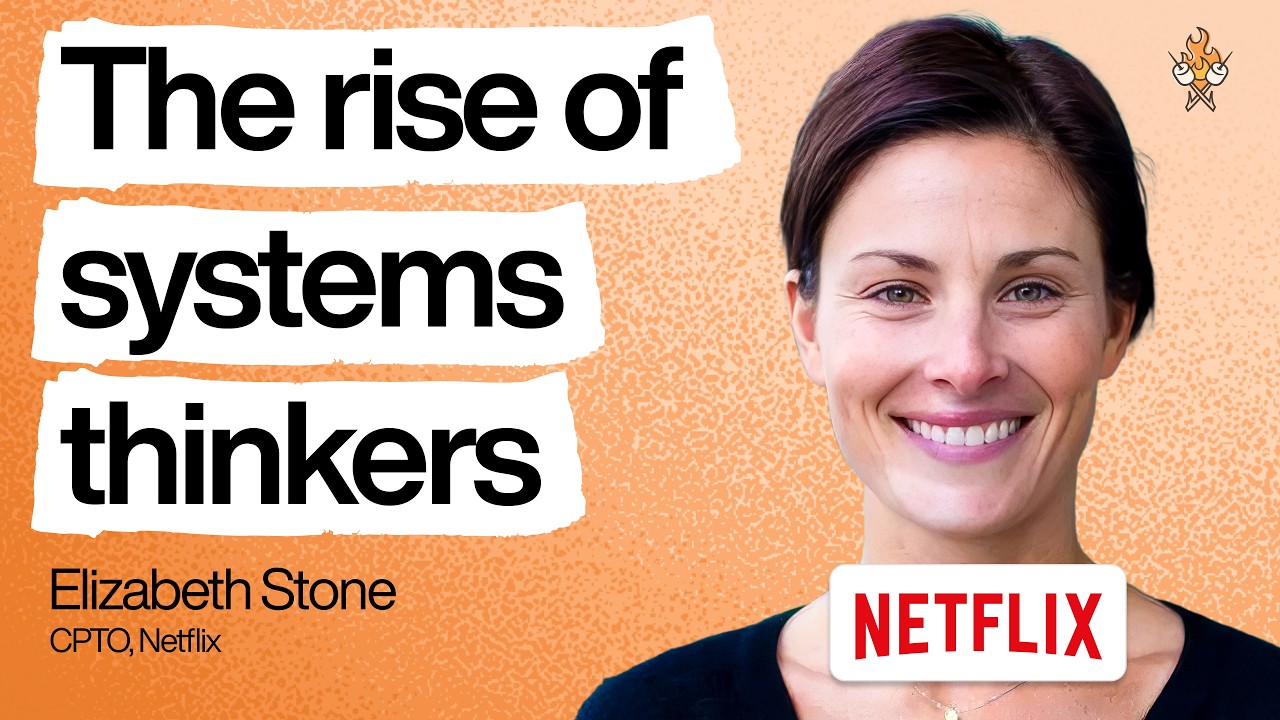
In the context of AI, Stone identified a growing need for "systems thinkers", individuals who can look across business domains and abstract them into building blocks. This is particularly relevant for central engineering teams tasked with building common infrastructure and preferred pathways that offer benefits and guardrails in an AI-driven world.

"We need more systems thinkers in a world with AI," she explained. "That looks a little bit different across functions, but I could play out a couple examples. So, in our core infrastructure team at Netflix in central engineering, a lot of what made Netflix successful over time was that local teams with specific business problems could move fast to deliver."

Similarly, for design teams, the focus is shifting towards developing design systems and templates to enable more people to create coherent products that fit the overall member experience. The aspiration is to avoid "Frankensteins" of disparate design languages.

Netflix's Enduring Culture and AI Fluency

Stone drew parallels between Netflix's early culture deck, emphasizing high agency, autonomy, and talent density, and the operating principles of top AI labs today. She described Netflix's culture as "excellence as an operating system," driven by a belief that exceptional talent, given agency and accountability, leads to better outcomes.

The company is fostering "AI fluency" across its workforce, which varies by function and career stage. This doesn't mean using AI for its own sake, but rather having good judgment about its application and maintaining a mindset open to exploration and trying new things.

"That's the non-negotiable for all roles, and that's true at the senior most levels of Netflix, where we talk about we too need to have deep fluency in AI, even if we're not writing code as part of our day jobs," Stone said.

AI's Broader Impact Beyond Prototyping

Beyond prototyping and coding, Stone highlighted AI's significant impact in data analysis and content production at Netflix. AI is being used to distill vast amounts of information, identify key metrics, and uncover insights from decades of experiments and consumer research.

In content creation, AI and ML have long been integral to visual effects and localization. Generative AI, in particular, is a "step function" in creative ideation, with applications in pre-visualization and post-production, such as relighting, reframing, and dialogue changes, all aimed at enhancing content quality.

© 2026 StartupHub.ai. All rights reserved. You may not republish this article in full without a license. Search engines and AI research tools may crawl and summarize for reference. Bulk reproduction or model training requires a license. See our terms.
Daniel Singer

Written by

Daniel Singer

Editor, StartupHub.ai

Daniel Singer is the editor of StartupHub.ai, a technology expert and thought leader on AI and its applications across sectors, from fintech and healthcare to developer tooling and consumer software. He writes and tests the tools covered here thoroughly and regularly, and built StartupHub.ai to give founders, operators and buyers a clearer read on what they are actually being sold.

More from Daniel Singer