

Joe Lonsdale: AI's Role in Small Business Growth

Venture capitalist Joe Lonsdale discusses how AI can drive revenue growth and efficiency for small businesses, urging a focus on practical adoption and entrepreneurial spirit.

4 min read
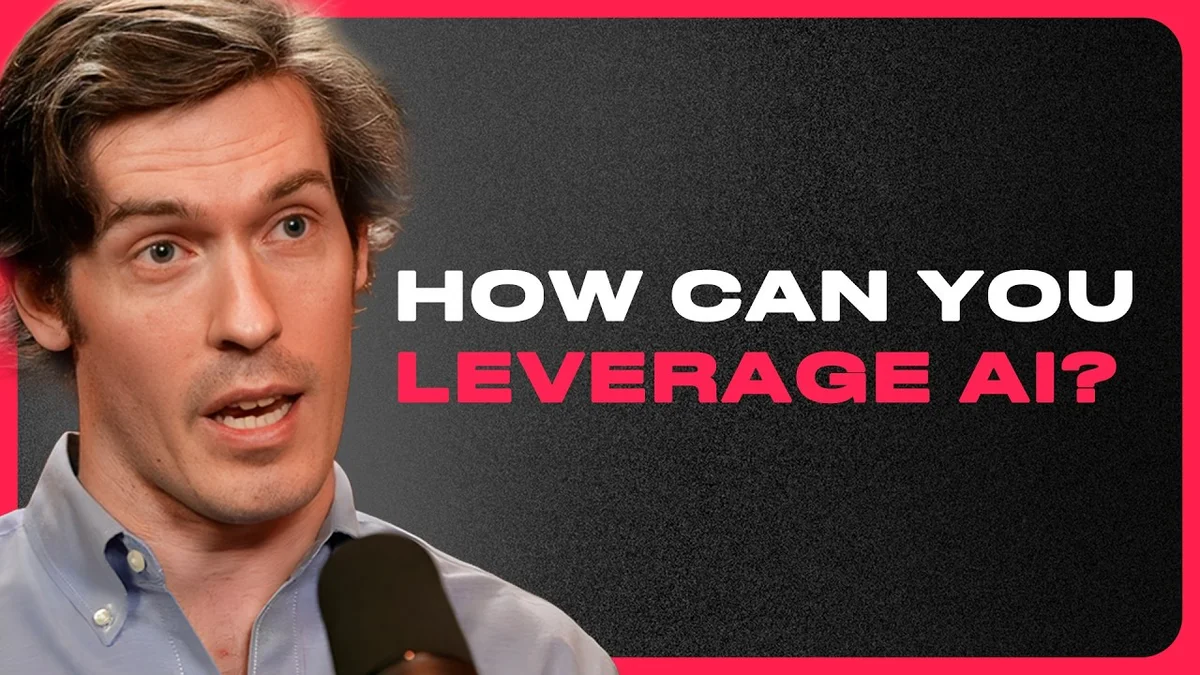
Joe Lonsdale speaking in a podcast interview setting
Image credit: StartupHub.ai· Joe Lonsdale

In a recent discussion, investor Joe Lonsdale shared his optimistic outlook on the transformative power of artificial intelligence, particularly for small businesses. Lonsdale, a co-founder of Palantir Technologies (NYSE: PLTR) and a prominent venture capitalist, emphasized that AI's impact extends beyond mere cost reduction, offering significant opportunities for revenue growth and operational enhancement.

Joe Lonsdale's Vision for AI in Business

Joe Lonsdale, known for his deep involvement in technology startups and his role as managing partner at 8VC, believes that AI is fundamentally changing what is possible across various industries. He expressed a strong sense of optimism about AI's potential, contrasting it with the prevalent fear surrounding the technology. Lonsdale highlighted that while many investors and businesses are focused on the cost-saving aspects of AI, the real opportunity lies in its ability to drive revenue and create new value.

He pointed out that small businesses, often operating with lean resources, can particularly benefit from AI adoption. Lonsdale's firm, 8VC, has been actively investing in companies that leverage AI to solve real-world problems and generate revenue. He noted that the initial hesitation from some investors about AI's application in smaller, traditional businesses is giving way to a recognition of its broader utility.

Related startups

The full discussion can be found on Joe Lonsdale's YouTube channel.

How to Actually Leverage AI in Your Business - Joe Lonsdale
How to Actually Leverage AI in Your Business — from Joe Lonsdale

AI as a Revenue Generator for Small Businesses

Lonsdale challenged the common perception that AI is primarily a tool for cutting costs. He argued that the most significant impact for small businesses will come from AI's ability to increase revenue. "It's not just about cutting costs," Lonsdale stated. "It's about revenue growth." He elaborated that by reallocating resources and time freed up by AI automation, small businesses can focus on more strategic, revenue-generating activities.

He drew a parallel to the concept of economic moats, suggesting that AI can help small businesses build defensible competitive advantages. By using AI to enhance customer acquisition, improve product development, or optimize sales processes, companies can outmaneuver competitors and capture greater market share. Lonsdale cited examples of businesses that have successfully integrated AI to achieve significant growth, often by identifying specific pain points and applying AI solutions directly.

The Role of Entrepreneurship and a Culture of Execution

Lonsdale also spoke about the increasing trend of young entrepreneurs seeking to build their own ventures. He emphasized that the skills and mindset required for successful entrepreneurship are crucial for navigating the AI revolution. "You have to be willing to go learn," he advised, suggesting that hands-on experience and a proactive approach are essential for those looking to enter fields driven by AI. He also highlighted the importance of a strong work ethic and a culture of execution, noting that "getting shit done" is fundamental to building successful businesses.

Lonsdale stressed that the narrative of AI replacing jobs needs to be balanced with the reality that AI can augment human capabilities and create new opportunities. He shared an anecdote about a successful small business that used AI to automate mundane tasks, allowing its employees to focus on more creative and customer-facing roles. This shift, he argued, leads to a more fulfilling work environment and drives business growth.

Addressing Barriers to AI Adoption

While optimistic, Lonsdale acknowledged that barriers still exist for widespread AI adoption, especially for small businesses. He pointed to the need for more accessible educational resources and training programs that can equip individuals with the skills to work with AI tools. He also mentioned the role of government and regulatory bodies in fostering an environment that encourages innovation while ensuring responsible AI development.

Lonsdale specifically called out the need to demystify AI and make it more approachable for entrepreneurs who may not have a technical background. He believes that by showcasing successful use cases and providing practical guidance, more small businesses will be empowered to embrace AI. The key, he suggested, is to focus on solving specific business problems rather than getting lost in the hype surrounding the technology itself.

The Future of AI and Small Business

Lonsdale concluded by reiterating his belief in the long-term positive impact of AI on the economy and society. He encouraged aspiring entrepreneurs to view AI not as a threat, but as a powerful ally in building successful and impactful businesses. His emphasis on practical application, revenue generation, and a proactive mindset offers a clear roadmap for small businesses looking to thrive in the age of artificial intelligence.

© 2026 StartupHub.ai. All rights reserved. Do not enter, scrape, copy, reproduce, or republish this article in whole or in part. Use as input to AI training, fine-tuning, retrieval-augmented generation, or any machine-learning system is prohibited without written license. Substantially-similar derivative works will be pursued to the fullest extent of applicable copyright, database, and computer-misuse laws. See our terms.