


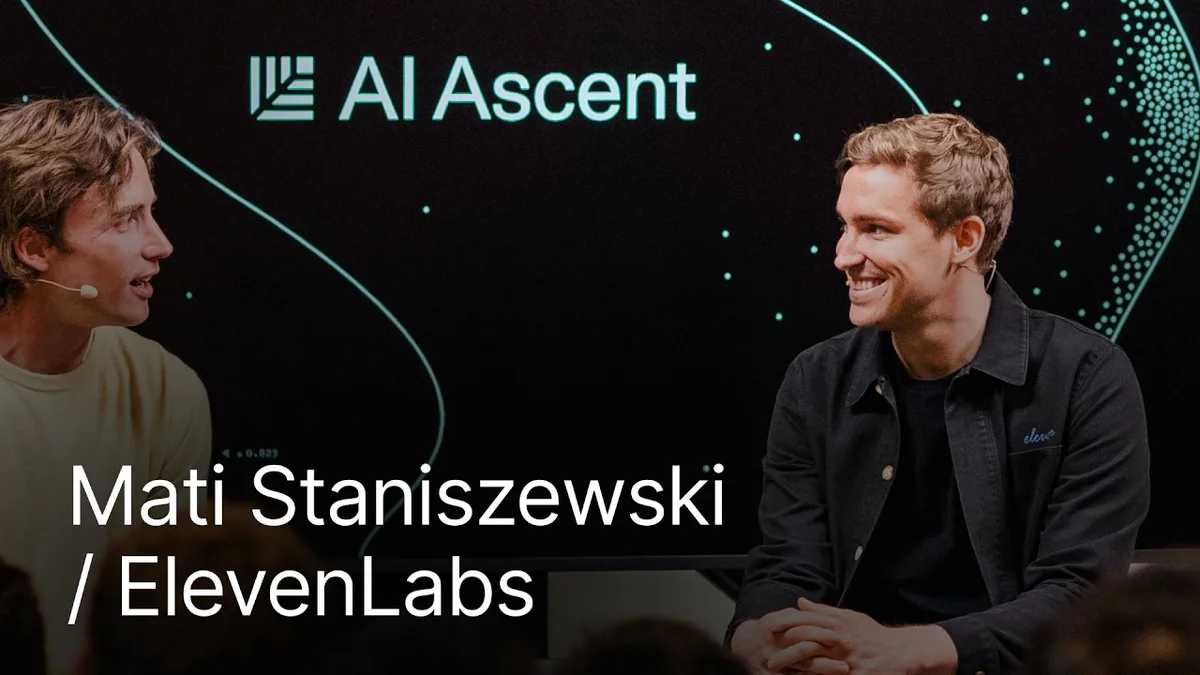
In a compelling discussion on how voice is shaping the future of human-AI interaction, Mati Staniszewski, co-founder of ElevenLabs, shared insights into the transformative power of AI-generated speech. Staniszewski articulated a vision where voice interfaces will become increasingly central to how we interact with technology, moving beyond the current text-dominated landscape.
The Rise of Voice as an Interface
Staniszewski emphasized that while text has been the primary mode of interaction with AI systems, voice offers a more natural, intuitive, and expressive pathway. He believes that as AI models become more sophisticated, they will be able to understand and generate human speech with remarkable fidelity, paving the way for a new era of seamless human-computer communication.
ElevenLabs' Approach to AI Voice
ElevenLabs is at the forefront of this shift, developing advanced AI models capable of creating highly realistic and emotionally resonant synthetic voices. Staniszewski touched upon the intricate process of training these models, which involves capturing the subtle nuances of human speech, such as tone, pitch, emotion, and pacing. This allows ElevenLabs' technology to generate voices that are not only clear and intelligible but also convey genuine human-like expressiveness.
Transforming User Experiences
The implications of advanced AI voice technology are vast, promising to revolutionize user experiences across numerous sectors. Staniszewski highlighted the potential for personalized content creation, more engaging virtual assistants, and improved accessibility for individuals with communication challenges. By enabling more natural and human-like voice interactions, AI can bridge gaps and create more inclusive technological experiences.
The Future of AI and Voice
Looking ahead, Staniszewski expressed optimism about the continued development and integration of voice AI. He anticipates a future where voice agents can understand context, emotion, and intent with greater accuracy, leading to more sophisticated and helpful AI companions. The journey of voice as an interface is just beginning, and companies like ElevenLabs are paving the way for a more human-centric technological future.