

Chrome's New AI Toolkit

Google is embedding AI directly into Chrome, offering developers powerful on-device tools for smarter, more private web applications.

2 min read
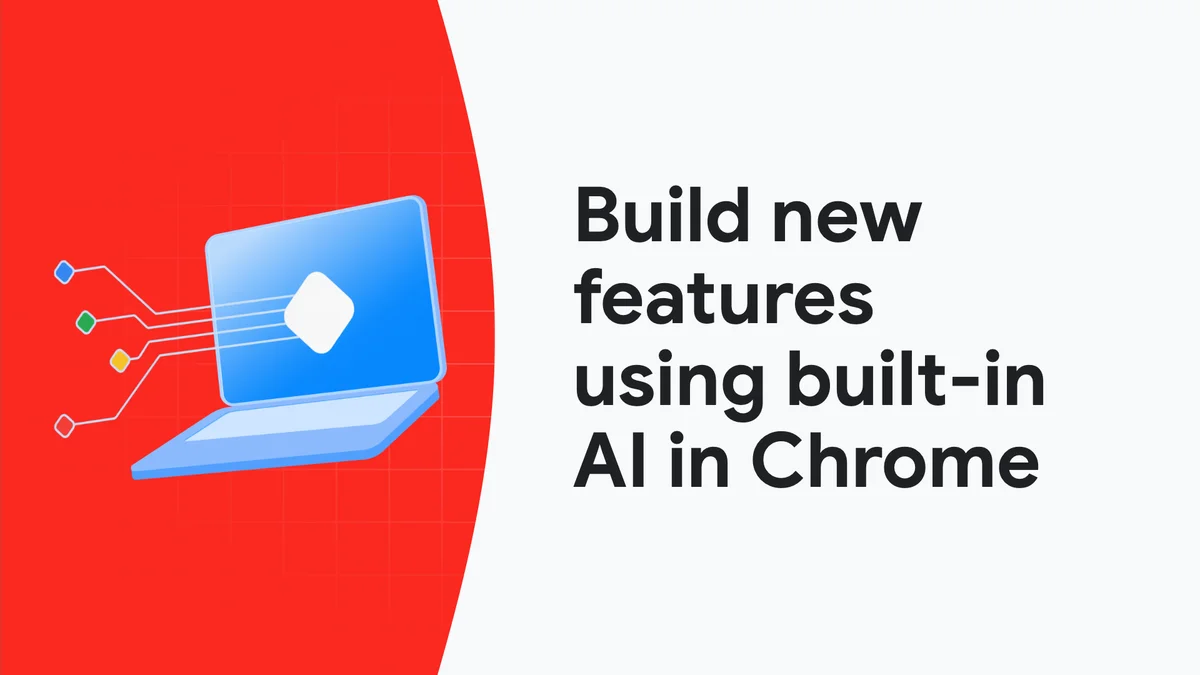
Abstract representation of AI integration within a browser interface.
Google Chrome is integrating powerful AI tools for developers.· Google Chrome Developer

Google is bringing artificial intelligence directly to the browser. Developers can now leverage built-in AI capabilities within Chrome to create more interactive and intelligent web experiences, bypassing the need for external cloud services.

This shift, detailed by Google at I/O 2026, focuses on running AI models locally on user devices. This approach significantly reduces development costs by eliminating cloud inference fees and minimizes latency. Crucially, it ensures sensitive user data remains within the browser, prioritizing privacy.

The benefits extend to offline functionality; once a model is downloaded, AI-powered features operate without an internet connection. Performance is also a key advantage, with hardware acceleration enabling on-device models to match or even surpass cloud-based performance.

Related startups

For devices that may not support full on-device processing, a hybrid approach is possible. Tools like Firebase AI Logic allow developers to implement fallback mechanisms, ensuring a consistent experience across different hardware capabilities.

AI Features for Modern Web Apps

Several new APIs are now available to developers. The Summarizer API can automatically generate headlines and SEO-friendly meta descriptions for content, streamlining the publishing process.

For structured data extraction, the Prompt API, when combined with JSON Schema, ensures predictable AI outputs. This is being used for tasks like automated tag generation and comment moderation, classifying content as 'Safe' or 'Harmful'.

The Prompt API also supports multimodal input, analyzing image pixels to automatically generate alt-text and captions, significantly improving media accessibility.

Writing and rewriting tasks are simplified with the Writer and Rewriter APIs. Users can expand bullet points into full paragraphs or adjust the tone and length of existing text with a single click.

Content creation is further enhanced by the Translator API, enabling creators to draft in one language and instantly translate it for global audiences, with options for native speaker refinement.

Real-World Adoption

Early adopters are already showcasing the power of these new tools. Drupal is integrating the Summarizer API for SEO tag generation within its CKEditor. Yahoo! Japan is utilizing the Prompt API for community comment moderation, and Trip.com is employing AI overviews to assist users with complex flight bookings.

This initiative marks a significant step towards more intelligent and privacy-conscious web development, bringing advanced AI capabilities directly into the user's browser.

© 2026 StartupHub.ai. All rights reserved. Do not enter, scrape, copy, reproduce, or republish this article in whole or in part. Use as input to AI training, fine-tuning, retrieval-augmented generation, or any machine-learning system is prohibited without written license. Substantially-similar derivative works will be pursued to the fullest extent of applicable copyright, database, and computer-misuse laws. See our terms.