

Boom Supersonic CEO Blake Scholl on using supersonic engines to power AI

4 min read
Boom Supersonic CEO Blake Scholl on using supersonic engines to power AI

Boom Supersonic's XB-1 Achieves Supersonic Flight, Unlocking New Engine Technology for AI
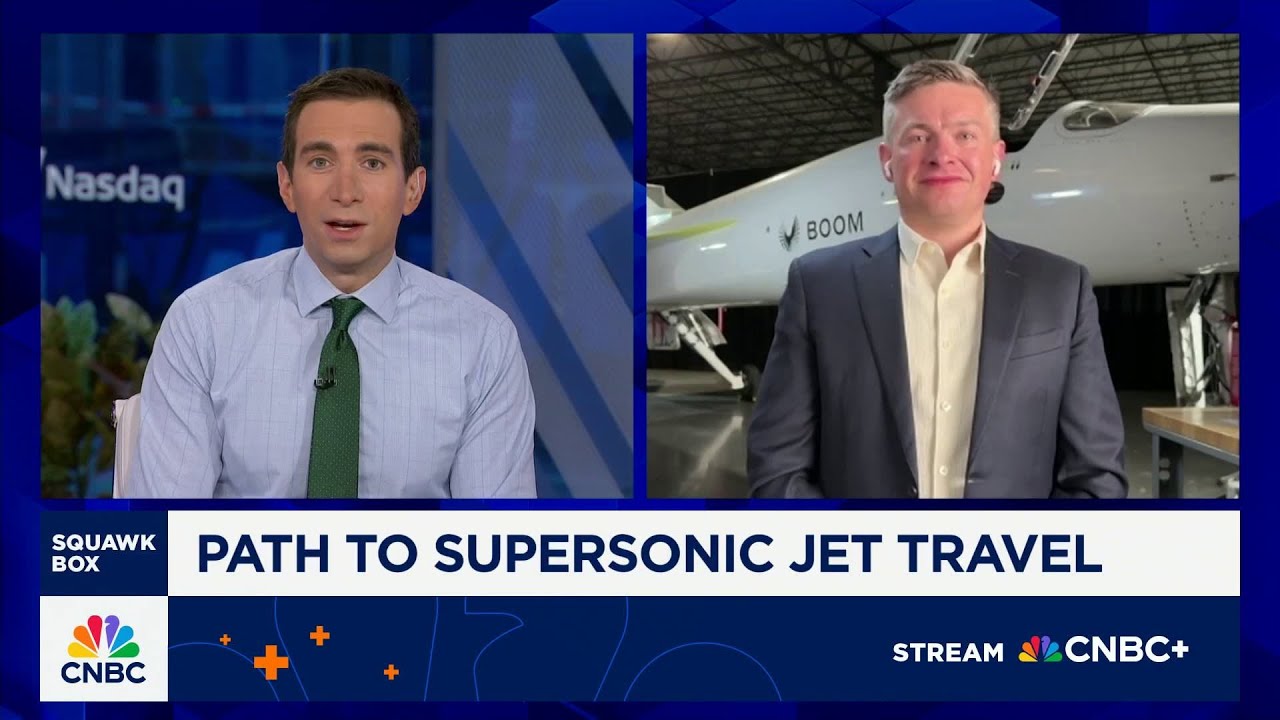
"We are announcing a major new product today, a new customer and new funding," stated Blake Scholl, Boom Supersonic founder and CEO, on CNBC's "Squawk Box." This announcement marks a significant milestone for the company, not only for its progress in supersonic aviation but also for its strategic pivot to leverage its advanced engine technology for the burgeoning AI sector. The company's recent funding round of $300 million, coupled with a new customer order for 250 gigawatts of power, signifies a bold move to address the immense energy demands of AI data centers, particularly in light of current electricity grid limitations.

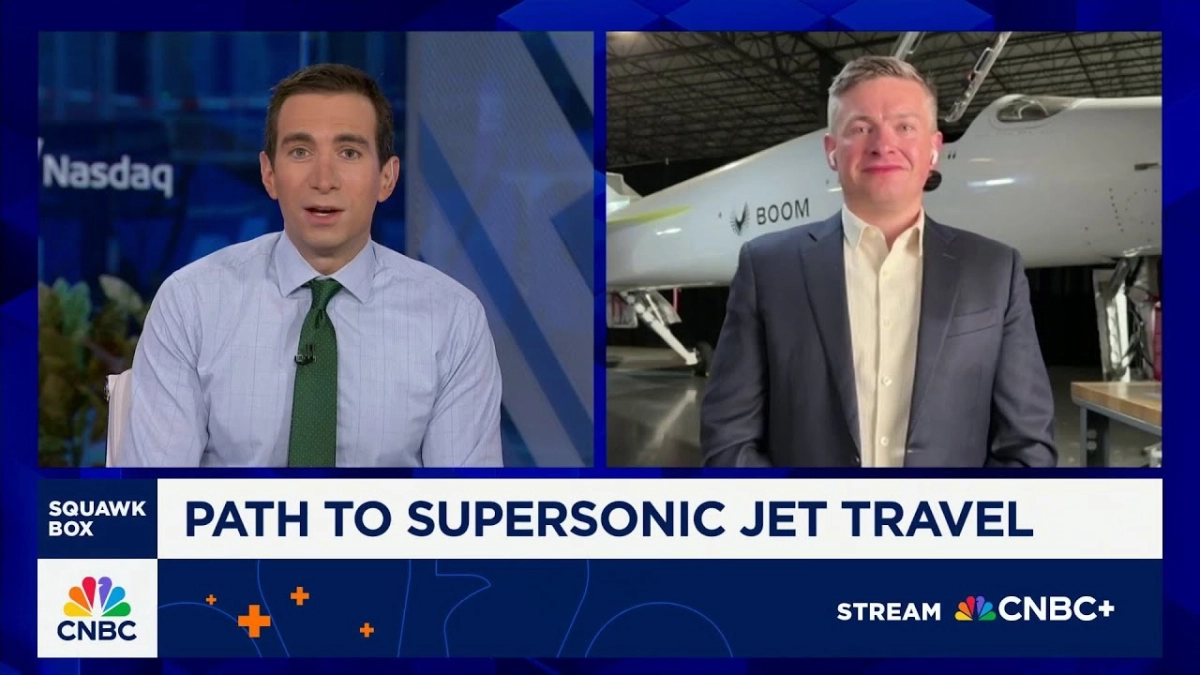
Scholl spoke with CNBC’s Carl Quintanilla at Boom’s hangar, discussing the company’s path to building a commercial supersonic jetliner. The conversation highlighted how the challenges faced in developing supersonic engines are directly transferable to powering the next generation of AI infrastructure. This dual focus positions Boom Supersonic at the intersection of two of the most transformative technological frontiers.

A key insight from the interview is Boom's innovative approach to addressing the energy crisis facing AI development. Scholl explained, "As we all know, there's an electricity crisis in America, AI hyperscalers can't get the electricity, the grid isn't meeting the need. So we are bringing our supersonic engine technology first on the ground as a 42-megawatt power turbine." This strategic deployment of their turbine technology aims to provide a scalable and efficient power solution for the immense computational needs of AI. This is a crucial development, as the demand for AI processing power continues to outpace existing energy infrastructure.

The company’s commitment to this new energy venture is underscored by its recent funding. Scholl elaborated on the financial aspect, stating, "We've been able to self-finance this. So today's funding, $300 million in new funding, allows us to deliver first the power turbine and then use the profit that we generate from that to fund the supersonic airliner development." This financial strategy not only de-risks the aviation project but also creates a more robust and diversified business model. It demonstrates a pragmatic approach to capital allocation, ensuring the core aviation vision remains on track while capitalizing on immediate market opportunities.

The direct link between supersonic engine technology and AI power generation is a compelling one. Scholl further elaborated on this synergy, saying, "The XB-1 aircraft is supersonic flight, no audible boom. We exceeded Mach 1 speed, reaching Mach 1.122 (750 mph). It flew for 34 minutes, reaching 35,290 FT. It uses a Symphony turbofan engine." He then drew a parallel to the energy sector, explaining, "The supersonic engines are the exact kind of turbines you need to generate clean, efficient, scalable energy on the ground." This technological convergence is a testament to the company's engineering prowess and forward-thinking strategy.

The interview also touched upon the broader economic implications and potential competitive landscape. When asked about the scale of this new venture, Scholl responded, "We have to believe that this is going to be a gigantic business. There is far more power need than ability to deliver it. And so, from this point forward, we are entirely self-funded." This statement reflects a strong conviction in the market demand for their energy solutions. He also highlighted a key differentiator: "What’s different is that their engines are really happiest when it's minus 50 degrees Celsius outside, at 30,000 feet. But when it's a hot day in Texas, it's actually not a big deal. And so we have a huge competitive advantage versus these other engines that are coming from the likes of GE, Rolls-Royce." This points to the superior performance and adaptability of Boom’s turbine technology in diverse environmental conditions, a critical factor for large-scale data center operations.

The company’s strategic decision to leverage its existing engine technology for AI data centers is a clever business maneuver. It allows them to generate revenue and build capital while continuing to develop their supersonic passenger jet. This diversification not only strengthens their financial position but also positions them as a unique player in both the aerospace and energy sectors. The ability to provide reliable, high-capacity power is paramount for the continued growth of AI, and Boom Supersonic appears poised to meet that demand.

The recent funding and customer acquisition for their power turbine technology represent a pivotal moment for Boom Supersonic. It demonstrates a clear strategy to monetize their advanced engineering capabilities in the near term, thereby accelerating their long-term vision of supersonic passenger travel. The company's dual-pronged approach showcases a sophisticated understanding of market needs and technological synergy.

© 2025 StartupHub.ai. All rights reserved. Do not enter, scrape, copy, reproduce, or republish this article in whole or in part. Use as input to AI training, fine-tuning, retrieval-augmented generation, or any machine-learning system is prohibited without written license. Substantially-similar derivative works will be pursued to the fullest extent of applicable copyright, database, and computer-misuse laws. See our terms.