

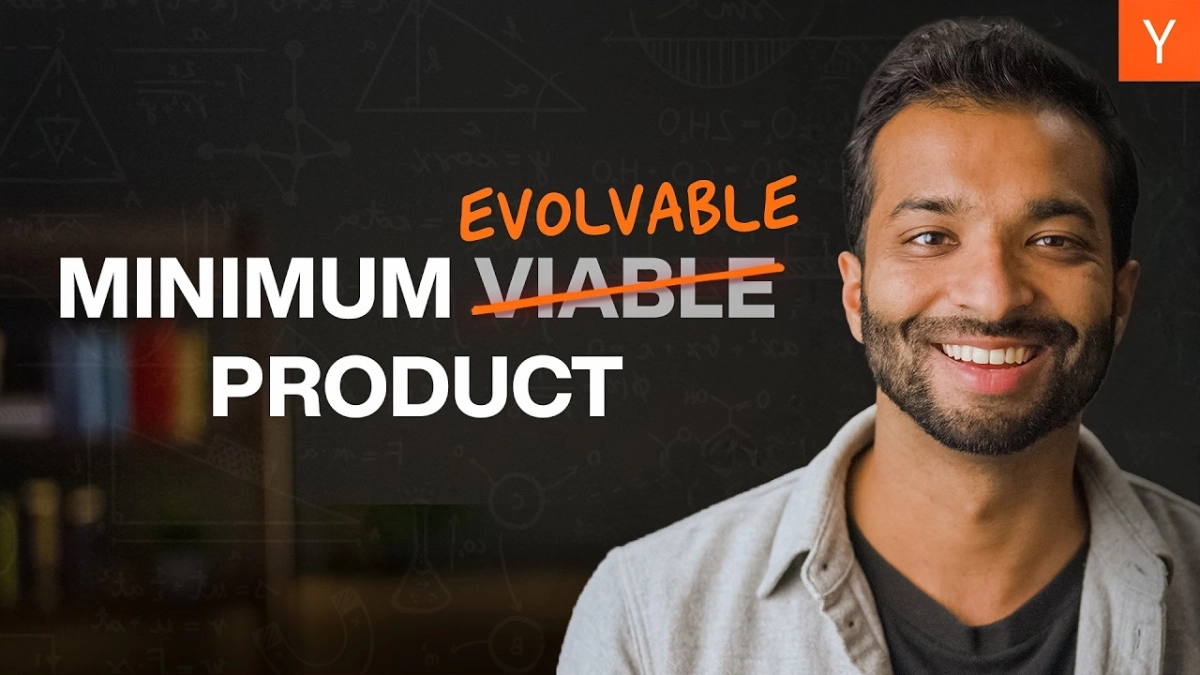
In the current epoch of hyper-accelerated development, especially within the AI sector where foundational models shift quarterly and inference costs remain volatile, the traditional startup playbook centered on the Minimum Viable Product (MVP) is increasingly inadequate. Viability alone is no longer the threshold for success; evolutionary potential is. This critical shift was the core message delivered by Y Combinator General Partner Ankit Gupta in his recent discussion, where he argued that founders must move beyond the MVP and focus instead on building a Minimum Evolvable Product (MEP).
Gupta spoke on YC's Main Function series about the strategies required to acquire those pivotal first users, emphasizing adaptability and the profound long-term impact these initial customers have on a company's trajectory. The challenge, he notes, is that "almost no one wants to be a startup's first paying customer." Most consumers avoid the inherent friction and instability of nascent products. Yet, every successful product, from the early versions of Airbnb to the first Tesla Roadster, found a small group willing to take that initial leap. This leads to the fundamental insight: finding these pioneers is not a matter of mass marketing or grand persuasion, but a focused, intensive search.
Gupta compellingly reframes the initial customer search, stating plainly: "Finding your first users is more of a search problem than a persuasion problem." Founders should be looking for the "true believers", those individuals or businesses suffering from a problem so acute, a "burning issue," that they are willing to overlook the inevitable bugs and incomplete features of an early product. This segment of the market, whether they are hobbyists, power users, or professionals whose workflow is severely hampered by the status quo, are desperate for any solution, even an imperfect one. Their need is so great that they are pre-sold on the concept, requiring minimal convincing, but maximum support and responsiveness.
This search-based approach has several counterintuitive implications for early-stage strategy, particularly around pricing and outreach. First, founders should "charge real money early." Early adopters and those with a critical, burning problem are rarely price sensitive. The primary goal of this early monetization is not revenue generation, but feedback quality. Gupta points out that "paying customers give sharper feedback than free users ever will." A customer who has invested capital, even a small amount, is far more likely to engage deeply, complain loudly, and provide the specific, actionable critiques necessary for product refinement than a free user who can simply churn without consequence. This sharp feedback loop is essential for quickly determining the correct evolutionary path for the MEP.
Furthermore, the initial outreach must be targeted and personal, fundamentally unlike the scalable marketing strategies employed by mature companies. A billboard campaign or broad social media blast will likely fail because it targets the general population, which inherently resists early adoption. Instead, founders should prioritize "targeted, personal outreach," whether through cold emails, direct community engagement, or literally knocking on doors. This personal connection is critical because it builds a relationship that can withstand the inevitable friction of an early product. When an early user is annoyed by a bug, that personal relationship allows the founder to address the issue directly and retain the user, turning frustration into loyalty and valuable data.
