

Bessemer Maps AI Data Center Future

Bessemer Venture Partners outlines the critical infrastructure needs for AI data centers, highlighting six key areas for startup innovation.

10 min read
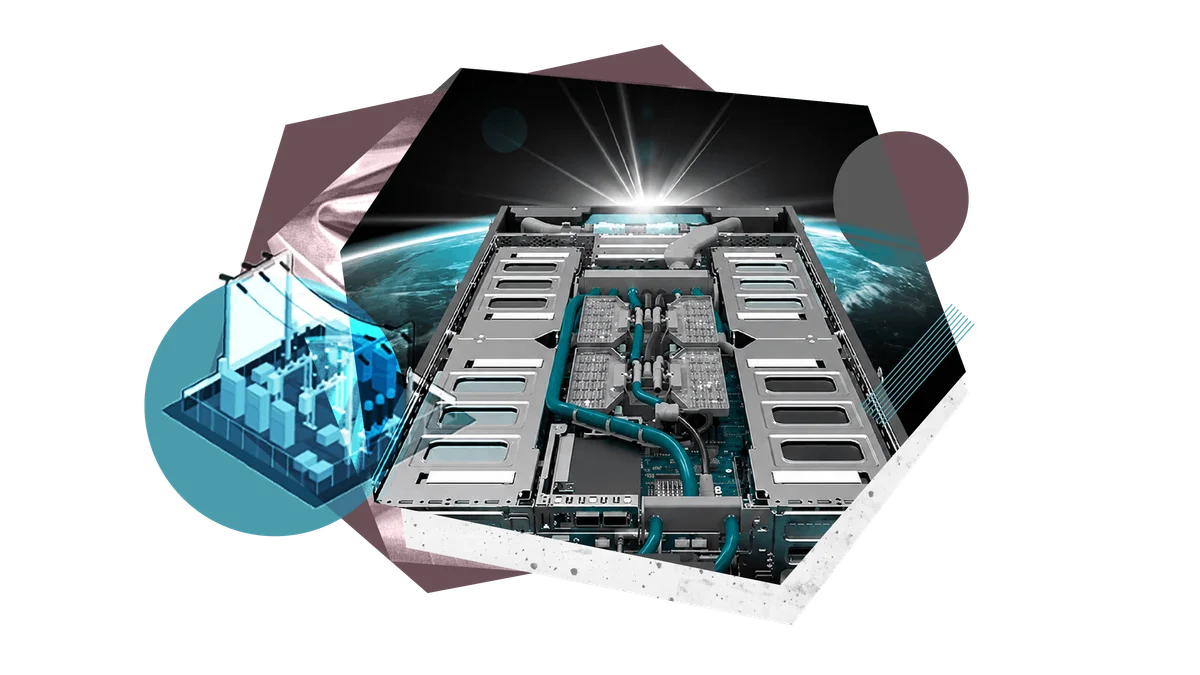
Diagram showing the AI data center stack with six key areas of opportunity identified by Bessemer Venture Partners.
Bessemer Venture Partners' roadmap outlines six core areas of opportunity in the AI data center infrastructure.· Bessemer Venture Partners

The artificial intelligence revolution isn't just about faster chips; it's a full-blown infrastructure challenge. As Bessemer Venture Partners outlines in its latest roadmap, the AI data center stack is ripe for disruption. Hyperscale data center capacity is ballooning, with 190 GW announced across 777 projects by early 2026. This surge means global data center electricity consumption is projected to more than double by 2030, potentially eclipsing all U.S. energy-intensive manufacturing combined.

Visual TL;DR. AI Data Center Boom leads to Power Demand Surge. Power Demand Surge causes Infrastructure Bottlenecks. Infrastructure Bottlenecks creates opportunity for Startup Innovation Areas. Startup Innovation Areas leads to Permitting & Site. Startup Innovation Areas leads to Power Generation. Startup Innovation Areas leads to Transmission & Conversion. Startup Innovation Areas leads to Software & Orchestration. Startup Innovation Areas leads to Construction & Labor. Infrastructure Bottlenecks drives On-Site Power Certainty.

Related startups

  1. AI Data Center Boom: 190 GW announced across 777 projects by early 2026
  2. Power Demand Surge: global electricity consumption projected to more than double by 2030
  3. Infrastructure Bottlenecks: grid connection takes 5-7 years, impacting over a quarter of projects
  4. Startup Innovation Areas: six critical infrastructure needs for AI data centers
  5. Permitting & Site: streamlining approvals and finding suitable locations
  6. Power Generation: ensuring sufficient and reliable energy sources
  7. Transmission & Conversion: managing power flow and voltage changes
  8. Software & Orchestration: optimizing data center operations and resource allocation
  9. Construction & Labor: accelerating building and staffing data centers
  10. On-Site Power Certainty: hyperscalers managing power generation for reliability
Visual TL;DR
Visual TL;DR — startuphub.ai AI Data Center Boom leads to Power Demand Surge. Power Demand Surge causes Infrastructure Bottlenecks leads to causes AI Data Center Boom Power Demand Surge Infrastructure Bottlenecks Permitting & Site Power Generation From startuphub.ai · The publishers behind this format
Visual TL;DR — startuphub.ai AI Data Center Boom leads to Power Demand Surge. Power Demand Surge causes Infrastructure Bottlenecks leads to causes AI Data CenterBoom Power DemandSurge InfrastructureBottlenecks Permitting & Site Power Generation From startuphub.ai · The publishers behind this format
Visual TL;DR — startuphub.ai AI Data Center Boom leads to Power Demand Surge. Power Demand Surge causes Infrastructure Bottlenecks leads to causes AI Data Center Boom 190 GW announced across 777 projects byearly 2026 Power Demand Surge global electricity consumption projectedto more than double by 2030 Infrastructure Bottlenecks grid connection takes 5-7 years, impactingover a quarter of projects Permitting & Site streamlining approvals and findingsuitable locations Power Generation ensuring sufficient and reliable energysources From startuphub.ai · The publishers behind this format
Visual TL;DR — startuphub.ai AI Data Center Boom leads to Power Demand Surge. Power Demand Surge causes Infrastructure Bottlenecks leads to causes AI Data CenterBoom 190 GW announcedacross 777 projectsby early 2026 Power DemandSurge global electricityconsumptionprojected to more… InfrastructureBottlenecks grid connectiontakes 5-7 years,impacting over a… Permitting & Site streamliningapprovals andfinding suitable… Power Generation ensuring sufficientand reliable energysources From startuphub.ai · The publishers behind this format
Visual TL;DR — startuphub.ai AI Data Center Boom leads to Power Demand Surge. Power Demand Surge causes Infrastructure Bottlenecks. Infrastructure Bottlenecks creates opportunity for Startup Innovation Areas. Startup Innovation Areas leads to Permitting & Site. Startup Innovation Areas leads to Power Generation. Startup Innovation Areas leads to Transmission & Conversion. Startup Innovation Areas leads to Software & Orchestration. Startup Innovation Areas leads to Construction & Labor. Infrastructure Bottlenecks drives On-Site Power Certainty leads to causes creates opportunity f… drives AI Data Center Boom 190 GW announced across 777 projects byearly 2026 Power Demand Surge global electricity consumption projectedto more than double by 2030 Infrastructure Bottlenecks grid connection takes 5-7 years, impactingover a quarter of projects Startup Innovation Areas six critical infrastructure needs for AIdata centers Permitting & Site streamlining approvals and findingsuitable locations Power Generation ensuring sufficient and reliable energysources Transmission & Conversion managing power flow and voltage changes Software & Orchestration optimizing data center operations andresource allocation Construction & Labor accelerating building and staffing datacenters On-Site Power Certainty hyperscalers managing power generation forreliability From startuphub.ai · The publishers behind this format
Visual TL;DR — startuphub.ai AI Data Center Boom leads to Power Demand Surge. Power Demand Surge causes Infrastructure Bottlenecks. Infrastructure Bottlenecks creates opportunity for Startup Innovation Areas. Startup Innovation Areas leads to Permitting & Site. Startup Innovation Areas leads to Power Generation. Startup Innovation Areas leads to Transmission & Conversion. Startup Innovation Areas leads to Software & Orchestration. Startup Innovation Areas leads to Construction & Labor. Infrastructure Bottlenecks drives On-Site Power Certainty leads to causes creates opportunity f… drives AI Data CenterBoom 190 GW announcedacross 777 projectsby early 2026 Power DemandSurge global electricityconsumptionprojected to more… InfrastructureBottlenecks grid connectiontakes 5-7 years,impacting over a… StartupInnovation Areas six criticalinfrastructureneeds for AI data… Permitting & Site streamliningapprovals andfinding suitable… Power Generation ensuring sufficientand reliable energysources Transmission &Conversion managing power flowand voltage changes Software &Orchestration optimizing datacenter operationsand resource… Construction &Labor acceleratingbuilding andstaffing data… On-Site PowerCertainty hyperscalersmanaging powergeneration for… From startuphub.ai · The publishers behind this format

The critical bottleneck isn't just building data centers, which can take 12-18 months, but connecting them to the grid, a process that currently drags on for five to seven years. Delays due to power, permitting, and construction constraints are already impacting over a quarter of planned projects for 2025. This reality is pushing hyperscalers toward the complexity of managing on-site power for certainty. The U.S. government is also taking notice, designating grid infrastructure as essential for national defense and the AI race.

This confluence of private and public demand is sparking one of the largest infrastructure investment cycles. Data centers commanded 78% of built-environment venture investment in 2025, but Bessemer believes the enabling hardware and software layers are still in their early stages, offering significant opportunities for startups.

Six Areas of Opportunity

Bessemer has identified six core areas where durable value creation is expected within the AI data center infrastructure buildout.

1. Permitting and Site Selection

Securing regulatory approval is the first hurdle. Processes for zoning, environmental impact, and utility interconnection vary widely and are often hampered by local opposition. McKinsey estimates over $5 billion is spent annually on infrastructure permitting in the U.S., with over $1.5 trillion in capital currently stalled in the pipeline. While large consulting firms dominate, AI-native software solutions like Lorica and Paces are emerging to automate workflows, unify data, and accelerate project timelines by surfacing risks like grid constraints and environmental issues upfront.

What Bessemer looks for: Product-focused teams unifying siloed data, leveraging context for agents, and compressing timelines to break ground. These are critical, high-cost preconstruction workflows that require handling complexity across multiple stakeholders.

2. Power Generation

The trend is shifting towards on-site power generation to bypass lengthy grid interconnection queues. The "Bring Your Own Power" (BYOP) movement sees data centers generating electricity behind the meter. Approximately 50 GW of behind-the-meter gas generation projects were announced in 2025 alone. Companies like Boom Supersonic are adapting jet engine cores for modular data center power, while Arbor is developing next-generation gas turbines with carbon capture. Renewables paired with batteries are also gaining traction as backup and a faster path to power. Calibrant Energy is a leader in deploying hyperscale battery systems, and Exowatt offers modular solar and thermal batteries. Looking further ahead, Inertia is pursuing fusion energy, a long-term bet for grid-scale clean power.

On the transmission front, American Terawatt is building private wire HVDC networks to connect data centers directly to power sources, bypassing the public grid. Bessemer is also tracking opportunities in power conversion and grid hardware.

What Bessemer looks for: Modular generation technologies, low LCOE, and repeatable deployment playbooks. Supply chain resilience is paramount, as is owning the hardware relationship with data center operators, layered with dispatch optimization or predictive controls. Companies aligned with NVIDIA's 800V DC architecture are particularly interesting.

3. Transmission, Power Conversion, and the Middle Mile of Power

Transformers are a critical bottleneck. Demand has surged 119% from 2019 to 2025, but manufacturing capacity lags significantly, leading to 5-year lead times for some incumbents. Switchgear and high-voltage cable backlogs are the next constraints. This supply crunch coincides with a massive increase in rack power density, from 20-40 kW in the cloud era to 500-600 kW and beyond for AI training clusters. The industry standardizing on 800V DC architecture further complicates legacy power delivery.

Opportunities lie in tackling supply chain constraints, re-architecting transformers and power conversion, and unlocking capacity from existing transmission infrastructure. Ayr Energy is compressing transformer lead times by manufacturing in India. Solid-state transformers (SSTs) offer a path to collapsing cost, complexity, and lead time by using Silicon Carbide semiconductors to convert medium-voltage AC directly to 800V DC in a single modular device. Heron Power is building modular SSTs for 800V DC conversion, and DG Matrix creates multi-port SSTs that consolidate multiple discrete power systems.

What Bessemer looks for: Companies that can simultaneously address speed and structure in hardware delivery. Innovations in power conversion, particularly those that simplify architecture and integrate with on-site generation, are key.

4. Software and Orchestration

As power demands and data center complexity grow, sophisticated software is needed to manage operations. This includes optimizing energy consumption, managing distributed energy resources, and ensuring grid stability. Orchestration platforms that can intelligently route power, predict demand, and integrate diverse energy sources are crucial for efficient and reliable AI data center operations.

5. Construction, Maintenance, and Labor

The physical buildout of data centers requires specialized construction and ongoing maintenance. The demand for skilled labor in areas like electrical engineering, site development, and specialized construction is intensifying. Innovations in modular construction, robotics for maintenance, and AI-powered project management can help accelerate timelines and improve efficiency in the demanding construction and upkeep cycles.

6. Cooling Technologies

AI workloads generate immense heat, necessitating advanced cooling solutions. Traditional air cooling may become insufficient for the high-density racks powering AI training. Liquid cooling, including direct-to-chip and immersion cooling, is becoming essential. Startups developing novel, energy-efficient, and scalable cooling technologies are poised to play a critical role in managing the thermal challenges of next-generation AI data centers.

© 2026 StartupHub.ai. All rights reserved. Do not enter, scrape, copy, reproduce, or republish this article in whole or in part. Use as input to AI training, fine-tuning, retrieval-augmented generation, or any machine-learning system is prohibited without written license. Substantially-similar derivative works will be pursued to the fullest extent of applicable copyright, database, and computer-misuse laws. See our terms.