

B2B Buyers Go Dark: AI's Invisible Reach

B2B buyers are increasingly researching vendors in 'dark funnel' channels like AI tools and private communities, bypassing traditional tracking. Marketers need new strategies to find them.

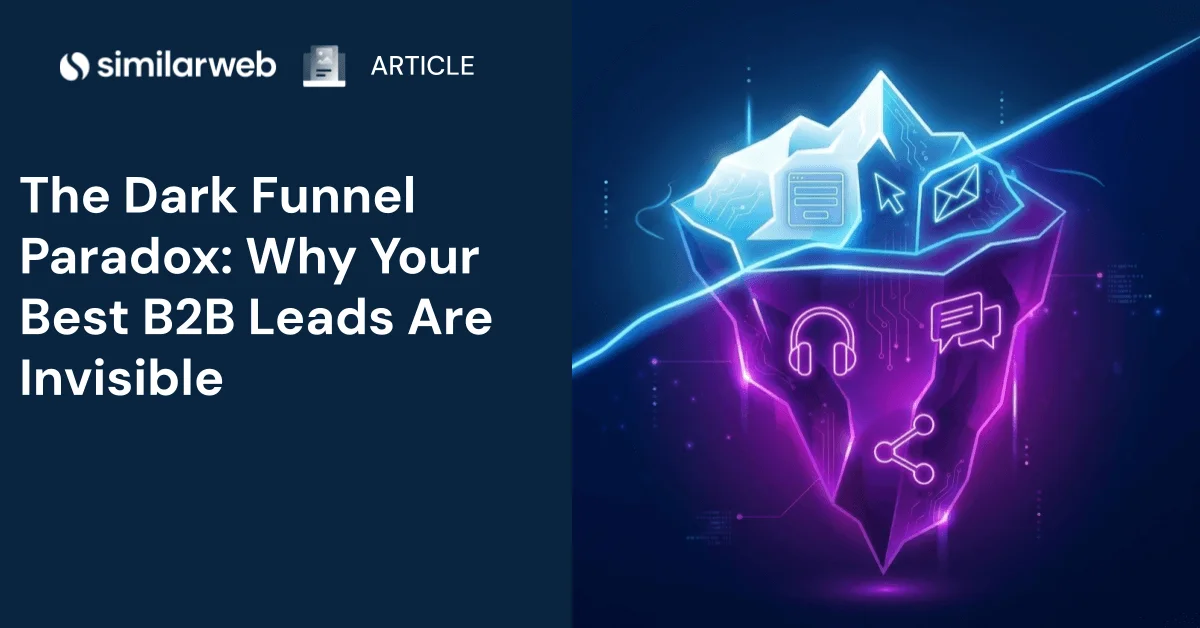
Infographic showing the B2B dark funnel with AI research and private communities as key components
Similarweb
Visual TL;DR
B2B Buyers Go DarkDriver
70% of buyer journey now happens before contacting sales
From the article 6 mentionsAI Brand Visibility as a Leading Indicator: Given that 70% of B2B buyers use AI for research, a brand's presence and sentiment in AI-generated answers serve as a proxy for dark funnel awareness.
AI Tools EmergeCore
From the article 6 mentionsThis 'dark funnel' is expanding, driven by a new wave of AI-powered research tools that allow buyers to gather intelligence silently and without traditional tracking.
Dark Funnel ExpandsContext
buyers retreat to private Slack, peer networks, and AI research platforms
From the article 9+ mentionsThis shift means CRMs often show a flat pipeline, while the 'dark funnel' is actually buzzing with activity.
Tracking Pixels FailDriver
traditional tracking pixels and UTM parameters cannot follow buyers into dark channels
From the articleBuyers are retreating to private Slack groups, peer networks, and AI research platforms where tracking pixels and UTM parameters simply can't follow.
CRMs Show FlatOutcome
From the articleThis shift means CRMs often show a flat pipeline, while the 'dark funnel' is actually buzzing with activity.
Marketers BlindOutcome
From the article 3 mentionsMarketers optimizing solely on visible data are operating with just 30% of the picture, making strategic decisions with a significant blind spot.
New Strategies NeededEffect
marketers need new strategies to find buyers in these untrackable channels
Contents(4)

The B2B buyer's journey is becoming increasingly opaque, with a staggering 70% of the process unfolding before a prospect ever contacts sales. This 'dark funnel' is expanding, driven by a new wave of AI-powered research tools that allow buyers to gather intelligence silently and without traditional tracking. Marketers optimizing solely on visible data are operating with just 30% of the picture, making strategic decisions with a significant blind spot. The harder demand gen teams chase traditional attribution, the more activity they push into untrackable channels.

Buyers are retreating to private Slack groups, peer networks, and AI research platforms where tracking pixels and UTM parameters simply can't follow. This shift means CRMs often show a flat pipeline, while the 'dark funnel' is actually buzzing with activity. Understanding this evolving landscape is critical for B2B success in 2026.

The Dark Funnel Paradox Deepens

The concept of the dark funnel isn't new. For years, marketers have grappled with 'dark social', links shared in direct messages, forwarded PDFs, or LinkedIn posts without referral data. This includes everything from a CFO discreetly asking peers for vendor recommendations to a buyer silently evaluating a category for months before a cold call. Traditional attribution models have always missed this, leading to the persistent, accurate complaint that 'last-touch attribution is broken.'

Now, generative AI is amplifying this problem. According to Similarweb data, the top four AI research tools, ChatGPT, Gemini, Perplexity, and Claude.ai, collectively generate over 7.6 billion visits monthly as of late 2025. Perplexity alone saw a 7x increase in monthly visits from January 2024 to December 2025. These aren't niche tools; they're mainstream research infrastructure. B2B buyers are using them to compare vendors and gather category insights, often without ever visiting a company's website or clicking an ad.

For example, queries like 'best competitive intelligence platforms for mid-market SaaS' or 'compare 6sense vs Bombora' generate summarized answers. A brand's appearance, or lack thereof, in these AI-generated responses shapes buyer perception. ChatGPT is already a significant referral source for major B2B research destinations, sending 3.37% of Forrester's traffic and 2.97% of Gartner's. This AI-assisted journey represents the dark funnel's newest, fastest-growing channel, and unlike private communities, it offers a degree of visibility.

Four Channels Hiding Your Best B2B Buyers

Not all dark funnel activity is the same, and understanding the specific channels helps prioritize visibility efforts.

  • Private Slack and Discord Communities: Thousands of B2B professional communities, like Revenue Collective and SaaStr channels, host substantive, peer-to-peer conversations invisible to marketing stacks. A recommendation within these groups can be highly influential, yet entirely unknown to vendors.
  • AI-Assisted Research: This is the emergent frontier. Buyers use tools like ChatGPT and Perplexity for vendor research. The AI's summary, rather than a direct website visit, forms their initial impression, bypassing traditional analytics and retargeting.
  • Peer Networks and Word-of-Mouth: Gartner research indicates buyers complete 65% to 70% of their journey before sales engagement. This phase relies heavily on trusted recommendations from colleagues, threads on LinkedIn, or investor referrals, channels that are inherently difficult to measure.
  • Dark Social (Ungated Content & Private Shares): Content shared via text messages, DMs, or private groups often shows up as 'direct' traffic in analytics. This misattribution robs content programs of credit. SparkToro data shows 100% of traffic from Slack, Discord, and WhatsApp is misattributed as direct. Leading B2B platforms like Gong (72.1% direct traffic) and HubSpot (71.6% direct traffic) see a significant portion of their visits bypass attribution entirely.

Why Intent Data Isn't Enough

Buyer intent data was meant to illuminate the dark funnel, flagging companies researching relevant keywords. While valuable, it has a fundamental limitation: it only sees activity on the open web through cooperating data networks. It cannot capture direct conversations in Slack, queries typed into ChatGPT, or private peer recommendations. One mid-market B2B firm learned this when their intent data showed low signals for a target account. Weeks later, that account signed with a competitor, a decision influenced by months of private peer network discussions and an AI comparison on Perplexity, none of which surfaced in their intent platform.

Intent data remains a vital signal, but it needs augmentation. The dark funnel operates outside its reach. This is where buyer intent data must merge with a new layer of intelligence focused on AI visibility tracking.

Building Your Dark Funnel Intelligence Stack

Surfacing dark funnel activity requires combining signals from multiple sources. No single tool offers a complete solution.

  • Behavioral Signals from Known Accounts: Tools like HubSpot's Breeze Intelligence (formerly Clearbit Reveal) and Demandbase can tie anonymous website traffic back to company IPs. Layering this with product usage data and engagement with ungated content provides a fuller picture of account-level intent, even without form fills. The pattern of behavior across multiple touchpoints matters more than any single interaction.
  • AI Brand Visibility as a Leading Indicator: Given that 70% of B2B buyers use AI for research, a brand's presence and sentiment in AI-generated answers serve as a proxy for dark funnel awareness. Monitoring which AI tools drive referral traffic to your site, tracking brand mentions in AI responses, and identifying competitor gains in AI visibility are emerging metrics for understanding dark funnel share shifts. Similarweb data shows that analyst sites like Forrester receive significantly more AI traffic (3.37%) than pure SaaS vendors like Salesforce (0.06%), suggesting buyers use AI for validation and research, not just initial discovery. Companies with authoritative content are already building dark funnel presence as a byproduct.
  • Intent Data Platforms Layered with Other Signals: Traditional intent data from platforms like Bombora and 6sense remains a Tier 1 signal. However, it's most effective when combined with account-level web behavior, AI brand visibility metrics, CRM engagement patterns, and social listening for public brand mentions.

By integrating these diverse intelligence layers, B2B companies can begin to map and influence the invisible buyer journey, turning the dark funnel from a blind spot into a strategic advantage.

© 2026 StartupHub.ai. All rights reserved. You may not republish this article in full without a license. Search engines and AI research tools may crawl and summarize for reference. Bulk reproduction or model training requires a license. See our terms.
Daniel Singer

Written by

Daniel Singer

Editor, StartupHub.ai

Daniel Singer is the editor of StartupHub.ai, a technology expert and thought leader on AI and its applications across sectors, from fintech and healthcare to developer tooling and consumer software. He writes and tests the tools covered here thoroughly and regularly, and built StartupHub.ai to give founders, operators and buyers a clearer read on what they are actually being sold.