

AWS CEO: AI Business is 'Massive' and Broadly Driven

AWS CEO Matt Garman discusses the massive, broad-based growth of AWS's AI business, the shift towards inference, custom silicon, and the importance of customer choice in AI models.

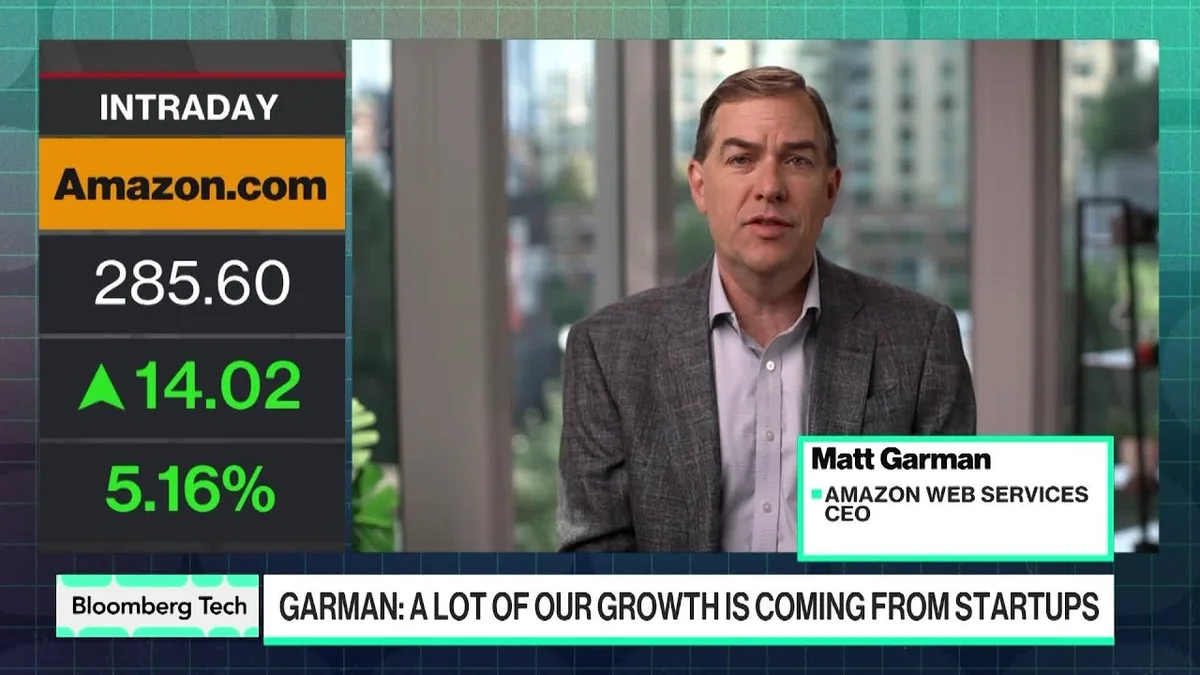
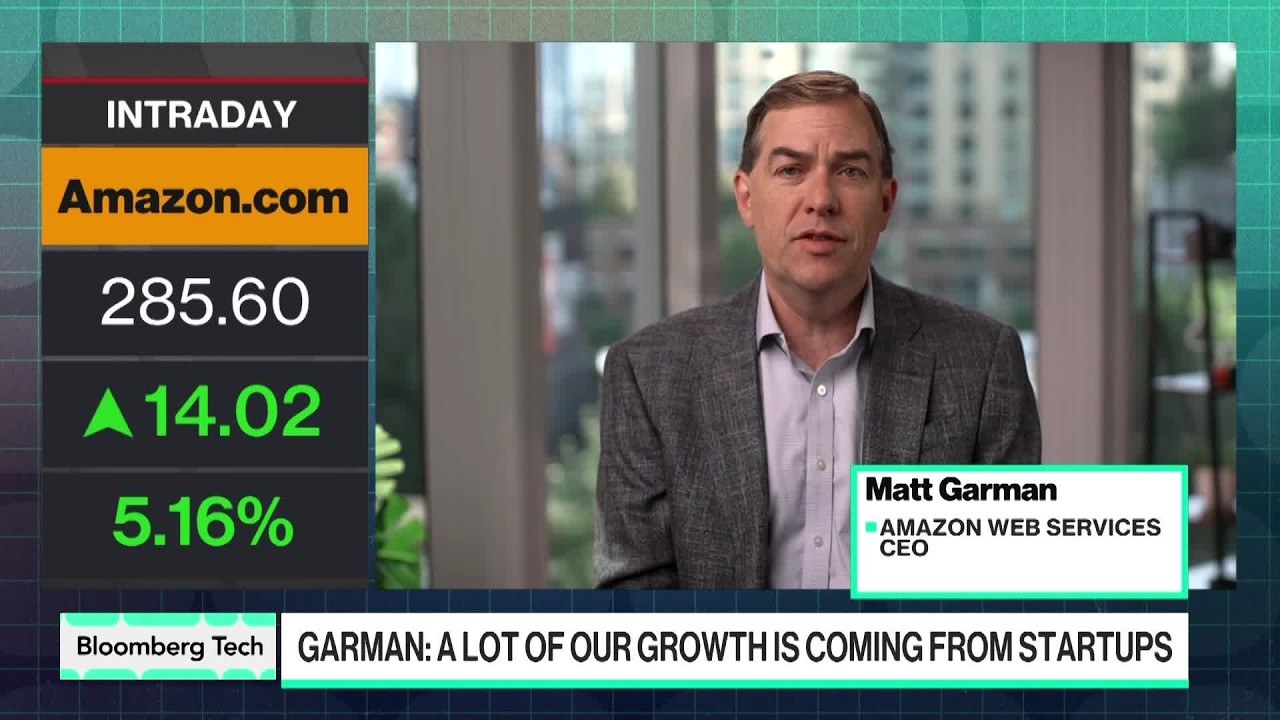
Matt Garman, CEO of Amazon Web Services, speaks during a Bloomberg Tech interview.
Bloomberg Technology
Visual TL;DR
Broad AI AdoptionDriver
From the article 3 mentionsGarman clarified that the rapid growth is not solely attributed to frontier labs like OpenAI and Anthropic, but rather a widespread adoption of AI across all AWS startup and enterprise customers.
Open-Weight ModelsContext
AWS supports various models, emphasizing customer choice and innovation
From the article 9+ mentionsHe stated that while frontier models from companies like OpenAI and Anthropic are highly valued, having a broad ecosystem of open-weight models allows customers to customize and innovate further.
AWS AI BusinessCore
From the article 9+ mentionsMatt Garman, CEO of Amazon Web Services (AWS), stated that the company's AI business is experiencing "just massive" growth, a trend that is broadly distributed across its customer base and not concentrated on a few major AI labs.
Impacts All IndustriesContext
financial services, healthcare, retail, media leveraging AI for business expansion
Shift to InferenceDriver
growing demand for running AI models, not just training them
From the article 5 mentionsGarman noted a significant shift towards inference workloads as AI models become more popular and integrated into customer operations.
Massive AI GrowthOutcome
From the article 3 mentionsMatt Garman, CEO of Amazon Web Services (AWS), stated that the company's AI business is experiencing "just massive" growth, a trend that is broadly distributed across its customer base and not concentrated on a few major AI labs.
Custom Silicon StrategyCore
Amazon developing its own chips like Trainium and Inferentia for AI workloads
From the articleGarman also discussed the momentum in AWS's chip business, highlighting the success of its custom silicon like Trainium and Graviton.
Cost Savings & ChoiceEffect
custom silicon offers better performance and lower costs for customers
From the articleFor instance, he noted that for optimized workloads, customers can save "20, 30% off of their inference costs when they run that on Trainium." He also highlighted the importance of offering choice, including the ability to run on both AWS custom processors and Nvidia GPUs.
Contents(7)

Matt Garman, CEO of Amazon Web Services (AWS), stated that the company's AI business is experiencing "just massive" growth, a trend that is broadly distributed across its customer base and not concentrated on a few major AI labs.

Broad AI Adoption Across Industries

Garman clarified that the rapid growth is not solely attributed to frontier labs like OpenAI and Anthropic, but rather a widespread adoption of AI across all AWS startup and enterprise customers. He highlighted that AI is impacting nearly every industry, including financial services, healthcare, retail, and media, as companies of all sizes seek to leverage AI for business expansion.

The full discussion can be found on Bloomberg Technology's YouTube channel.

AWS CEO Says AI Business Is 'Just Massive' - Bloomberg Technology
AWS CEO Says AI Business Is 'Just Massive', from Bloomberg Technology

"We're seeing a lot of growth from the top, frontier labs, but for AWS, we're not like some others maybe just concentrated on just one or two large customers, but it's actually growth from a really broad set of customers," Garman said.

AI Business Revenue and Workload Split

The AWS AI business currently has a revenue run rate of $25 billion, encompassing both model training and inference. Garman noted a significant shift towards inference workloads as AI models become more popular and integrated into customer operations.

"I would say more and more, it keeps shifting more towards inference," Garman explained. "As these models get really popular and really powerful, more and more companies are integrating that inference into their workloads."

CAPEX Investments and Demand

Amazon's substantial capital expenditure, projected at $220 billion for the year, is largely driven by AI infrastructure. Garman confirmed that this investment is expected to increase next year to meet the high demand, with much of the capacity already spoken for through 2027 and 2028.

"We expect that CapEx number will be bigger next year than it is this year," Garman stated. "Today, demand still significantly outstrips supply, and we're trying to build and invest to keep up with what customers are asking for."

Amazon's Custom Silicon Strategy

Garman also discussed the momentum in AWS's chip business, highlighting the success of its custom silicon like Trainium and Graviton. He confirmed that the chip business has a revenue run rate of $25 billion, primarily from renting out capacity based on these chips.

"Graviton is incredibly popular; we've been building Graviton for many years now, and in fact, almost all of our large customers use Graviton as some part of their deployment," he said. Trainium chips are also in high demand, with capacity largely sold out through the end of next year.

Cost Savings and Choice

Garman emphasized the cost benefits customers experience by running workloads on AWS silicon. For instance, he noted that for optimized workloads, customers can save "20, 30% off of their inference costs when they run that on Trainium." He also highlighted the importance of offering choice, including the ability to run on both AWS custom processors and Nvidia GPUs.

Open-Weight Models and Innovation

Regarding the signing of the open-weights letter, Garman stressed the importance of customer choice and fostering innovation. He stated that while frontier models from companies like OpenAI and Anthropic are highly valued, having a broad ecosystem of open-weight models allows customers to customize and innovate further.

"We think that it's important to not over-legislate there and give that flexibility for customers to use whichever models they find to be the best fit," Garman commented. He added that AWS aims to ensure that any future AI legislation is applied evenly across both frontier and open-weight models.

Monetization of Open Models

Garman also touched upon the evolving business models of open-weight AI companies, noting that many are beginning to introduce licensing around their models, particularly for cloud deployments. He believes this trend will lead to a blend of models, with providers finding ways to monetize their intellectual property.

"AWS is a great platform for companies to come and offer their IP and their capabilities to the world," Garman concluded. "So everybody, whether they're startups, whether they're governments, whether they're large enterprises, everybody can build on top of AWS. And if they have choice and they have access to these different models, it allows companies to be able to come and monetize them and sell when they have value to customers."

© 2026 StartupHub.ai. All rights reserved. You may not republish this article in full without a license. Search engines and AI research tools may crawl and summarize for reference. Bulk reproduction or model training requires a license. See our terms.
Daniel Singer

Written by

Daniel Singer

Editor, StartupHub.ai

Daniel Singer is the editor of StartupHub.ai, a technology expert and thought leader on AI and its applications across sectors, from fintech and healthcare to developer tooling and consumer software. He writes and tests the tools covered here thoroughly and regularly, and built StartupHub.ai to give founders, operators and buyers a clearer read on what they are actually being sold.