

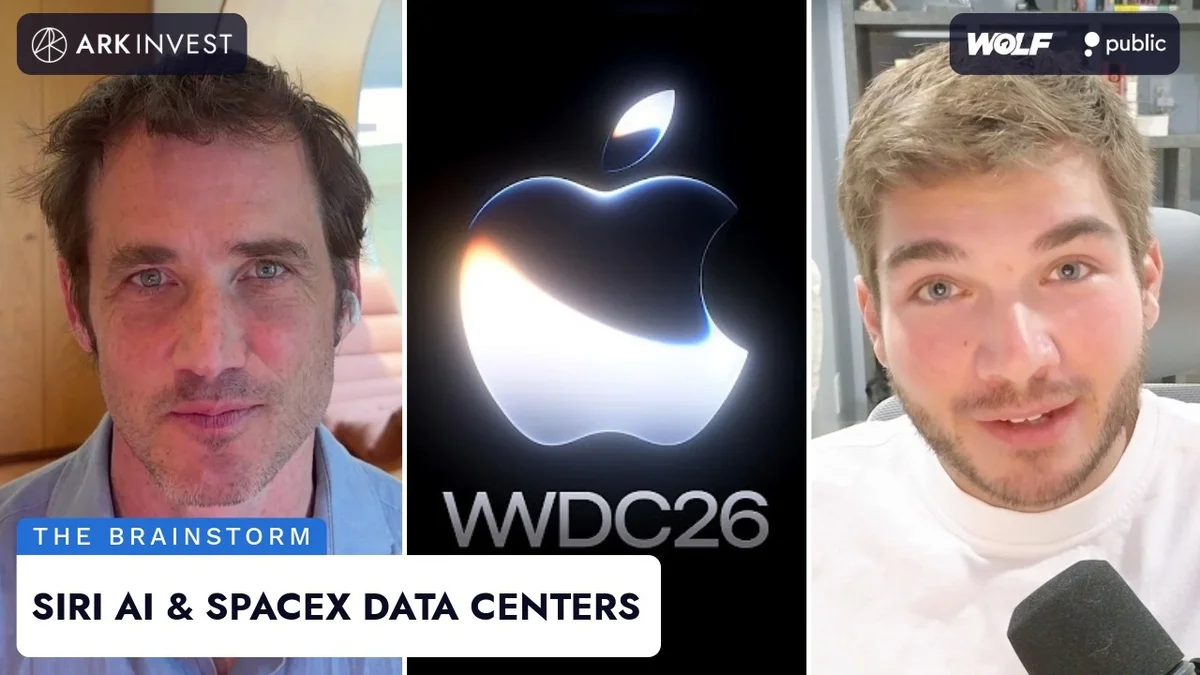
Apple WWDC, Siri AI, and SpaceX Data Centers

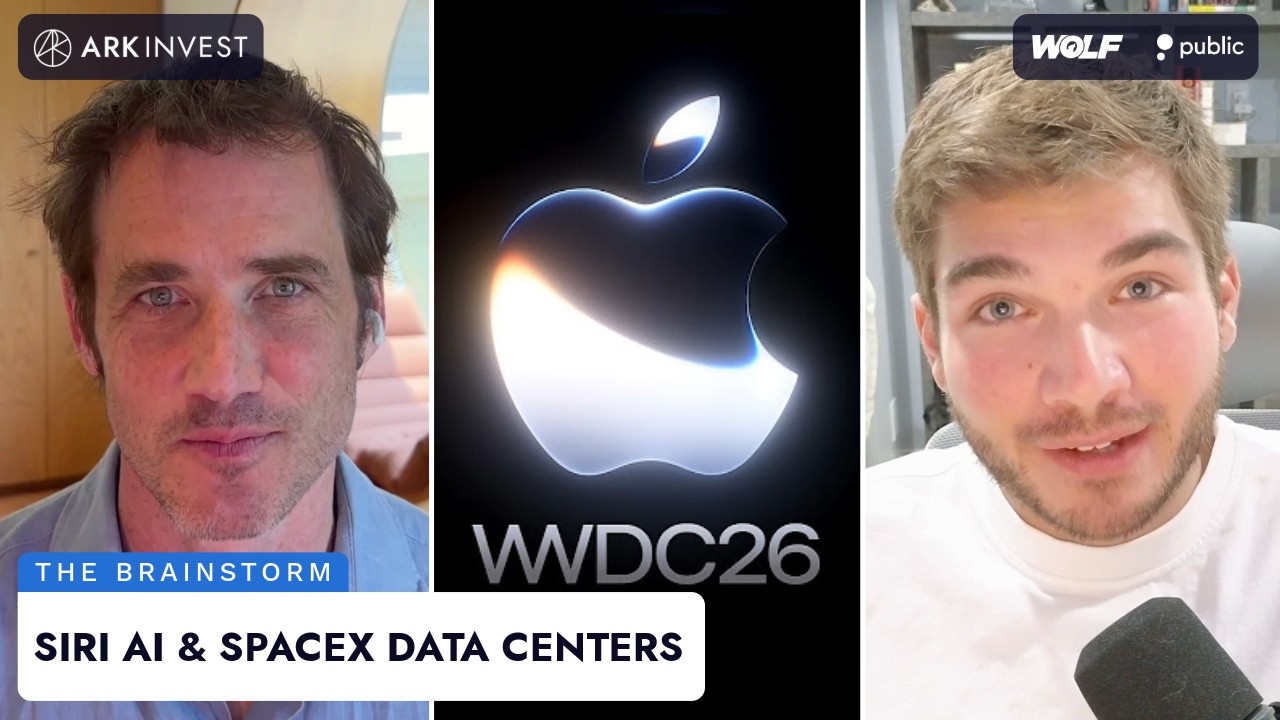
Brett Winton and Nick Grous discuss Apple's Siri AI upgrades, Gemini integration, and SpaceX's data center plans on 'The Brainstorm'.

Brett Winton and Nick Grous discussing AI advancements on The Brainstorm
Hosts Brett Winton and Nick Grous discuss AI developments.· ARK Invest
Visual TL;DR
Apple WWDCCore
Apple's annual developer conference announcements
From the article 5 mentionsThe conversation centers on Apple's recent WWDC announcements, particularly the much-anticipated upgrades to Siri's artificial intelligence capabilities.
SpaceX Data CentersCore
SpaceX building data centers for Starlink
From the article 4 mentionsThe hosts also delve into the broader implications of AI infrastructure, touching upon SpaceX's strategic moves into data centers.
Siri AI UpgradeDriver
From the article 7 mentionsThe conversation centers on Apple's recent WWDC announcements, particularly the much-anticipated upgrades to Siri's artificial intelligence capabilities.
AI Infrastructure NeedsDriver
Supporting vast computational demands of AI
From the article 7 mentionsThis move is seen as a critical enabler for both the Starlink satellite internet service and SpaceX's broader AI compute needs.
Gemini IntegrationContext
Potential integration with Google's Gemini models
From the article 4 mentionsThe discussion explores how Apple plans to integrate advanced AI models, potentially including those from Google's Gemini family, to transform Siri into a more sophisticated and contextually aware digital assistant.
Sophisticated AssistantEffect
Siri becomes more contextually aware and capable
From the article 3 mentionsThe discussion explores how Apple plans to integrate advanced AI models, potentially including those from Google's Gemini family, to transform Siri into a more sophisticated and contextually aware digital assistant.
Future of TechOutcome
From the article 3 mentionsThe episode examines how these two seemingly disparate areas, consumer AI assistants and large-scale data infrastructure, are interconnected and driving the future of technology.
Contents(3)

In the latest episode of 'The Brainstorm,' hosts Brett Winton and Nick Grous dive into the critical developments shaping the AI and technology sectors. The conversation centers on Apple's recent WWDC announcements, particularly the much-anticipated upgrades to Siri's artificial intelligence capabilities. The discussion explores how Apple plans to integrate advanced AI models, potentially including those from Google's Gemini family, to transform Siri into a more sophisticated and contextually aware digital assistant.

Apple WWDC, Siri AI, and SpaceX Data Centers - ARK Invest
Apple WWDC, Siri AI, and SpaceX Data Centers, ARK Invest

The hosts also delve into the broader implications of AI infrastructure, touching upon SpaceX's strategic moves into data centers. This development is seen as crucial for supporting the vast computational demands of SpaceX's Starlink satellite network and its broader AI initiatives. The episode examines how these two seemingly disparate areas, consumer AI assistants and large-scale data infrastructure, are interconnected and driving the future of technology.

Siri's AI Leap and Gemini Integration

A significant portion of the discussion focuses on the potential for Siri to undergo a major overhaul, moving beyond its current limitations. Winton and Grous highlight the expectation that Siri will soon be powered by a more advanced AI model, with a particular focus on the possibility of integrating Google's Gemini models. This integration is anticipated to bring a new level of conversational depth and contextual understanding to Siri, making it more competitive with other leading AI assistants.

The conversation emphasizes that this is not just a minor update but a fundamental shift in Siri's underlying architecture. The hosts suggest that Apple has been working on a new back-end AI architecture for years, and this WWDC announcement marks a significant step forward. The ability for Siri to access and process personal context, including messages, photos, and other data, promises a more personalized and efficient user experience. They note that this move aligns with the broader industry trend of AI systems becoming more integrated and capable of executing complex tasks.

SpaceX's Data Center Strategy

The episode also touches upon SpaceX's strategic expansion into the data center market. The hosts discuss how SpaceX is reportedly leasing significant data center capacity, potentially in the tens of gigawatts, to power its AI ambitions. This move is seen as a critical enabler for both the Starlink satellite internet service and SpaceX's broader AI compute needs. The ability to process vast amounts of data efficiently is paramount for AI development, and by securing data center resources, SpaceX is positioning itself to be a key player in the AI infrastructure landscape.

The discussion highlights the high cost associated with this infrastructure, with estimates suggesting substantial investments per gigawatt. However, the potential for high profit margins in this sector, particularly for companies with proprietary technology and a significant first-mover advantage, makes it an attractive venture. The integration of AI compute with satellite infrastructure is a key theme, suggesting a future where connectivity and AI processing are seamlessly integrated.

The Competitive AI Landscape

Winton and Grous also reflect on the broader competitive dynamics within the AI industry. They observe that the "winner-take-most" nature of AI development means that a few dominant players are likely to emerge. Companies like Apple, Google, and Microsoft are making significant investments to capture market share and establish leadership in AI. The conversation touches upon how these companies are leveraging their existing strengths, whether it's Apple's vast user base and hardware ecosystem or Microsoft's cloud infrastructure and partnership with OpenAI, to drive AI innovation.

The discussion also considers the challenges of monetization and the trade-offs between training AI models and deploying them efficiently. The hosts emphasize that while powerful AI models require significant resources for training, the ability to deploy them effectively and profitably through subscription services or integrated hardware is key to long-term success. The discussion concludes by highlighting the rapid pace of AI development and the ongoing race among major technology players to define the future of intelligent systems.

© 2026 StartupHub.ai. All rights reserved. You may not republish this article in full without a license. Search engines and AI research tools may crawl and summarize for reference. Bulk reproduction or model training requires a license. See our terms.
Daniel Singer

Written by

Daniel Singer

Editor, StartupHub.ai

Daniel Singer is the editor of StartupHub.ai, a technology expert and thought leader on AI and its applications across sectors, from fintech and healthcare to developer tooling and consumer software. He writes and tests the tools covered here thoroughly and regularly, and built StartupHub.ai to give founders, operators and buyers a clearer read on what they are actually being sold.