

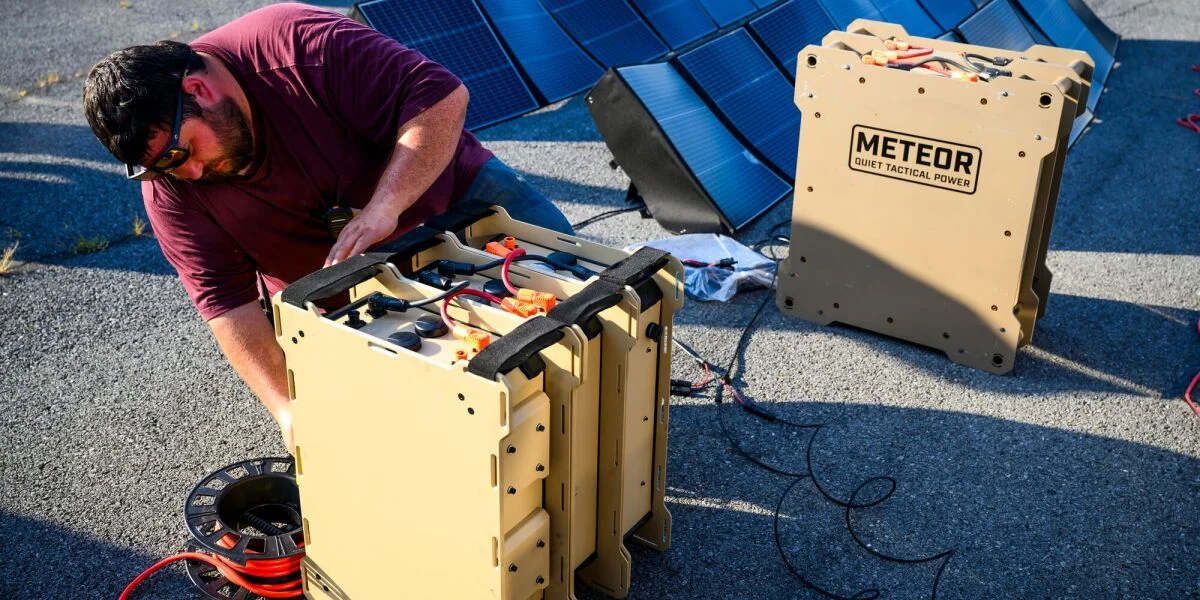
Amazon's rapid disaster tech expands

Amazon is significantly expanding its portable disaster relief technology, aiming to restore power, Wi-Fi, and water in minutes.

Amazon volunteers loading portable disaster relief technology systems onto a cargo plane.
Amazon volunteers prepare rapid response technology systems for deployment.· Amazon News
Visual TL;DR
Disaster Tech ExpansionDriver
Amazon significantly expanding portable disaster relief technology
From the articleThe development of these Amazon's Disaster Response Tech systems addresses critical gaps in disaster recovery.
2,000+ Portable SystemsCore
From the articleAmazon is dramatically scaling its disaster relief technology, pledging over 2,000 portable systems capable of restoring critical services like power, Wi-Fi, and clean water within minutes.
Restore Power, Wi-Fi, WaterEffect
Systems restore power, Wi-Fi, and clean water in minutes
From the article 3 mentionsConfigurations range from satellite-powered Wi-Fi and solar microgrids to water purification units and drone-detection technology.
50x ExpansionOutcome
From the articleThis initiative marks a significant 50x expansion from the 42 systems deployed last year, with more than 800 slated to ship ahead of the upcoming hurricane season.
Free to NonprofitsOutcome
From the article 2 mentionsAccording to Amazon News, the tech giant will provide these units to nonprofit partners at no cost by 2027.
Single-Person DeploymentContext
From the article 3 mentionsEach system is designed for single-person deployment and can restore a vital service in the immediate aftermath of natural disasters.
Diverse ConfigurationsContext
Satellite Wi-Fi, solar microgrids, water purification, drone detection
From the article 2 mentionsNonprofit partners request systems based on specific disaster-related needs, with Amazon matching configurations to identified service failures.
Aid AgenciesCore
From the article 2 mentionsThese capabilities, often costing agencies tens or hundreds of thousands of dollars, will be made available to organizations like the American Red Cross and World Central Kitchen.
Contents(3)

Amazon is dramatically scaling its disaster relief technology, pledging over 2,000 portable systems capable of restoring critical services like power, Wi-Fi, and clean water within minutes. This initiative marks a significant 50x expansion from the 42 systems deployed last year, with more than 800 slated to ship ahead of the upcoming hurricane season. According to Amazon News, the tech giant will provide these units to nonprofit partners at no cost by 2027.

Each system is designed for single-person deployment and can restore a vital service in the immediate aftermath of natural disasters. Configurations range from satellite-powered Wi-Fi and solar microgrids to water purification units and drone-detection technology. These capabilities, often costing agencies tens or hundreds of thousands of dollars, will be made available to organizations like the American Red Cross and World Central Kitchen.

Restoring Services in Minutes

The urgency of such technology was highlighted during Hurricane Melissa in Jamaica, where Amazon's systems quickly restored satellite Wi-Fi and solar electricity to a damaged hospital. This rapid restoration allowed medical staff to coordinate care when traditional infrastructure failed.

These portable units are reusable, returning to Amazon for refurbishment after each deployment. This circular approach ensures the technology's longevity and broadens its impact across multiple communities and events.

Scaling Up Disaster Preparedness

Amazon plans to have more than 800 systems ready from its Tennessee hub for the 2026 hurricane season. By the end of 2027, additional units will be positioned in California and Pennsylvania, offering coast-to-coast U.S. coverage and proximity to at-risk island communities.

At full scale, the program aims to support emergency operations at 130 locations simultaneously. This could provide enough off-grid energy to power a 50-bed hospital for three days or support extensive food service operations at a shelter.

Technology Addressing Critical Gaps

The development of these Amazon's Disaster Response Tech systems addresses critical gaps in disaster recovery. Traditional relief efforts often focus on immediate physical needs, leaving essential infrastructure like power and communication systems offline for weeks.

The technology also incorporates features like drone-detection capabilities, which are crucial for preventing interference with emergency aircraft during wildfires or other crises. This capability, usually a costly addition, is provided at no charge to local agencies.

Nonprofit partners request systems based on specific disaster-related needs, with Amazon matching configurations to identified service failures. The deployment leverages Amazon's global delivery network for rapid transport, even when roads are impassable.

World Central Kitchen, for instance, utilizes the solar power units to maintain food service operations after dark and reliable Wi-Fi for coordination during disaster responses, ensuring hot meals can be served to displaced populations around the clock.

© 2026 StartupHub.ai. All rights reserved. You may not republish this article in full without a license. Search engines and AI research tools may crawl and summarize for reference. Bulk reproduction or model training requires a license. See our terms.
Daniel Singer

Written by

Daniel Singer

Editor, StartupHub.ai

Daniel Singer is the editor of StartupHub.ai, a technology expert and thought leader on AI and its applications across sectors, from fintech and healthcare to developer tooling and consumer software. He writes and tests the tools covered here thoroughly and regularly, and built StartupHub.ai to give founders, operators and buyers a clearer read on what they are actually being sold.