

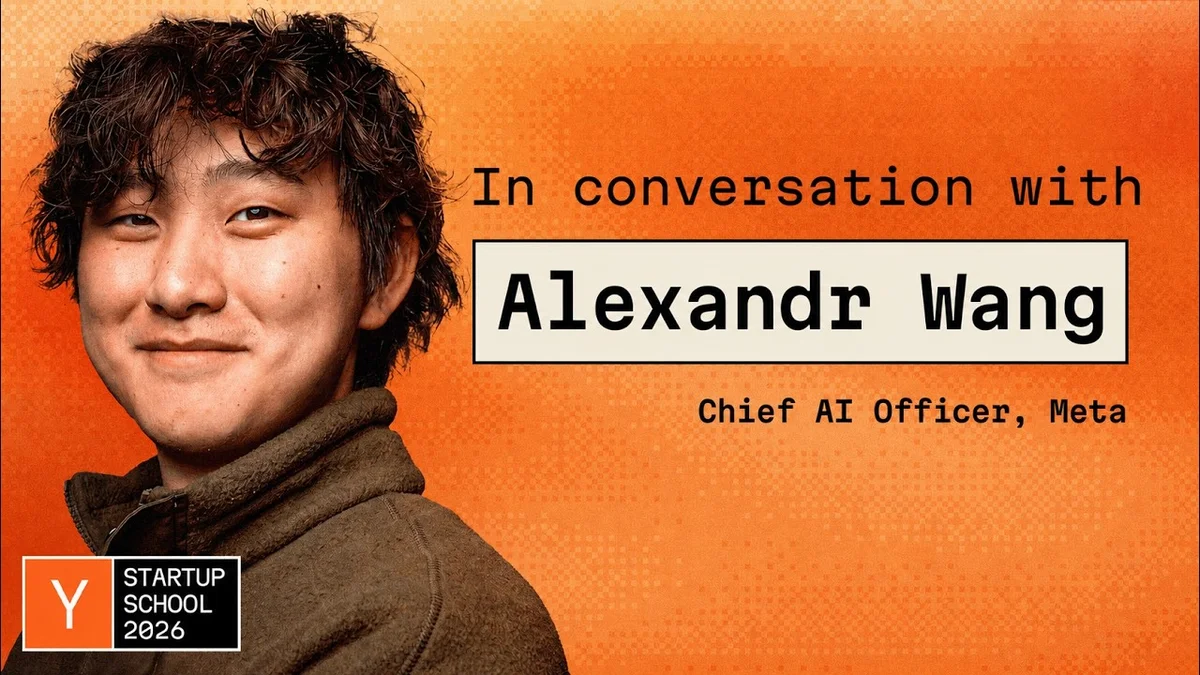
Alex Wang: From Math Whiz to AI Pioneer

Meta's Alex Wang discusses his journey from early AI research to leading Meta's AI efforts, emphasizing the criticality of data and the future of agentic AI.

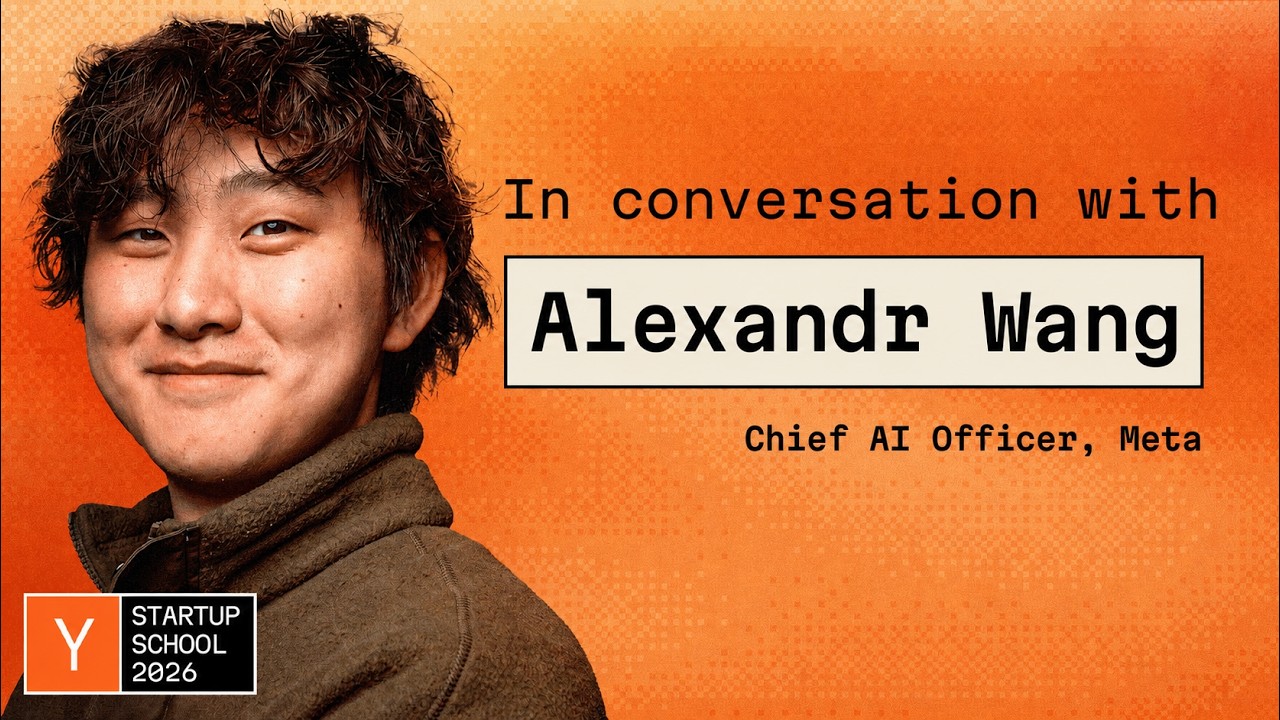
Alexandr Wang speaking on stage at a tech conference.
YC
Visual TL;DR
Math WhizContext
early success in math and computer science competitions, seeking big impact
From the article 2 mentionsIn a candid conversation at Y Combinator's Startup School, Alex Wang, Chief AI Officer at Meta, shared his journey from a math olympiad participant to a leader in the AI space.
Silicon Valley PullDriver
friend's Palantir internship and Quora gap year inspired move
From the article 2 mentionsThis led Wang to take a gap year after high school to work at Quora in Silicon Valley before attending MIT at age 18.
Scale AI GenesisCore
founded Scale AI at 19, addressing data labeling bottleneck for AI
From the article 2 mentionsHe began building Scale AI at 19, a period he described as a constant learning experience, "drinking from the fire hose pretty constantly."
Data BottleneckDriver
critical need for high-quality data to train and improve AI models
From the article 5 mentionsWang recalled a pivotal moment during his time at MIT when he realized the critical bottleneck in training AI models was data.
Meta AI LeaderCore
now Chief AI Officer at Meta, leading frontier AI efforts
From the article 7 mentionsIn a candid conversation at Y Combinator's Startup School, Alex Wang, Chief AI Officer at Meta, shared his journey from a math olympiad participant to a leader in the AI space.
Agentic AI FutureEffect
vision for AI with agency, transforming human-computer interaction
From the article 3 mentionsWang also discussed Meta's vision for "personal superintelligence," envisioning a future where billions of people have tailored AI assistants that expand their agency.
Open Source CommitmentContext
Meta's dedication to open source AI fosters innovation and collaboration
Abundant IntelligenceOutcome
future where AI provides widespread intelligence and empowers individuals
From the articleReflecting on the decade of AI progress, Wang believes it will be obvious in hindsight that intelligence and agency are becoming abundant.
Contents(6)

In a candid conversation at Y Combinator's Startup School, Alex Wang, Chief AI Officer at Meta, shared his journey from a math olympiad participant to a leader in the AI space. Wang recounted his early days growing up in Los Alamos, New Mexico, a seemingly isolated upbringing that fueled his ambition for "really big things." He detailed how an early internship experience and a friend's path into Silicon Valley inspired him to pursue computer science.

From Math Competitions to the Valley

Wang's academic prowess was evident early on, with success in math and computer science competitions. However, he felt a pull towards making a significant impact, even if the exact path wasn't clear. A friend's internship at Palantir after high school served as a crucial early influence. This led Wang to take a gap year after high school to work at Quora in Silicon Valley before attending MIT at age 18. He began building Scale AI at 19, a period he described as a constant learning experience, "drinking from the fire hose pretty constantly."

The full discussion can be found on YC's YouTube channel.

Alexandr Wang: From Los Alamos to Superintelligence - YC
Alexandr Wang: From Los Alamos to Superintelligence, from YC

The Genesis of Scale AI: Data as the Bottleneck

Wang recalled a pivotal moment during his time at MIT when he realized the critical bottleneck in training AI models was data. While compute and code were readily accessible, obtaining quality datasets was a significant challenge. This insight led to the founding of Scale AI, initially focused on providing data for self-driving cars and computer vision applications. He noted the initial "unsexy" perception of data in the eyes of venture capitalists, many of whom hadn't trained models themselves. This skepticism, he observed, has since reversed, with data now widely recognized as a key opportunity in AI.

The Power of First Principles and Conviction

Wang emphasized the importance of "first principles thinking" and developing "conviction in a set of beliefs that nobody else agrees with." He argued that truly successful companies are often built on ideas that are not yet popular, requiring founders to "toil in obscurity for years." He stressed the need for entrepreneurs to develop their own internal compass, as relying too heavily on external opinions can lead to confusion and stagnation.

The early mechanics of building a company, he admitted, are not skills one is typically born with. Instead, entrepreneurs must continuously improve and learn quickly. He highlighted the current era as particularly "lucky" for startups, with resources like Y Combinator and the availability of AI agents to assist founders.

AI's Transformative Potential and Meta's Vision

Looking ahead, Wang believes the current bottleneck in AI is not model progress but the diffusion of this technology throughout the world. He stated, "If the models didn't improve at all from today, there would still be like decades and decades of like total upheaval and change in the economy and how the world operates." He views this as a "once in a civilization opportunity" for builders to shape the future.

Wang also discussed Meta's vision for "personal superintelligence," envisioning a future where billions of people have tailored AI assistants that expand their agency. This vision extends to entrepreneurship, with Meta anticipating an explosion of businesses powered by these AI agents working in concert with personal agents.

Meta's Frontier AI Efforts and Open Source Commitment

He shared insights into his work at Meta, including the recent launch of MuseSpark 1.1 and the rapid development of new models. Wang highlighted the critical role of "talent density" in frontier AI research and the need for an operating model that embraces experimentation and scientific rigor. He also emphasized Meta's commitment to open-source models, aiming to empower the broader AI community.

Wang expressed excitement about Meta's models, noting that MuseSpark is significantly more cost-effective than competitors. He stressed that AI products should not be prohibitively expensive and that accessibility is key to unlocking innovation.

The Future is Abundant Intelligence and Agency

Reflecting on the decade of AI progress, Wang believes it will be obvious in hindsight that intelligence and agency are becoming abundant. The scarce resource, he posited, will shift to "vision and ambition." He concluded by urging builders to have a clear vision for the future and the drive to execute it, noting that AI will significantly amplify these efforts. He also acknowledged the responsibility of builders to prepare the world for these changes, addressing security and risk management.

Wang advised aspiring entrepreneurs to ignore the noise, develop their own compass, and identify the "exponential curves" in technology. He likened the current AI progress to Moore's Law in its transformative potential, even when the initial applications seem mundane.

Meta announced it is offering $1,000 in free credits for the Spark API to attendees, signaling a commitment to fostering developer innovation in the AI space.

© 2026 StartupHub.ai. All rights reserved. You may not republish this article in full without a license. Search engines and AI research tools may crawl and summarize for reference. Bulk reproduction or model training requires a license. See our terms.
Daniel Singer

Written by

Daniel Singer

Editor, StartupHub.ai

Daniel Singer is the editor of StartupHub.ai, a technology expert and thought leader on AI and its applications across sectors, from fintech and healthcare to developer tooling and consumer software. He writes and tests the tools covered here thoroughly and regularly, and built StartupHub.ai to give founders, operators and buyers a clearer read on what they are actually being sold.