



In a candid discussion on "The a16z Show," Palantir Technologies CEO Alex Karp, a prominent figure known for his deep dives into technology's intersection with global politics and societal shifts, articulated his views on the current geopolitical landscape, the race for AI supremacy, and the vital role of American technological leadership. Karp, who co-founded Palantir in 2003 with a mission to help Western governments and their allies analyze data and operate more effectively, stressed the urgent need for the United States to maintain its technological and military advantage in an increasingly complex and competitive world.
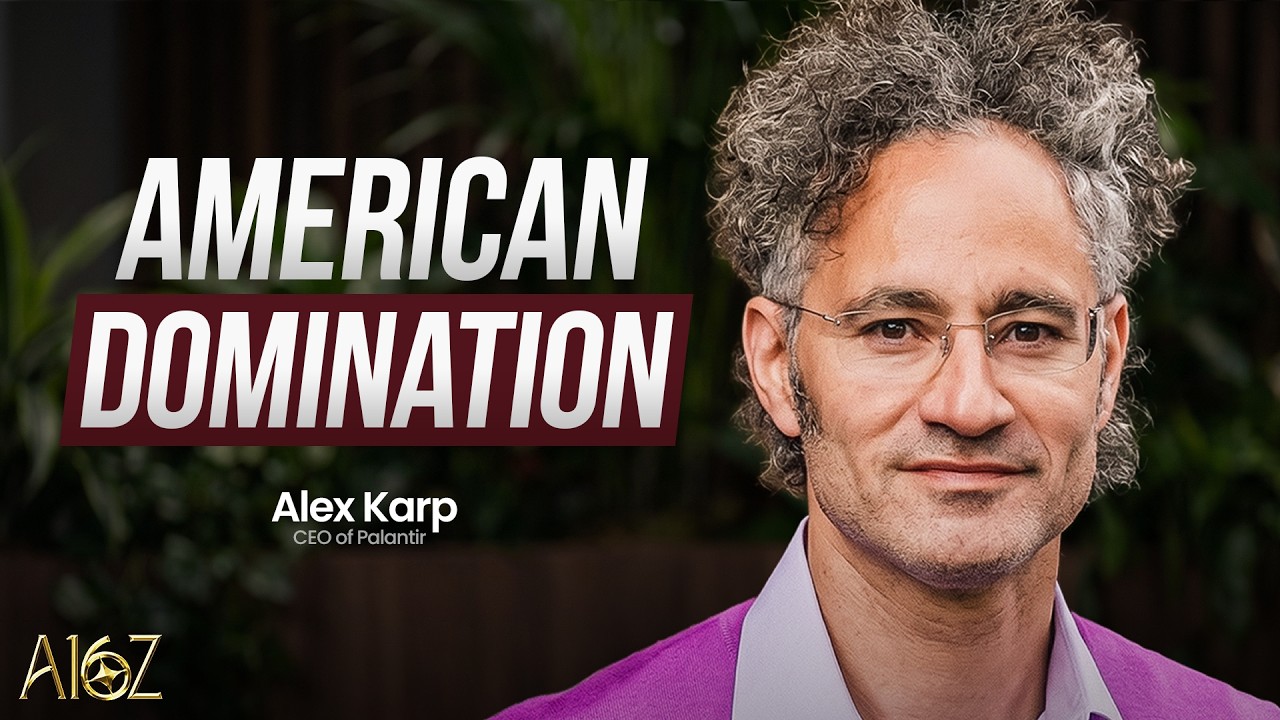
Alex Karp: A Visionary in Data and Defense
Alex Karp is a unique figure in the tech world. Holding a PhD in Neoplatonic Social Philosophy from Goethe University Frankfurt, his academic background might seem unconventional for a tech CEO, but it informs his nuanced perspective on the philosophical and ethical dimensions of technology. Karp is known for his provocative insights and his unwavering commitment to Palantir's mission, which he often frames as enabling the West to defend its values and interests in a rapidly changing world. Palantir, named after the seeing stones in J.R.R. Tolkien's "The Lord of the Rings," provides sophisticated software platforms that help organizations integrate, manage, and secure their data, particularly for government agencies in defense, intelligence, and public health.
The Geopolitical Imperative for AI Dominance
Karp opened the discussion by underscoring the significance of the current technological race, particularly in artificial intelligence. He posited that the global balance of power is increasingly tied to a nation's ability to lead in AI and advanced software capabilities. Karp drew a stark comparison between the United States and its geopolitical rivals, notably China and Russia, emphasizing that a failure to maintain a decisive technological edge could have profound consequences for democratic societies. He articulated a clear thesis: that the United States must not only innovate but also ensure its technological advancements are aligned with its foundational values.
"We are the power that actually has a choice," Karp stated, highlighting the unique position of the U.S. in shaping the future of technology. He elaborated on the idea that while other nations might prioritize different outcomes, the American approach is rooted in a commitment to individual liberty and democratic principles. This, he argued, provides a critical differentiator and a moral imperative to lead in the development and deployment of AI and other advanced technologies.
Palantir's Role in National Security
The conversation naturally gravitated towards Palantir's contributions to national security and defense. Karp spoke about the company's long-standing work with government agencies, providing them with the tools to analyze vast amounts of data, identify threats, and make critical decisions. He alluded to the sensitive nature of this work, emphasizing the trust placed in Palantir by its clients to handle complex and often classified information. The company's software is designed to empower users to make sense of disparate data sources, enabling them to gain insights that are crucial for national defense and security operations.