

AI Threatens Leveraged Software Buyouts

AI advancements and rising interest rates are creating significant risks for highly leveraged software companies, potentially leading to a wave of restructurings.

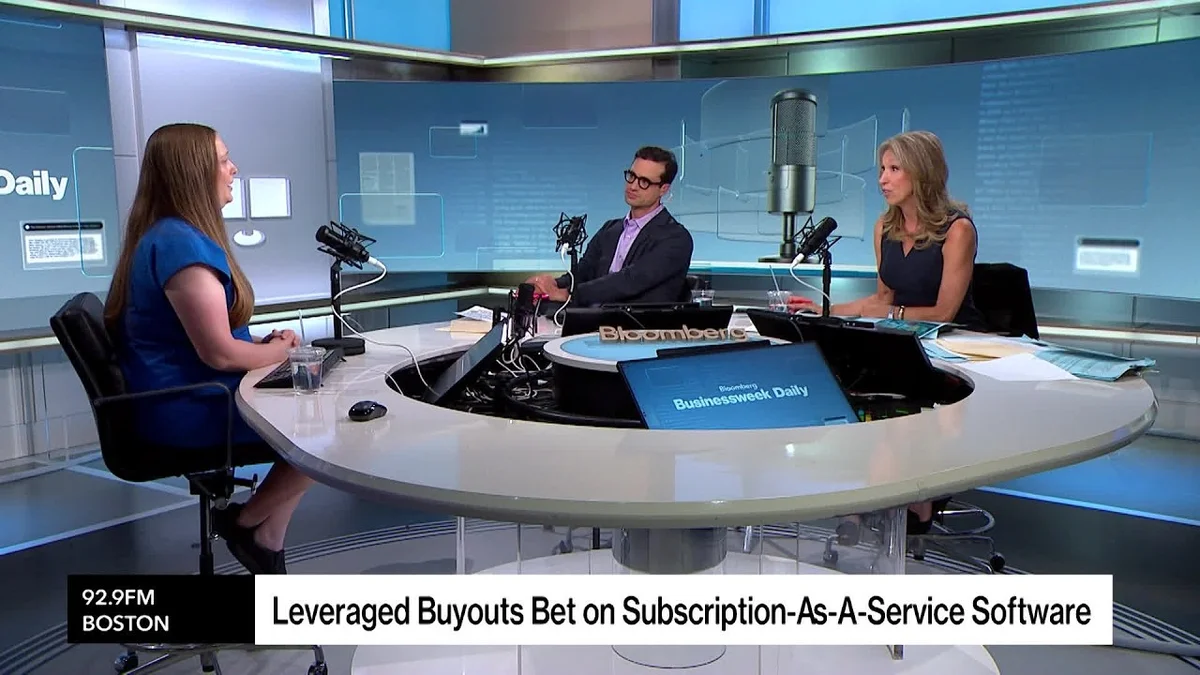
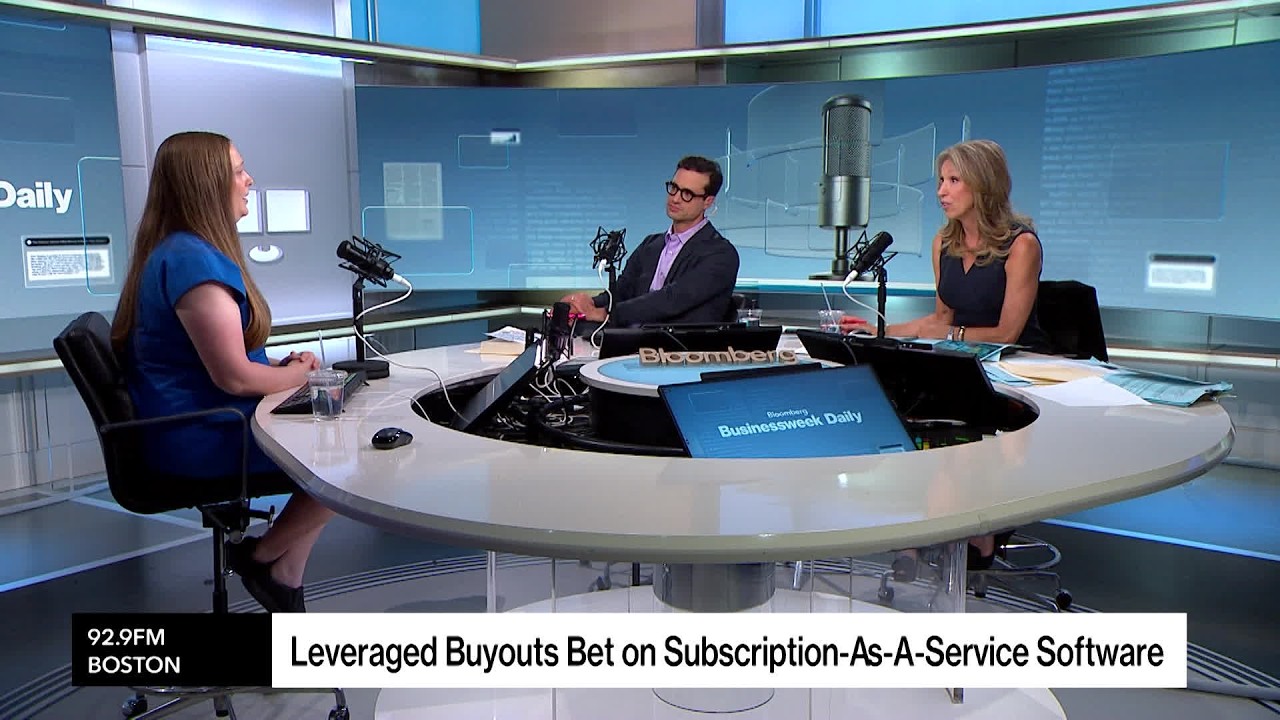
Bloomberg Businessweek Daily hosts discuss AI's impact on software companies and leveraged buyouts.
Bloomberg Podcast
Visual TL;DR
AI AdvancementsDriver
AI's burgeoning capabilities casting a long shadow over the software industry
From the articleThe primary concern driving the potential disruption is the rapid advancement of AI technologies.
Rising Interest RatesDriver
increasing cost of debt for highly leveraged software companies
From the articleAs interest rates have risen, so have borrowing costs, squeezing liquidity for these companies.
Leveraged Buyout ModelContext
private equity acquires companies by loading them with significant debt
From the articleThe burgeoning capabilities of artificial intelligence are casting a long shadow over the software industry, particularly concerning the leveraged buyout (LBO) model that has fueled significant growth in the sector.
Software Revenue FaltersEffect
AI's disruptive potential makes it harder for software companies to grow
From the article 2 mentionsThis model, while profitable when companies perform well, becomes precarious when revenue growth falters.
Debt Service RiskOutcome
companies struggle to service debt when revenue growth falters
SaaS ApocalypseOutcome
From the article 2 mentionsPaula Seligson, a Senior Reporter at Bloomberg News, discussed the potential "SaaS Apocalypse" and its implications for private equity firms and their heavily indebted software holdings.
Private Equity FirmsCore
facing significant risks with their heavily indebted software holdings
From the article 5 mentionsSeligson explained the fundamental private equity strategy: acquiring companies by loading them with debt, which is then serviced by the target company itself, not the acquiring firm.
Contents(5)

The burgeoning capabilities of artificial intelligence are casting a long shadow over the software industry, particularly concerning the leveraged buyout (LBO) model that has fueled significant growth in the sector. Paula Seligson, a Senior Reporter at Bloomberg News, discussed the potential "SaaS Apocalypse" and its implications for private equity firms and their heavily indebted software holdings.

The Mechanics of Private Equity Leverage

Seligson explained the fundamental private equity strategy: acquiring companies by loading them with debt, which is then serviced by the target company itself, not the acquiring firm. This model, while profitable when companies perform well, becomes precarious when revenue growth falters.

"The better the margins, the more debt you can load it up with," Seligson stated. "The whole basically private equity business model is to use that to lever up a company when they buy it. The debt is not borrowed by the private equity firm. The debt is borrowed by the target company being acquired."

The full discussion can be found on Bloomberg Podcast's YouTube channel.

‘SaaSpocalypse’ Risk From AI Reaches Beyond Private Equity - Bloomberg Podcast
‘SaaSpocalypse’ Risk From AI Reaches Beyond Private Equity, from Bloomberg Podcast

AI's Disruptive Potential

The primary concern driving the potential disruption is the rapid advancement of AI technologies. Seligson highlighted that while software providing core infrastructure might be relatively safe, companies focused on data visualization or tasks that can be replicated by AI models like Gemini or ChatGPT are particularly vulnerable.

The fear is that "you'll have certain types of software companies especially affected," Seligson noted. "If you are providing software that's like the infrastructure layer of a company, probably okay. If you're doing data visualization and that's your main product, you can just plug that into Gemini or ChatGPT. And those business models could be especially at risk." The potential for internal teams to use AI tools to replicate existing software functionalities on a per-seat basis could erode revenue streams, even if not fully replacing them.

The Medallia Case Study

Seligson pointed to the example of Medallia, a software company taken private by Thomas Bravo. Despite its previous success, Medallia faced significant financial difficulties, leading to a $5 billion loss for its investors. Seligson noted that Medallia's issues predated the current AI concerns but served as a stark reminder of the risks involved.

"Toma Bravo took Medallia private," Seligson recounted. "It seemed like a very smart investment at the time. They used a $1.8 billion private credit loan to finance it, and specifically a recurring revenue loan... and it also had a special feature called pick or payment in kind, where you could basically defer some of the interest by adding it to the principal payment of the debt later. And so basically this company tried to increase earnings. It couldn't. But because it was picking the debt, the actual total debt size kept increasing." This ultimately led to an unfortunate restructuring.

Debt, Rates, and Refinancing Risks

The conversation then shifted to the broader financial implications. Seligson explained that many LBOs were structured with floating-rate debt during the 2020-2022 period. As interest rates have risen, so have borrowing costs, squeezing liquidity for these companies.

Furthermore, the difficulty in selling companies or taking them public due to falling valuations means many PE-backed software firms are "stuck." The critical test, Seligson emphasized, lies in refinancing debt that is maturing in the coming years, with an estimated $150 billion in such debt across various markets.

The Future Outlook

Seligson cautioned that the full impact of the potential "SaaS Apocalypse" is yet to unfold, with the debt market likely to reveal the extent of the crisis on a case-by-case basis over the next few years. The trend of private equity funds reducing their share of software deals, as indicated by PitchBook data showing a decline from 19.8% in 2022 to an estimated 10.7% in 2026, suggests a growing wariness in the market.

"Lender confidence is key because if you lose access to debt capital markets, at the very least your borrowing costs will go up even more. In a worst-case scenario, you might not be able to refinance at all, and either of those can cause a restructuring," Seligson concluded.

© 2026 StartupHub.ai. All rights reserved. You may not republish this article in full without a license. Search engines and AI research tools may crawl and summarize for reference. Bulk reproduction or model training requires a license. See our terms.
Daniel Singer

Written by

Daniel Singer

Editor, StartupHub.ai

Daniel Singer is the editor of StartupHub.ai, a technology expert and thought leader on AI and its applications across sectors, from fintech and healthcare to developer tooling and consumer software. He writes and tests the tools covered here thoroughly and regularly, and built StartupHub.ai to give founders, operators and buyers a clearer read on what they are actually being sold.