

Abridge Leverages GPT-5.5 for Enhanced Clinical AI Notes

Abridge is enhancing its clinical AI notes with GPT-5.5, aiming for greater accuracy and reduced provider burden.

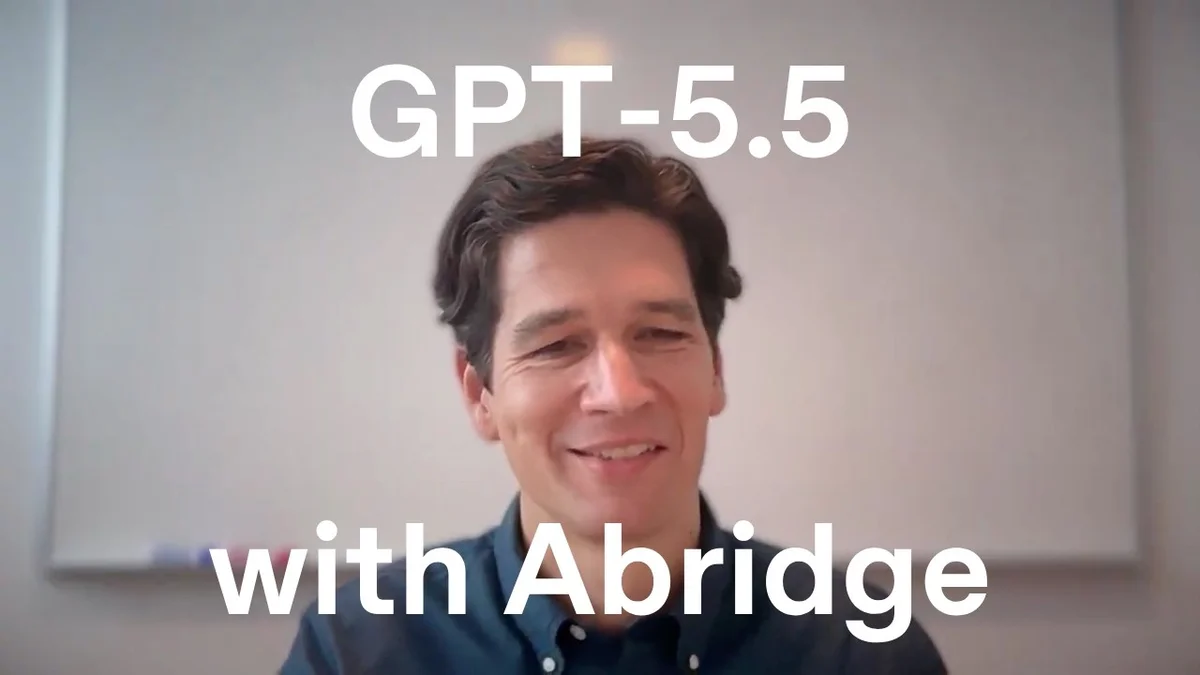
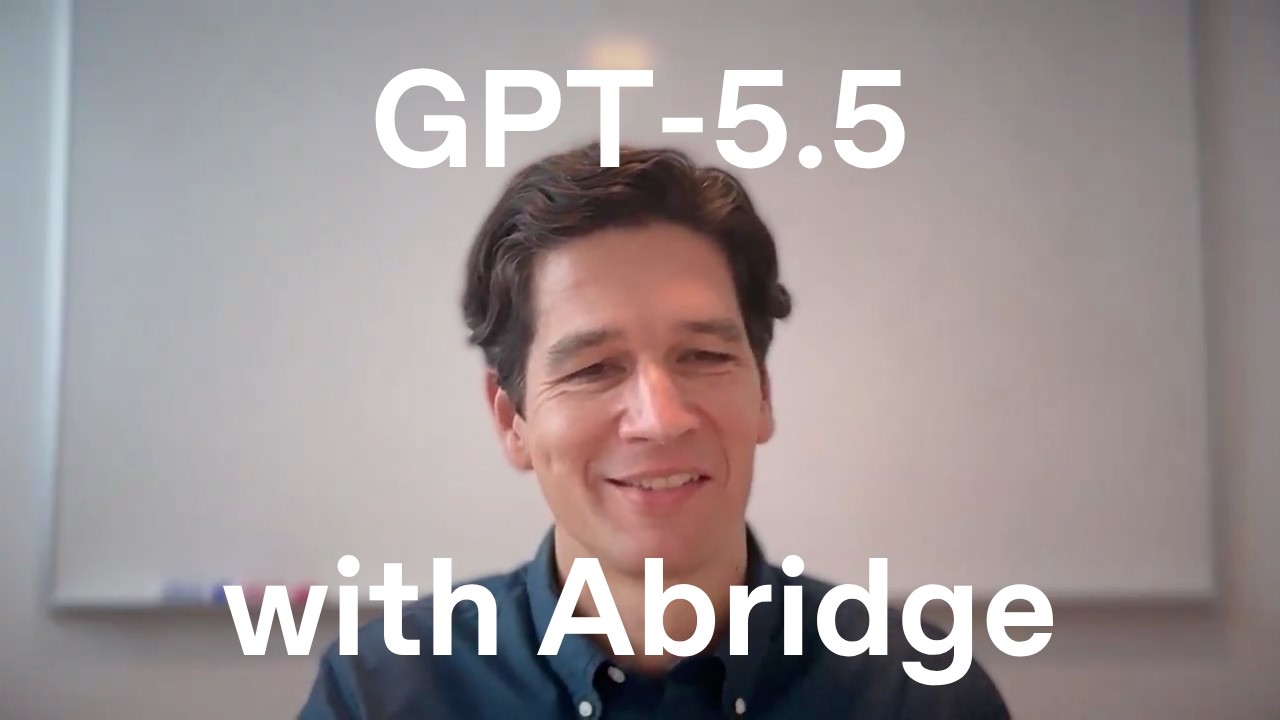
Man in a dark blue shirt speaking, with text overlay 'Built With GPT-5.5'
OpenAI Youtube
Visual TL;DR
Provider BurdenDriver
high demands on clinicians for documentation and note-taking
From the article 8 mentionsSanders further explained that the ability of GPT-5.5 to perform "ambient documentation has been incredibly powerful for removing burden from providers, for more complete documentation, and better capture of what's actually happening in the clinical conversation."
AbridgeCore
From the article 6 mentionsAbridge, a company focused on transforming clinical documentation through AI, has announced the integration of GPT-5.5 into its platform.
GPT-5.5 IntegrationCore
new AI model for enhanced clinical note generation
From the article 8 mentionsAbridge, a company focused on transforming clinical documentation through AI, has announced the integration of GPT-5.5 into its platform.
PartnershipsContext
collaboration drives AI advancement in healthcare
Improved Fact ExtractionEffect
accurately pulls more facts from conversations
From the article 2 mentionsSanders highlighted that "several things are exciting for us about GPT-5.5." He specifically pointed to an improvement in first-pass coherence and fact extraction when analyzing conversations.
Enhanced AI NotesEffect
higher quality and more accurate clinical documentation
From the article 6 mentionsThis advancement aims to significantly enhance the quality and efficiency of generating clinical notes from recorded healthcare conversations.
Reduced BurdenOutcome
less time spent by providers on documentation
From the article 2 mentionsThe ability to capture nuances from spoken interactions and convert them into structured notes can alleviate a significant administrative burden on clinicians, allowing them to focus more on patient care.
Better Patient ExperienceOutcome
providers can focus more on patient care
From the article 2 mentionsThis directly impacts the quality of the notes delivered, ultimately aiming to provide providers with the best possible experience for their patients.
Contents(3)

Abridge, a company focused on transforming clinical documentation through AI, has announced the integration of GPT-5.5 into its platform. This advancement aims to significantly enhance the quality and efficiency of generating clinical notes from recorded healthcare conversations. The development highlights the ongoing progress in large language models and their practical applications within the demanding healthcare sector.

Matt Sanders, Senior Engineering Manager for Note Generation at Abridge, explained the impact of this new integration. He noted that the use of GPT-5.5 leads to an increase in the number of facts that can be accurately pulled directly from provider and patient conversations. This directly impacts the quality of the notes delivered, ultimately aiming to provide providers with the best possible experience for their patients.

The full discussion can be found on OpenAI Youtube's YouTube channel.

Built with GPT-5.5: Abridge Clinical AI Notes - OpenAI Youtube
Built with GPT-5.5: Abridge Clinical AI Notes, from OpenAI Youtube

Improving Clinical Conversations with AI

The core of Abridge's technology lies in its ability to analyze conversations between healthcare providers and patients. The goal is to extract the most critical information and translate it into comprehensive clinical documentation. Sanders elaborated on how this process works, stating, "We come together in the conversation between the provider and the patient and look to pull the most important information out of that to help support providers in getting the best documentation for the visit that we can."

This process is particularly crucial in a field where accurate and detailed record-keeping is paramount. The ability to capture nuances from spoken interactions and convert them into structured notes can alleviate a significant administrative burden on clinicians, allowing them to focus more on patient care.

GPT-5.5: A Leap in Coherence and Fact Extraction

Abridge's exploration of GPT-5.5 has yielded promising results, particularly in areas where previous AI models sometimes struggled. Sanders highlighted that "several things are exciting for us about GPT-5.5." He specifically pointed to an improvement in first-pass coherence and fact extraction when analyzing conversations. Previously, nuances in patient-provider dialogues could lead to confusion or inaccuracies in AI-generated notes. However, with GPT-5.5, the model demonstrates a "much better level of fact extraction in these particular situations."

This improved accuracy is critical for clinical settings. When providers and patients discuss complex medical histories or sensitive information, the AI's ability to precisely identify and record key details is essential. Sanders further explained that the ability of GPT-5.5 to perform "ambient documentation has been incredibly powerful for removing burden from providers, for more complete documentation, and better capture of what's actually happening in the clinical conversation."

The Value of Partnerships in AI Advancement

Abridge explicitly acknowledged the foundational role of AI research and development in their progress. Sanders stated, "We find a lot of value in OpenAI and that allows us ultimately to be able to deliver a better note overall." This reliance on leading AI models like those developed by OpenAI underscores the collaborative nature of AI advancement, where specialized applications build upon the broad capabilities of foundational models.

The use of advanced AI models like GPT-5.5 in healthcare has the potential to reshape how medical professionals manage their administrative tasks. By automating and improving the accuracy of clinical note-taking, Abridge and similar companies are working to address burnout among healthcare providers and enhance the overall quality of patient care through better data management.

© 2026 StartupHub.ai. All rights reserved. You may not republish this article in full without a license. Search engines and AI research tools may crawl and summarize for reference. Bulk reproduction or model training requires a license. See our terms.
Daniel Singer

Written by

Daniel Singer

Editor, StartupHub.ai

Daniel Singer is the editor of StartupHub.ai, a technology expert and thought leader on AI and its applications across sectors, from fintech and healthcare to developer tooling and consumer software. He writes and tests the tools covered here thoroughly and regularly, and built StartupHub.ai to give founders, operators and buyers a clearer read on what they are actually being sold.