

Snowflake's Metadata Hub: Unifying Data Silos

Snowflake's Metadata Hub aggregates data metadata across diverse systems, enabling unified control and analysis without data migration.

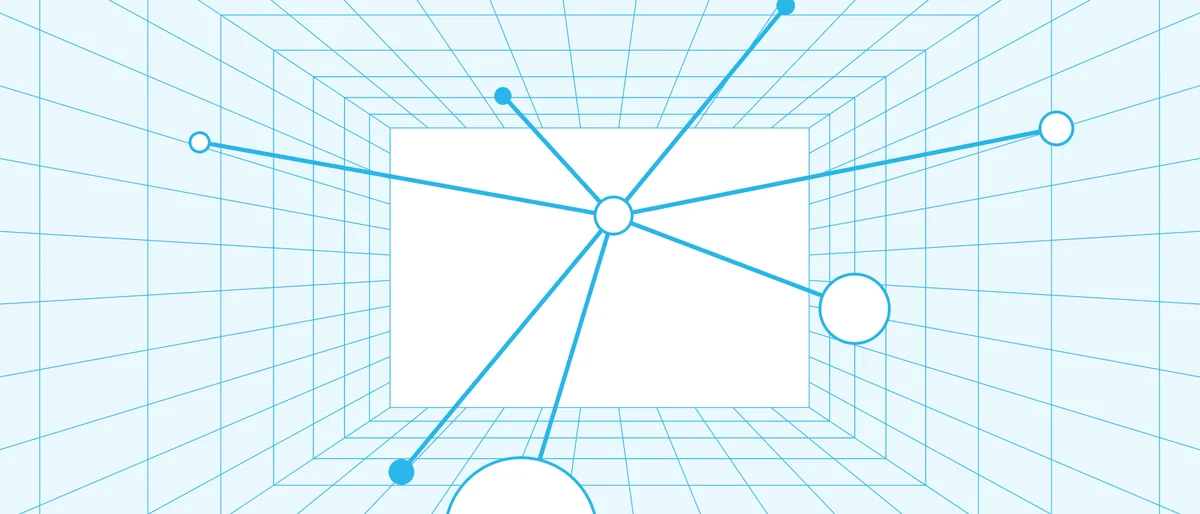
Diagram illustrating the Snowflake Metadata Hub architecture connecting various data sources.
The Metadata Hub architecture connects disparate data sources into a unified control plane.· Snowflake
Visual TL;DR
Data Silos FragmentedDriver
data scattered across Snowflake, AWS Glue, OneLake, Databricks
From the articleThe promise of a unified data platform has consistently faltered against this reality of fragmented metadata.
Migration ImpracticalDriver
From the articleThe conventional approach of migrating everything to a single platform is increasingly impractical.
Snowflake Metadata HubCore
From the article 4 mentionsSnowflake's answer is the Metadata Hub, designed not to compete but to aggregate and federate metadata from existing catalogs into a single, queryable interface.
Open by DesignContext
built on foundational principles of openness, native participation
From the articleOpen by Design: The Apache Iceberg™ ecosystem and its REST Catalog (IRC) specification provide a shared protocol.
Unified Control & AnalysisEffect
enables unified control and analysis without data migration
Complete Data VisibilityOutcome
unified understanding of data structure, semantics, lineage, ownership
From the article 4 mentionsComplete Visibility: The Metadata Hub acts as a single, real-time inventory of the entire data estate.

Enterprises have long grappled with data scattered across Snowflake, AWS Glue, Microsoft OneLake, Databricks Unity Catalog, and custom solutions. The promise of a unified data platform has consistently faltered against this reality of fragmented metadata.

The conventional approach of migrating everything to a single platform is increasingly impractical. Acquisitions, regulatory demands, and team preferences ensure a multi-platform reality. This fragmentation hinders comprehensive data visibility and control.

Snowflake's answer is the Metadata Hub, designed not to compete but to aggregate and federate metadata from existing catalogs into a single, queryable interface. This approach enables unified understanding of data structure, semantics, lineage, and ownership without requiring data movement.

The Pillars of Interoperability

The Metadata Hub is built on three foundational principles: openness, native participation, and complete visibility.

1. Open by Design: The Apache Iceberg™ ecosystem and its REST Catalog (IRC) specification provide a shared protocol. Snowflake embeds Apache Polaris, an open-source catalog, within every Horizon Catalog, fostering seamless interoperability with systems like AWS and Databricks that also align with the Iceberg standard. This ensures no silos, only shared metadata.

2. Native and Bidirectional: Unlike read-only workarounds, Snowflake's integration with catalogs like AWS Glue and Databricks Unity Catalog is native and bidirectional. This allows direct reading and writing of data in its original format, with changes reflected across platforms in near real-time, typically within 30 seconds.

3. Complete Visibility: The Metadata Hub acts as a single, real-time inventory of the entire data estate. This visibility is crucial for discovery, governance, applying policies, tracking lineage, and optimizing costs across all connected data sources.

Unlocking New Capabilities

This unified architecture enables cross-platform queries without data duplication or ETL processes. It empowers comprehensive governance, allowing policies, masking, and classification rules to be applied across the entire estate from a single point.

Furthermore, AI services like Snowflake Cortex gain a holistic understanding of the data estate, leading to more accurate natural language queries and intelligent agents that can reason across disparate catalogs. Real-time cost attribution and optimized resource utilization are also direct benefits.

The Metadata Hub architecture comprises three layers: the authoritative catalog layer, the IRC-driven connectivity layer, and the control layer for discovery and governance. This approach transforms fragmentation into an asset, making every platform more valuable.

© 2026 StartupHub.ai. All rights reserved. You may not republish this article in full without a license. Search engines and AI research tools may crawl and summarize for reference. Bulk reproduction or model training requires a license. See our terms.
Daniel Singer

Written by

Daniel Singer

Editor, StartupHub.ai

Daniel Singer is the editor of StartupHub.ai, a technology expert and thought leader on AI and its applications across sectors, from fintech and healthcare to developer tooling and consumer software. He writes and tests the tools covered here thoroughly and regularly, and built StartupHub.ai to give founders, operators and buyers a clearer read on what they are actually being sold.