

a16z Launches $1.1B Machine Age Fund for AI

a16z raised $1.1B for its Machine Age Fund to rebuild US compute infrastructure as AI pushes racks toward 1 MW and gigawatt campuses.

6 min read
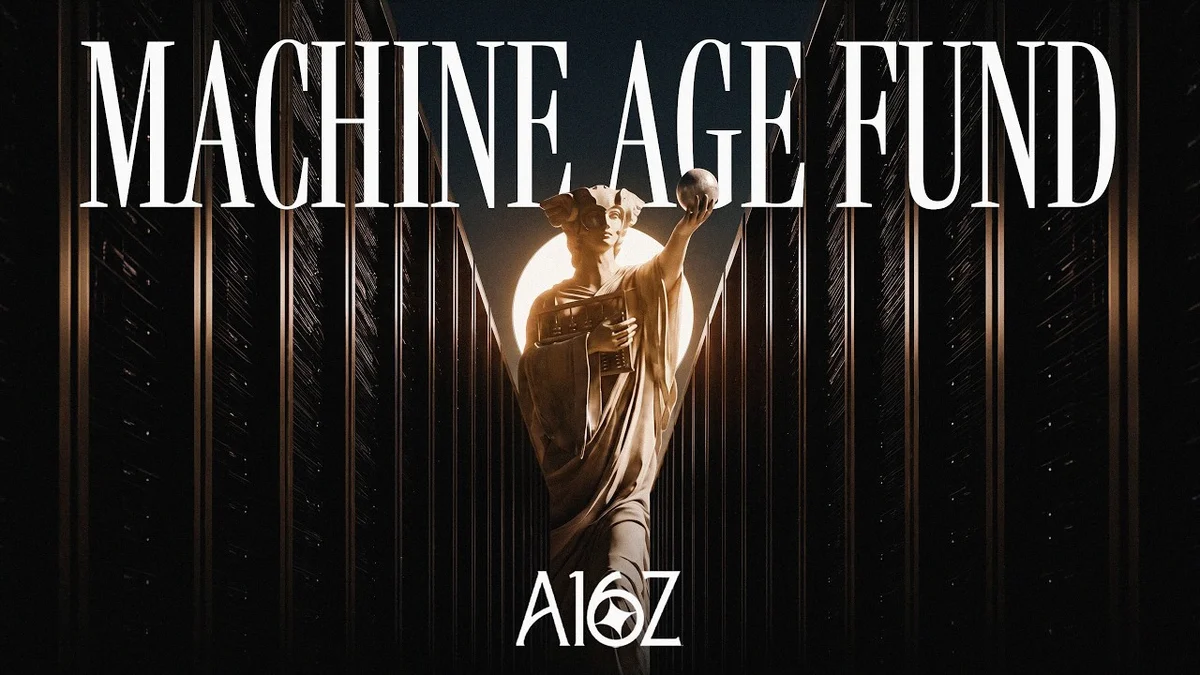
a16z Machine Age Fund concept for AI hardware and data center infrastructure
a16z says AI requires a full rebuild of compute infrastructure from chips to power.· a16z
Visual TL;DR
US AI compute shortageDriver
Power and compute gaps as AI racks hit 1 MW scale
From the article 3 mentionsThe firm frames AI as alchemy that turns sand into thought, and thought at scale now demands a rebuild of American compute infrastructure.
Machine Age Fund launchCore
From the articlea16z raised $1.1 billion for its Machine Age Fund to accelerate the physical buildout of AI.
Full stack backingEffect
Fund targets chips, memory, networking, storage, data centers, robotics, home AI
From the articleThe fund will back the full physical stack on which AI runs.
Infrastructure rebootOutcome
US compute stack reboots to meet AI power density demands
From the article 3 mentionsCasado leads infrastructure, Raghuram is managing partner on Growth and Infrastructure after decades running data center system software, Ulevitch leads American Dynamism, and George leads Growth.
US AI compute shortageDriver
Power and compute gaps as AI racks hit 1 MW scale
From the article 3 mentionsThe firm frames AI as alchemy that turns sand into thought, and thought at scale now demands a rebuild of American compute infrastructure.
Key partners leadContext
Ben Horowitz, Martin Casado, Raghu Raghuram, David Ulevitch, David George
From the articleCasado leads infrastructure, Raghuram is managing partner on Growth and Infrastructure after decades running data center system software, Ulevitch leads American Dynamism, and George leads Growth.
Casado leads infraContext
Martin Casado directs infrastructure investments across data centers and networking
From the articleCasado leads infrastructure, Raghuram is managing partner on Growth and Infrastructure after decades running data center system software, Ulevitch leads American Dynamism, and George leads Growth.
Raghuram growth leadContext
From the articleCasado leads infrastructure, Raghuram is managing partner on Growth and Infrastructure after decades running data center system software, Ulevitch leads American Dynamism, and George leads Growth.
Machine Age Fund launchCore
From the articlea16z raised $1.1 billion for its Machine Age Fund to accelerate the physical buildout of AI.
Full stack backingEffect
Fund targets chips, memory, networking, storage, data centers, robotics, home AI
From the articleThe fund will back the full physical stack on which AI runs.
Infrastructure rebootOutcome
US compute stack reboots to meet AI power density demands
From the article 3 mentionsCasado leads infrastructure, Raghuram is managing partner on Growth and Infrastructure after decades running data center system software, Ulevitch leads American Dynamism, and George leads Growth.
Contents(3)

a16z raised $1.1 billion for its Machine Age Fund to accelerate the physical buildout of AI. The firm frames AI as alchemy that turns sand into thought, and thought at scale now demands a rebuild of American compute infrastructure.

a16z Launches $1.1B Machine Age Fund for AI - a16z
a16z Launches $1.1B Machine Age Fund for AI, from a16z

The video pitch is blunt. The United States is short power, short compute, short chips, and the entire compute stack is being rebooted for AI.

Why hardware, why now

The fund will back the full physical stack on which AI runs. That includes chips, memory, networking and storage, plus complete systems from data centers to robotics to home AI appliances.

The authors are Ben Horowitz, Martin Casado, Raghu Raghuram, David Ulevitch and David George. Casado leads infrastructure, Raghuram is managing partner on Growth and Infrastructure after decades running data center system software, Ulevitch leads American Dynamism, and George leads Growth.

The timing rests on physics, not narrative. Compute density per rack is up 28x from an Nvidia (NASDAQ:NVDA) H100 rack to a Rubin rack, rack power has moved from 5 to 10 kW to 100 to 250 kW today, and the firm expects 1 MW racks within three years.

Data center scale is moving from tens to hundreds of megawatts to gigawatt campuses, with power increasingly drawn from grid plus behind-the-meter sources. Copper interconnects inside the rack are already at their limits.

What the fund will chase

a16z lists what must change: cheaper and higher-bandwidth memory across the hierarchy, faster and more scalable interconnects between nodes, power efficient edge devices, and the cooling, materials, electrical and real estate to support them.

The supply side is not built for this rate. Hardware vendors are accustomed to 20% to 30% annual growth, the firm wrote, while AI infrastructure needs triple-digit growth to catch demand.

Deal flow explains the shift. Hardware startups were a small share of a16z pipeline a couple years ago. They are now over 20%.

Recent bets cited include Unconventional AI, Nexthop, Volta, Atoms, Heron Power and Mind Robotics. Earlier hardware marks include leading Skydio Series A in 2016, SpaceX, Anduril in 2019 and Waymo in 2020.

Why this matters for AI builders and investors

This is not a contrarian hardware turn. It is a follow-on to a12z's American Dynamism thesis and to a market where memory, high-bandwidth memory and power have become the binding constraints, not model weights.

Competitors have moved the same way. Lux Capital, DCVC and Founders Fund have enlarged deep tech and industrials books, while hyperscalers and neoclouds have locked up gigawatt-scale capacity through vendor-financed campus deals and long-term power purchase agreements.

For founders, the bar changes. a16z says its go-to-market, talent and marketing platform is now tuned for hardware, with Guido Appenzeller, former CTO of Intel (NASDAQ:INTC) Data Center Group, plus Shangda Xu and Erin Price-Wright helping bridge customers, suppliers and manufacturers.

That signals where diligence will focus: manufacturability, supply chain, and power and cooling integration, not just silicon performance. Startups selling only a faster chip without a path to rack-scale deployment and contracted power will struggle to clear investment committees.

The test is near term and measurable. Watch 2027 rack deployments, HBM pricing and lead times, and whether 100 to 250 kW rack designs actually ship at volume without derating. If 1 MW rack timelines slip, capital will rotate back to software efficiency plays.

a16z is betting the bottleneck stays physical, and that someone has to fund it before thought at scale can be abundant.

© 2026 StartupHub.ai. All rights reserved. Do not enter, scrape, copy, reproduce, or republish this article in whole or in part. Use as input to AI training, fine-tuning, retrieval-augmented generation, or any machine-learning system is prohibited without written license. Substantially-similar derivative works will be pursued to the fullest extent of applicable copyright, database, and computer-misuse laws. See our terms.