

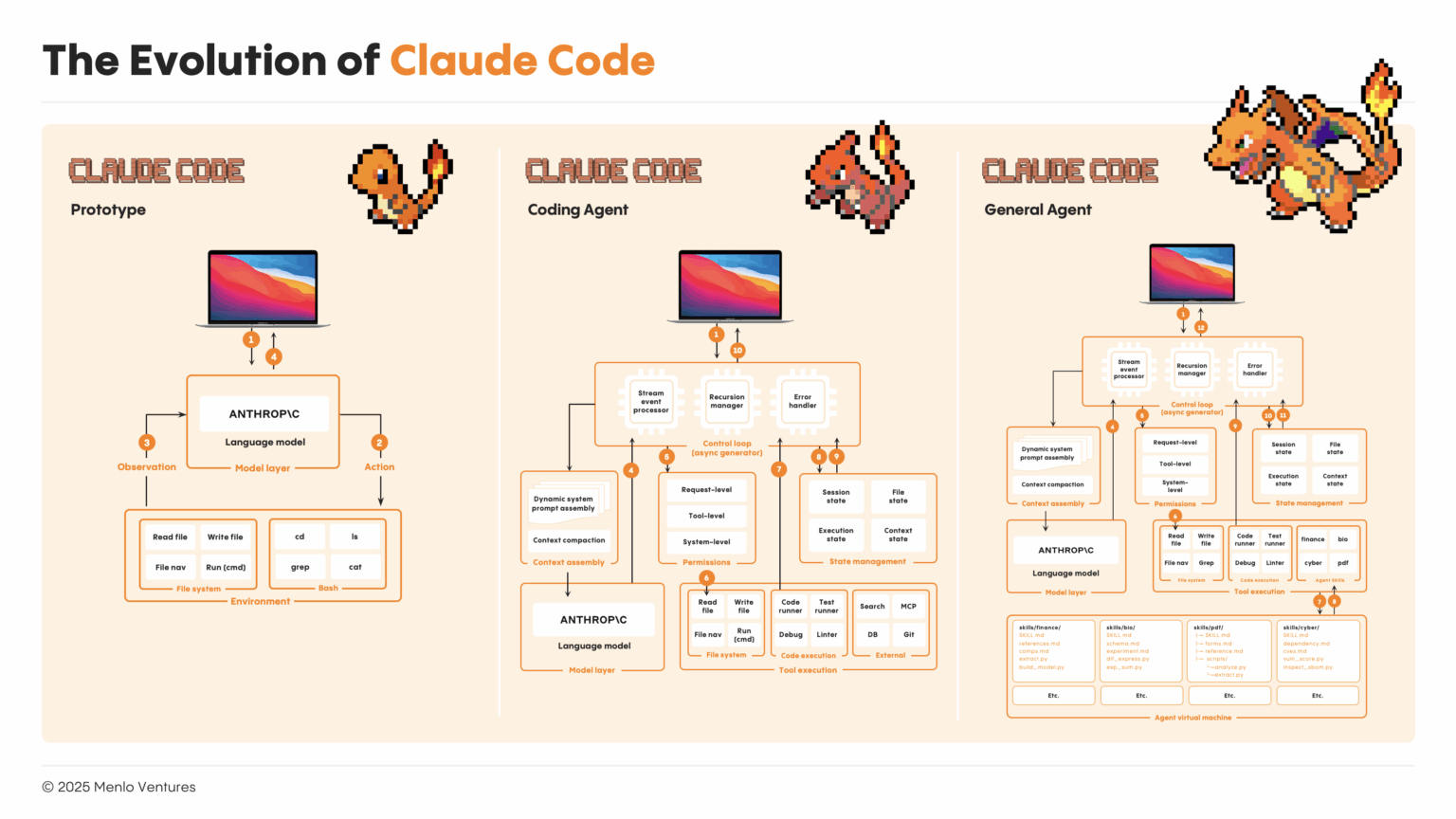
The crowded landscape of generative AI applications, from code generation to legal support, looks like a chaotic mess of overlapping products with no clear moats or margins. But according to venture capital analysis, the problem isn't poor execution; it’s that the traditional software playbook is fundamentally broken.
AI categories are not mature markets at all. They are "proto-markets," evolutionary precursors where demand exists but the rules of engagement, technology stability, and economic structure have yet to settle. This distinction, argues Derek Xiao, a principal at Menlo Ventures, means the classic SaaS strategy, moats first, then margins, then market leadership, is "actively wrong."
The core issue is technological instability. In SaaS, the definition of "done" was stable. In AI, the foundation constantly shifts. When Claude Sonnet 4.5 was released, it forced companies like Cognition to entirely rebuild their agents because the underlying model behaviors broke previous assumptions about tool use and context awareness. Products like Manus have reportedly reconstructed their agent framework four times.
This instability collapses the boundaries that defined traditional software. Horizontal versus vertical, sales versus IT, these distinctions blur when a single generalized AI capability can span every department. Salesforce’s Agentforce and ServiceNow’s NowAssist are now competing on customer support, recruiting, and finance, far outside their original domains.
The New Moat: Learning Velocity
In proto-markets, the heavy, upfront engineering efforts that once built durable SaaS moats, proprietary foundation models or sophisticated search architectures, are failing. What wins instead is "product plasticity and learning velocity."