

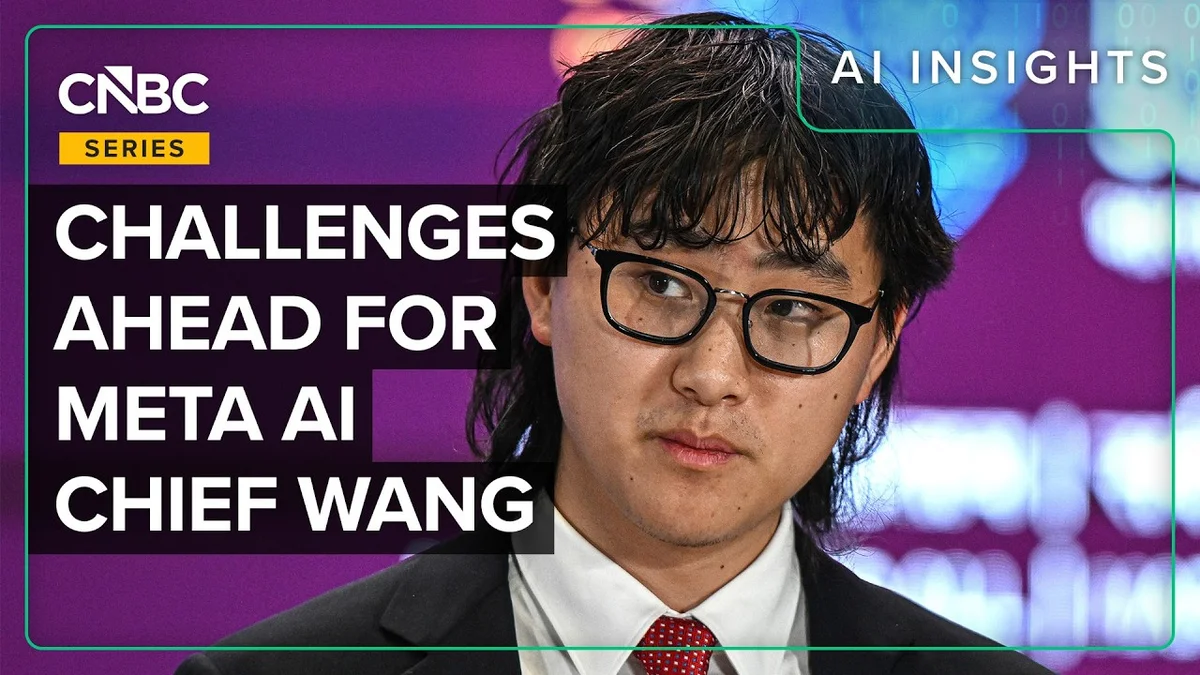
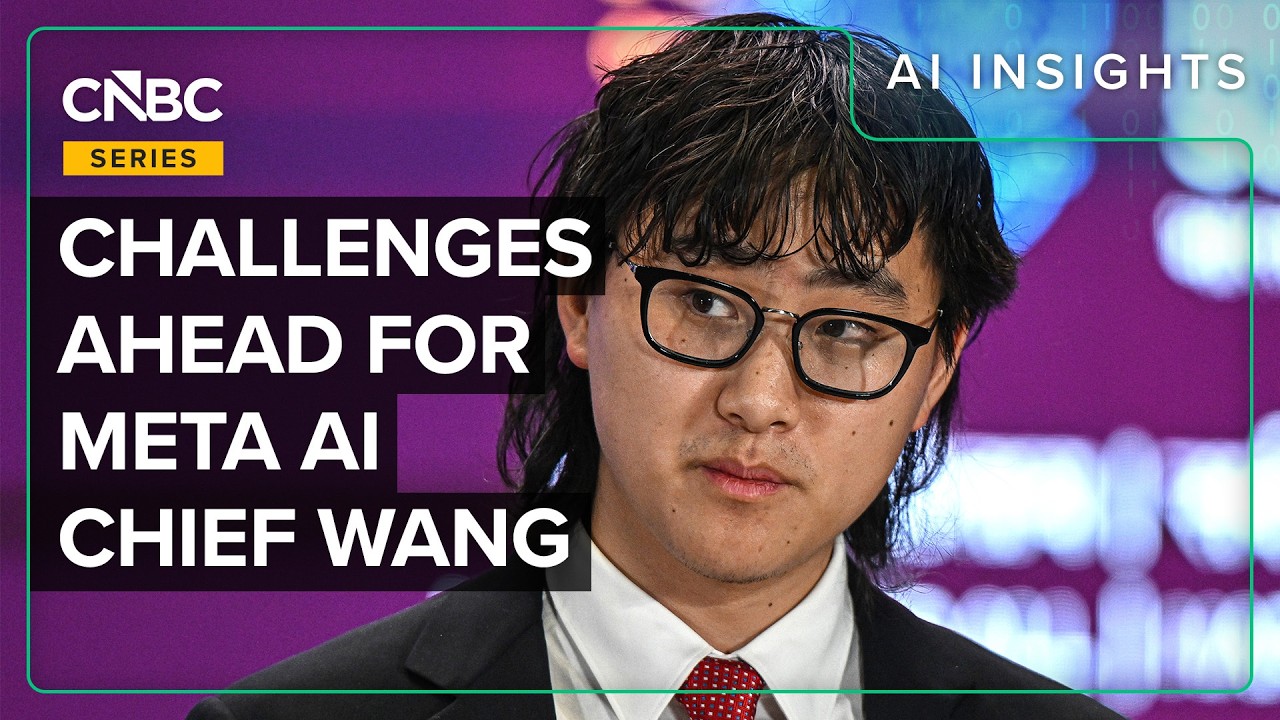
Meta AI Chief Faces Challenges After Rocky First Year

Alexandr Wang's first year as Meta's Chief AI Officer has been a period of strategic shifts, talent acquisition, and increased investment amidst challenges.

CNBC reporter Julia Boorstin in a yellow blazer, discussing Meta's AI challenges.
CNBC
Visual TL;DR
Wang's First YearCore
Alexandr Wang appointed Chief AI Officer, facing challenges
From the article 3 mentionsMeta's first year under Wang's leadership has also been characterized by significant personnel movements.
Strategic ShiftsContext
Moving from open-source to proprietary AI models
From the article 2 mentionsThis period has presented substantial challenges for Meta's AI division, impacting its stock performance and strategic direction.
Talent AcquisitionContext
Focus on acquiring and retaining AI talent
From the article 4 mentionsThe appointment followed a $14.3 billion acquisition and significant investment in Wang's company, Scale AI.
Increased InvestmentDriver
Significant investment in AI division and Scale AI
From the article 3 mentionsMeta is actively seeking ways to monetize its AI investments.
Monetization FocusContext
Integrating AI into business for revenue generation
Future OutlookEffect
Continued investment and strategic adjustments for AI growth
Llama 4 IssuesDriver
From the articleThis change is exemplified by the release of Llama 4, which, despite initial anticipation, faced reports of mixed quality, with Meta attributing these issues to bugs.
Stock PerformanceOutcome
Meta's shares declined 19%, underperforming Nasdaq Composite
From the article 3 mentionsThis stock performance reflects the broader scrutiny on Meta's AI direction under Wang's leadership.
Contents(4)

It has been one year since Mark Zuckerberg appointed Alex Wang as Meta's Chief AI Officer. The appointment followed a $14.3 billion acquisition and significant investment in Wang's company, Scale AI. This period has presented substantial challenges for Meta's AI division, impacting its stock performance and strategic direction.

Meta AI Chief Faces Challenges After Rocky First Year - CNBC
Meta AI Chief Faces Challenges After Rocky First Year, CNBC

Meta Platforms (NASDAQ:META) saw its shares decline by 19% in the past year, underperforming the Nasdaq Composite. This stock performance reflects the broader scrutiny on Meta's AI direction under Wang's leadership.

Shifting AI Strategy and Model Development

A key shift observed in Meta's AI approach has been a move away from open-source models. This strategy was previously championed by the company but is now increasingly leaning towards proprietary models. This change is exemplified by the release of Llama 4, which, despite initial anticipation, faced reports of mixed quality, with Meta attributing these issues to bugs.

The company is now focusing on proprietary tools, with Wang's team responsible for developing Meta's Muse Spark AI model. Wall Street analysts have expressed positive sentiment towards Muse Spark, recognizing its competitive capabilities and efficiency in the AI domain.

Monetization and Business Integration

Meta is actively seeking ways to monetize its AI investments. One significant initiative is the testing of AI subscription services, with plans for tiered pricing. The cheapest plan is set to cost $7.99 per month, with a premium option at $20 per month. This strategy aims to generate new revenue streams from Meta's AI features, integrating them more deeply into its existing ad business.

The company's AI efforts are also being bolstered to enhance its ad business. This integration is crucial for Meta as it seeks to leverage AI advancements for commercial success.

Talent Acquisition and Internal Dynamics

Meta's first year under Wang's leadership has also been characterized by significant personnel movements. Mark Zuckerberg revealed the recruitment of new talent from leading AI research organizations such as OpenAI, Anthropic, and Google. These high-profile hires, reportedly commanding substantial salaries, have also led to internal friction and some dissatisfaction within the company. This talent influx is part of a broader strategy to strengthen Meta's AI capabilities.

Alongside these acquisitions, Meta has also seen internal restructuring. Reports indicate layoffs of approximately 600 employees from the AI unit, described as 'bloated.' This move is seen as Wang cementing his leadership and streamlining operations within the AI division.

Investment and Future Outlook

Meta's commitment to AI is evident in its substantial capital expenditures. The company has bumped its 2026 capital expenditure forecast to as much as $145 billion, an increase from $72.5 billion spent last year. This significant investment is directed towards AI and data center infrastructure, signaling a long-term commitment to AI dominance.

Investors are closely watching Meta's ability to convert its AI advancements into tangible revenue and user engagement. The success of its subscription models and the performance of its AI-powered features will be critical indicators of Wang's impact in his second year as Chief AI Officer.

© 2026 StartupHub.ai. All rights reserved. You may not republish this article in full without a license. Search engines and AI research tools may crawl and summarize for reference. Bulk reproduction or model training requires a license. See our terms.
Daniel Singer

Written by

Daniel Singer

Editor, StartupHub.ai

Daniel Singer is the editor of StartupHub.ai, a technology expert and thought leader on AI and its applications across sectors, from fintech and healthcare to developer tooling and consumer software. He writes and tests the tools covered here thoroughly and regularly, and built StartupHub.ai to give founders, operators and buyers a clearer read on what they are actually being sold.