

Garry Tan: Build AI-Native Companies, Not Just AI Users

Y Combinator CEO Garry Tan outlines how to build AI-native companies, emphasizing productivity gains and the strategic 'wiring of work' with AI agents.

5 min read
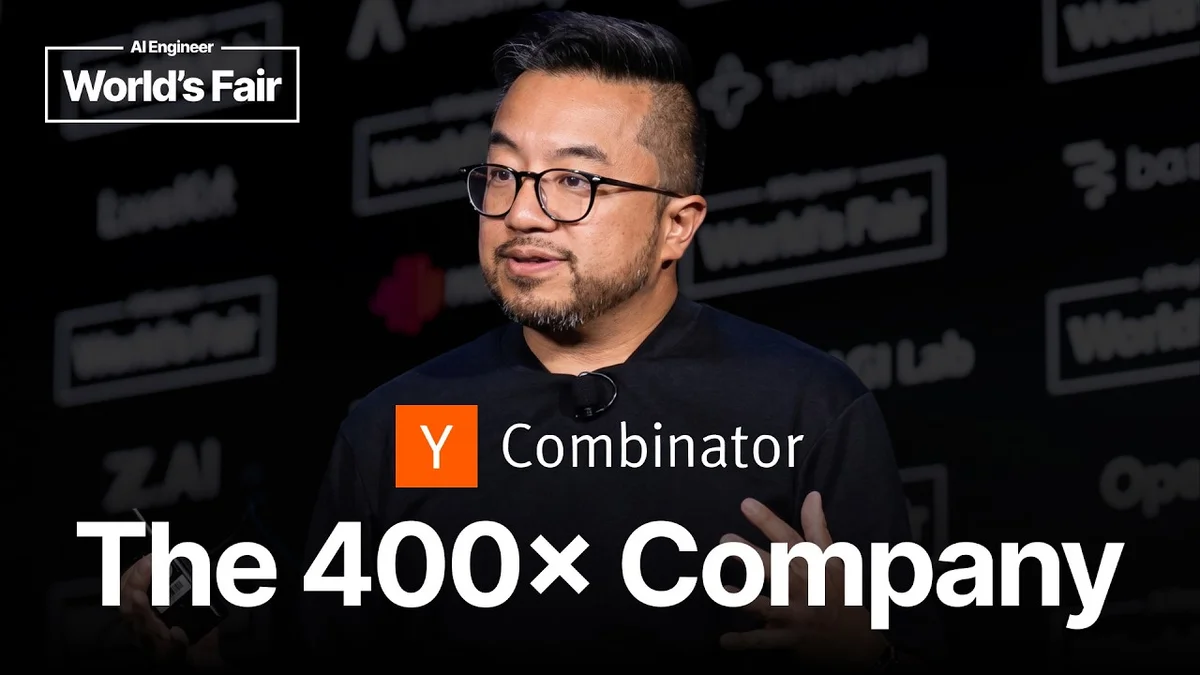
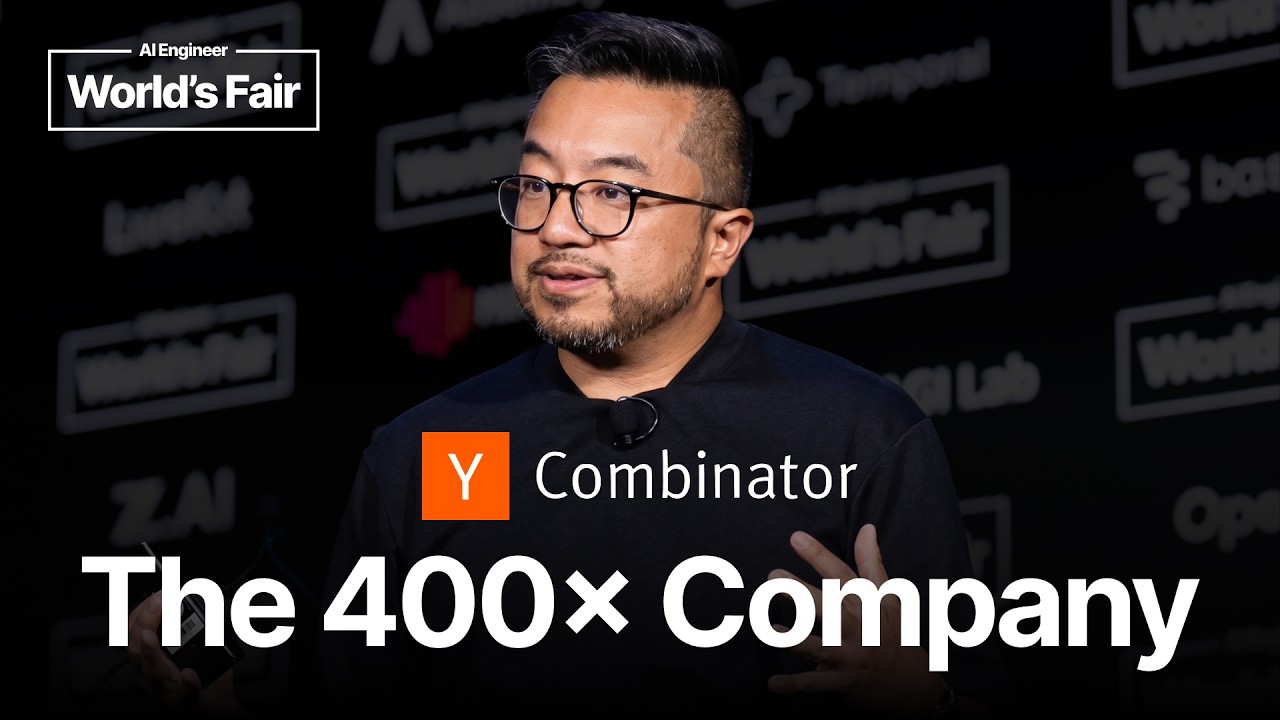
Garry Tan, CEO of Y Combinator, speaking on stage at the AI Engineer World's Fair.
Garry Tan, CEO of Y Combinator, speaking at the AI Engineer World's Fair.· AI Engineer
Visual TL;DR
Garry Tan: Build AI-NativeCore
YC CEO urges founders to build AI-native companies, not just AI users
From the article 4 mentionsGarry Tan, President and CEO of Y Combinator, delivered a powerful keynote at the AI Engineer World's Fair, urging founders to build "AI-native" companies rather than simply adopting AI tools.
Old Productivity LowDriver
engineer coded 14 usable lines per day in 2013, limited output
AI Agents 'Wire Work'Context
From the articleHe attributed this leap not to superior models, but to the strategic implementation of AI agents, stating, "The leverage is not in the weights, it's in how you wire the work."
400x Productivity GainEffect
current CEO output estimated 400 times greater with AI assistance
95% AI-Gen CodebasesEffect
From the articleHe revealed that in the Winter 25 batch of YC startups, a quarter of the companies had codebases that were 95% AI-generated.
Company BrainsContext
AI agents create 'company brains' and enable 'context engineering'
From the article 3 mentionsA key concept introduced was the "company brain", a personalized knowledge base that acts as a "second brain" for both individuals and organizations.
Fastest Growing YCOutcome
Winter 25 batch became YC's fastest-growing and most profitable in history
Contents(5)

Garry Tan, President and CEO of Y Combinator, delivered a powerful keynote at the AI Engineer World's Fair, urging founders to build "AI-native" companies rather than simply adopting AI tools. Tan emphasized the transformative potential of AI, illustrating how it can dramatically increase individual productivity and reshape organizational structures.

Garry Tan: Build AI-Native Companies, Not Just AI Users - AI Engineer
Garry Tan: Build AI-Native Companies, Not Just AI Users, from AI Engineer

From 14 Lines of Code to 400x Productivity

Tan drew a stark contrast between his own coding output in 2013, when he managed about 14 usable lines of code per day as an engineer, and his current output as YC's CEO, which he estimates is 400 times greater. He attributed this leap not to superior models, but to the strategic implementation of AI agents, stating, "The leverage is not in the weights, it's in how you wire the work."

He revealed that in the Winter 25 batch of YC startups, a quarter of the companies had codebases that were 95% AI-generated. This batch has since become the fastest-growing and most profitable in YC's history, suggesting a strong correlation between AI adoption and startup success.

The Architecture of AI-native companies

Tan outlined a new organizational blueprint for AI-native companies, where core functions are encoded as "skill files", essentially AI agents with specific, clearly defined jobs. He likened these components to traditional organizational structures:

  • Skill File: An employee with a single capability.
  • Resolver Table: An orchestrator that routes tasks to the appropriate skill file.
  • Filing Rules: Internal processes and compliance checks.
  • Trigger Evals: Performance reviews and tests for skill execution.

He argued that by treating AI agents as a workforce, companies can achieve the operational scale previously requiring hundreds of employees, but with a fraction of the staff. Tan highlighted companies like Emergence and Retail, which achieved significant ARR with remarkably small teams, as examples of this new model.

The Importance of 'Wiring the Work'

Tan stressed that effective AI integration requires careful consideration of where computation occurs, distinguishing between "latent space" (the LLM itself, used for judgment and understanding vague human intent) and "deterministic space" (code agents writing structured output like TypeScript). He noted that success hinges on seamlessly integrating these two spaces.

Company Brains and Context Engineering

A key concept introduced was the "company brain", a personalized knowledge base that acts as a "second brain" for both individuals and organizations. Tan described his own Gbrain project, which aggregates years of emails, notes, and experiences, enabling AI agents to retrieve relevant information and synthesize insights instantly. This "brain" allows AI to act as a colleague rather than just an assistant.

He cautioned that uncurated knowledge bases can become "garbage dumps," emphasizing the need for "memory plus hygiene," provenance, and contradiction checks. The ability to selectively surface relevant information, akin to a librarian choosing the right books, is crucial.

The Call to Action: Build AI-Native

Tan concluded with a powerful call to action for founders:

  • Build AI-Native Companies: Design your organization around AI from day one.
  • Embrace Skill Files: Treat AI agents as employees and codify processes as skills.
  • Develop a Company Brain: Create a persistent knowledge layer that compounds over time.
  • Never Do One-Off Work: "Skillify" every task and output to enable reuse and continuous learning.

Tan asserted that the fear surrounding AI's impact on jobs is a "failure of imagination." He believes that by embracing this new paradigm, founders can multiply their capabilities, build highly efficient companies, and lead the way in shaping a future of abundance powered by software.

© 2026 StartupHub.ai. All rights reserved. You may not republish this article in full without a license. Search engines and AI research tools may crawl and summarize for reference. Bulk reproduction or model training requires a license. See our terms.