

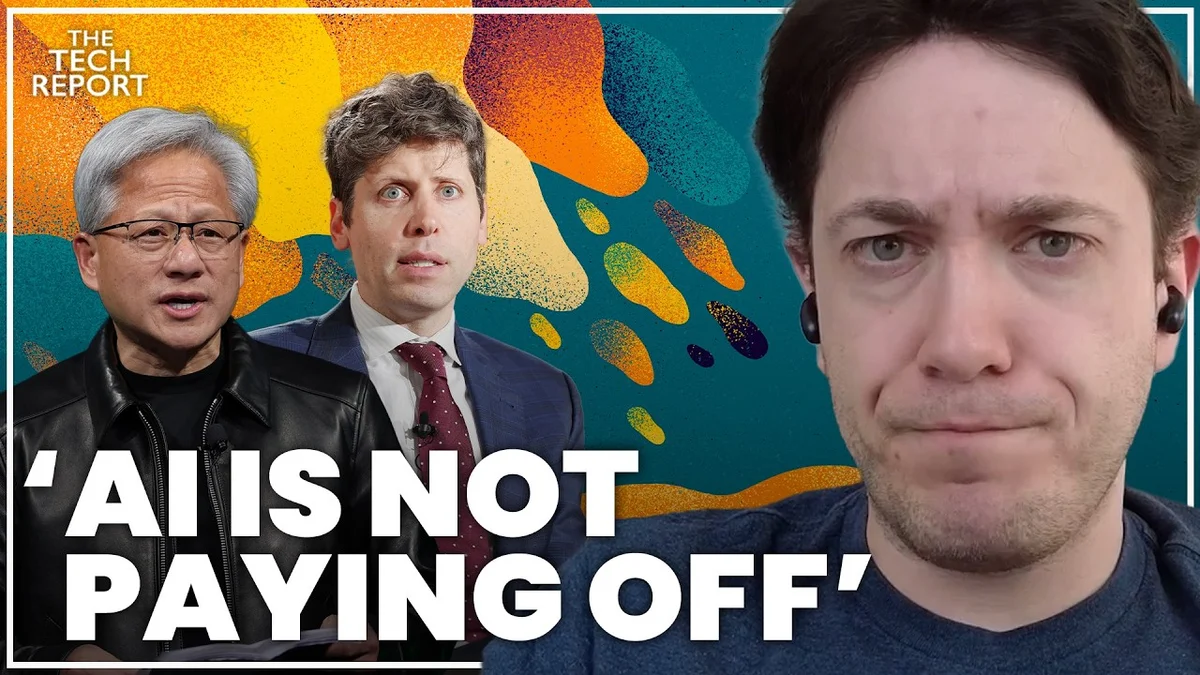
Ed Zitron: Nvidia's AI Funding Is 'Desperate Marketing'

Analyst Ed Zitron slams Nvidia's AI funding announcements as 'desperate marketing,' questioning their financial sustainability and highlighting risks of an AI bubble.

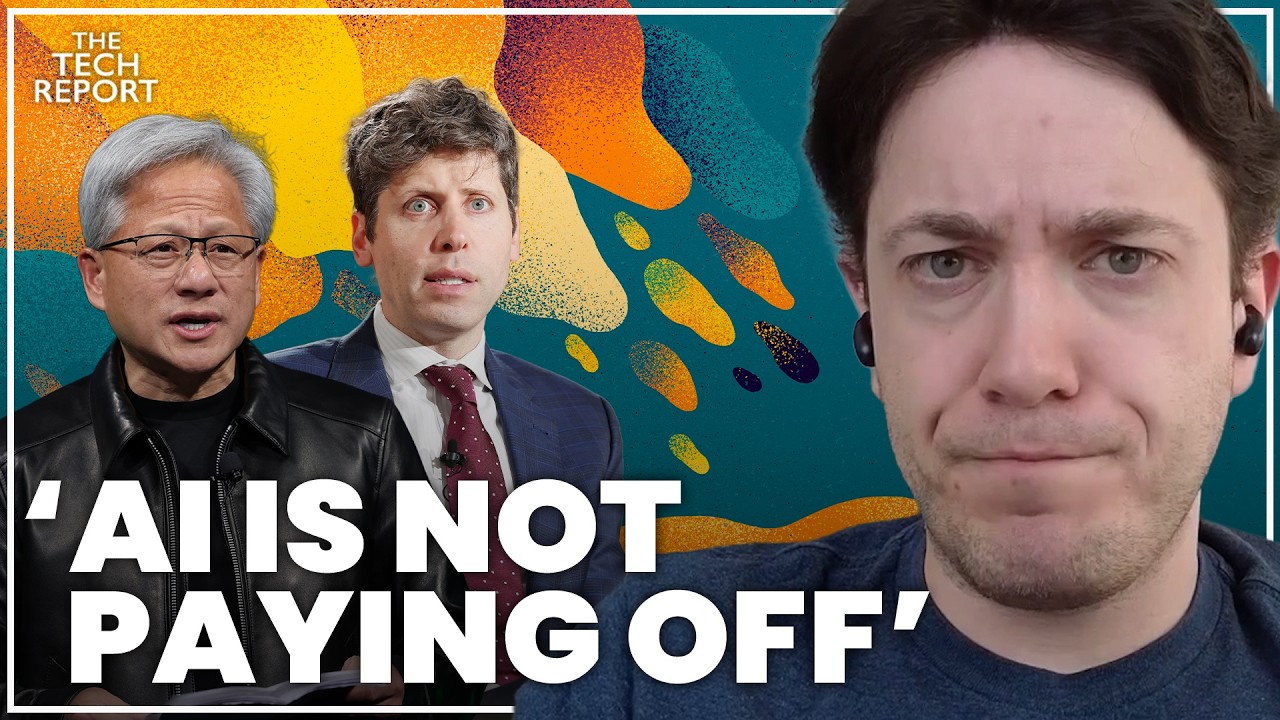
Ed Zitron, analyst and author, speaking on The Tech Report.
YouTube
Visual TL;DR
Nvidia's AI FundingDriver
From the article 7 mentionsIn a candid assessment of the current AI boom, writer and podcast host Ed Zitron suggests that Nvidia (NASDAQ:NVDA)'s increasingly large funding announcements signal desperation, not strength.
GPU Depreciation RiskDriver
GPUs depreciate quickly, creating significant financial risk for investors
From the articleZitron also highlights the issue of GPU depreciation, noting their useful life is only about three years.
Questioning NumbersContext
past $100B OpenAI MOU yielded no data center construction or funding
AI 'Marketing Campaign'Driver
From the article 3 mentionsSpeaking on The Tech Report, Zitron argues that the AI sector's massive capital demands are being met with what he describes as "the world's largest marketing campaign."
Fragile DependencyOutcome
markets crash if Nvidia stops spending money on capital expenditures
From the article"The moment they stop spending money on capex, they crash the markets," Zitron stated, implying a fragile dependency within the AI infrastructure ecosystem.
AI Bubble RiskOutcome
analyst Ed Zitron warns of an impending AI bubble due to unsustainable funding
From the article 4 mentionsHe points out that the SEC has exempted some data center securities from regulations put in place after the 2008 financial crisis, allowing for less disclosure and greater risk.
Stargate ProjectContext
$500B AI infrastructure fund lacked concrete details, never funded an LLC
From the article 2 mentionsHe elaborates on the $500 billion "Stargate" project, meant to be an AI infrastructure fund, noting that neither SoftBank nor OpenAI contributed the pledged funds, and that the entire initiative lacked concrete details.
SEC/Ratings AgenciesEffect
SEC and ratings agencies should scrutinize AI funding claims more closely
From the articleHe also questions the role of ratings agencies, suggesting they act more as marketing firms that "rationalize the irrational" and support companies inflating bubbles.
Contents(4)

In a candid assessment of the current AI boom, writer and podcast host Ed Zitron suggests that Nvidia (NASDAQ:NVDA)'s increasingly large funding announcements signal desperation, not strength. Speaking on The Tech Report, Zitron argues that the AI sector's massive capital demands are being met with what he describes as "the world's largest marketing campaign."

Ed Zitron: Nvidia's AI Funding Is 'Desperate Marketing'

Questioning the Numbers

Zitron points to past Nvidia announcements, such as a $100 billion memorandum of understanding with OpenAI, which ultimately yielded no actual data center construction or funding. "The moment they stop spending money on capex, they crash the markets," Zitron stated, implying a fragile dependency within the AI infrastructure ecosystem.

He elaborates on the $500 billion "Stargate" project, meant to be an AI infrastructure fund, noting that neither SoftBank nor OpenAI contributed the pledged funds, and that the entire initiative lacked concrete details. "Nothing existed. They never even funded an LLC," he claimed, drawing parallels to current Nvidia initiatives.

The 'Marketing Campaign' of AI

According to Zitron, the relentless announcements of massive funding rounds serve primarily to inflate Nvidia's stock and create a perception of unstoppable growth. He contends that the AI bubble has become a massive marketing effort, with companies making speculative announcements that are detached from reality.

The core of Zitron's argument is that the projected demand for data centers, $800 billion to $1.something trillion over the next 3.5 years, is vastly outstripping the actual capital being deployed, which he estimates at around $130 billion. He finds it particularly concerning that such large sums are being committed based on the assumption that certain customers might fail.

GPU Depreciation and Financial Risk

Zitron also highlights the issue of GPU depreciation, noting their useful life is only about three years. He questions the long-term viability of renting these chips, especially if demand falters. The practice of "vendor financing by proxy," where companies like Nvidia backstop deals for customers like CoreWeave, is also scrutinized.

This financial maneuvering, where Nvidia invests in companies that then rent compute from Nvidia, is seen as a way to inflate balance sheets and secure debt, which is then spent back with Nvidia. "This should all be illegal," Zitron asserted, calling for regulations on Special Purpose Vehicles (SPVs) and limits on financing customers who represent a significant portion of a company's revenue.

The Role of the SEC and Ratings Agencies

Zitron criticizes the Securities and Exchange Commission (SEC) for what he perceives as a failure to regulate the AI bubble's instability. He points out that the SEC has exempted some data center securities from regulations put in place after the 2008 financial crisis, allowing for less disclosure and greater risk. He also questions the role of ratings agencies, suggesting they act more as marketing firms that "rationalize the irrational" and support companies inflating bubbles.

Ultimately, Zitron believes that many of these data center projects are destined to fail because the underlying demand and funding mechanisms are not sustainable. "We are approaching the GDPs of countries. It is the entire debt system. I know where the trillions are going to come from from the system, especially considering I don't think anyone gets paid back when it comes to data center debt," he concluded.

© 2026 StartupHub.ai. All rights reserved. You may not republish this article in full without a license. Search engines and AI research tools may crawl and summarize for reference. Bulk reproduction or model training requires a license. See our terms.
Daniel Singer

Written by

Daniel Singer

Editor, StartupHub.ai

Daniel Singer is the editor of StartupHub.ai, a technology expert and thought leader on AI and its applications across sectors, from fintech and healthcare to developer tooling and consumer software. He writes and tests the tools covered here thoroughly and regularly, and built StartupHub.ai to give founders, operators and buyers a clearer read on what they are actually being sold.