


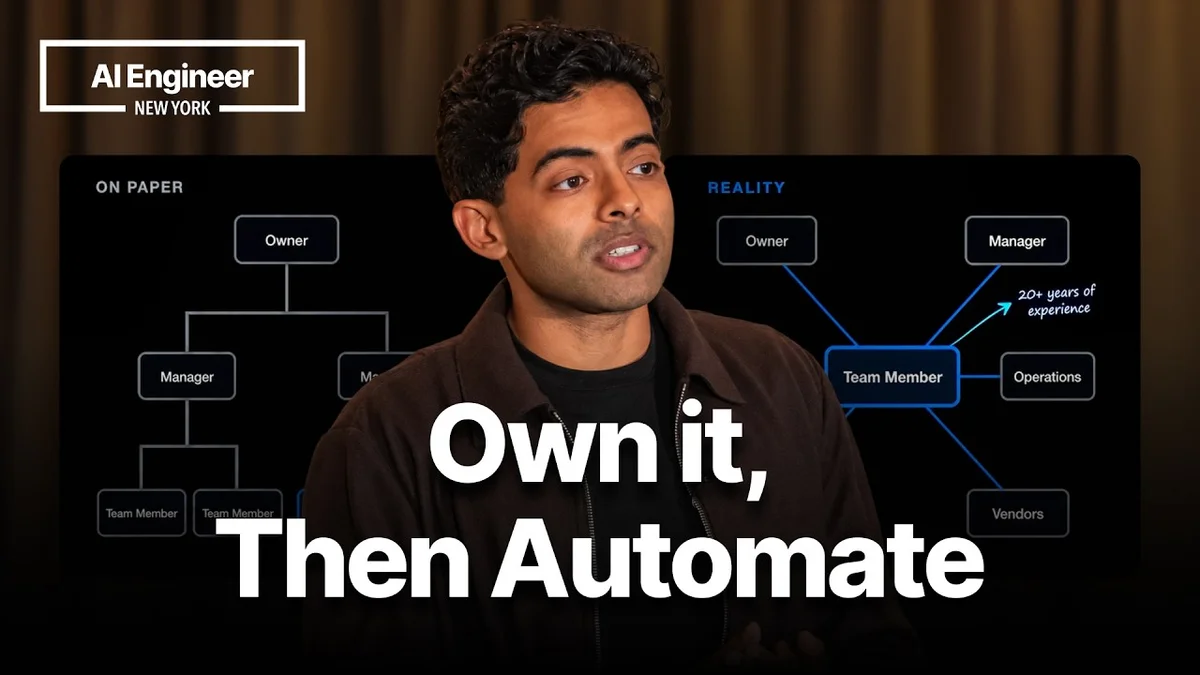
Selling AI is the hard way to capture AI value. That is the argument AI Engineer heard from Prathik Naidu, founding partner at Long Lake, who said the better strategy is to buy the business and own the outcome. I think he is right for a specific slice of the economy, and that slice is enormous.
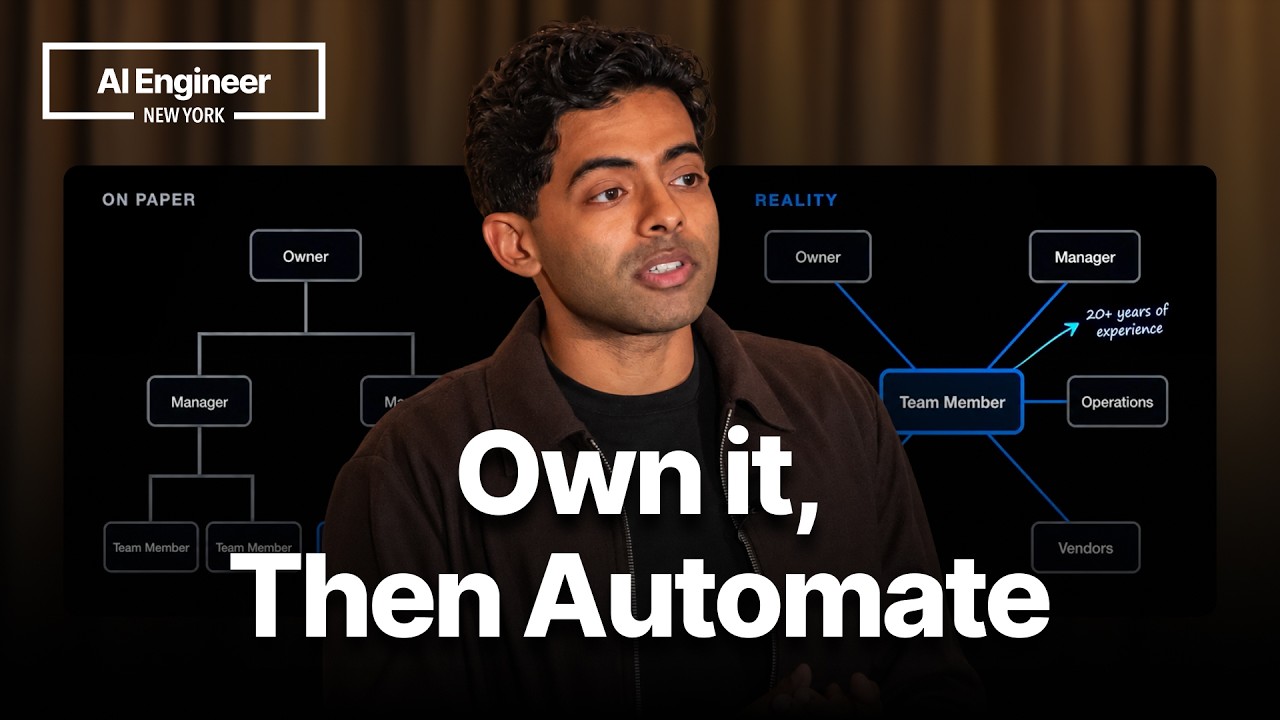
Naidu described the familiar outside-in slog. You find a pain, build an agent for one narrow use case, then hit security review, 20-year-old systems, and the adoption fight over whose job it is to drive usage. Even if you land a seven-figure contract, he said, you may have created $5 million a year in EBITDA for the client, which at what he called a roughly conservative 10x multiple is $50 million in enterprise value that accrues to them, not you. The model got cheap. The capture did not.
Ownership, in his telling, fixes the plumbing.
Naidu said Long Lake is an applied AI holding company that has raised $7.5 billion in capital from Elad Gil, General Catalyst, Alpha Wave, D1 and others, started about three years ago, and now partners with 40 businesses with a 55-person team across technology, finance and operations. The pitch is access, data and incentive alignment: your engineers sit with the veterans who hold the tacit knowledge, every live task and edge case becomes training signal, and you win only when the business wins. He pointed to the recent $6.3 billion take-private of Amex GBT to enter corporate travel as the model at scale. For engineering and ops leaders, the workflow change is literal, fly to Minneapolis, Portland or London, map the full operation not one workflow, and fund a deployment team whose job is not seats sold but revenue per employee and service quality.
The economics make the point concrete. Naidu contrasted software, where he said $100 of incremental revenue leaves about $80 after delivery, with services, where $100 leaves about $20 because you hire, train and manage for every new client. He called that an 80% marginal tax on growth that pushes founders to stop chasing scale even in what he described as a $70 trillion global services market versus a much smaller software market. AI, he argued, breaks the link between labor cost and revenue, giving services businesses software-like operating leverage if you deploy across the whole operation and then put the freed capacity to work on growth and customer experience. The path is a J-curve, he said, you invest in platform and workflow capture, you get time savings and high usage, then you must convert that into P&L impact. That last step is the hard one outside-in sellers rarely control.


