

Nvidia GPU Bonds: Jensen Huang Reframes Compute as Financial Asset

Bernie Sanders calls for an AI development pause, Nvidia views GPUs as financial assets, and Grok 4.7 is set to leverage SpaceX data.

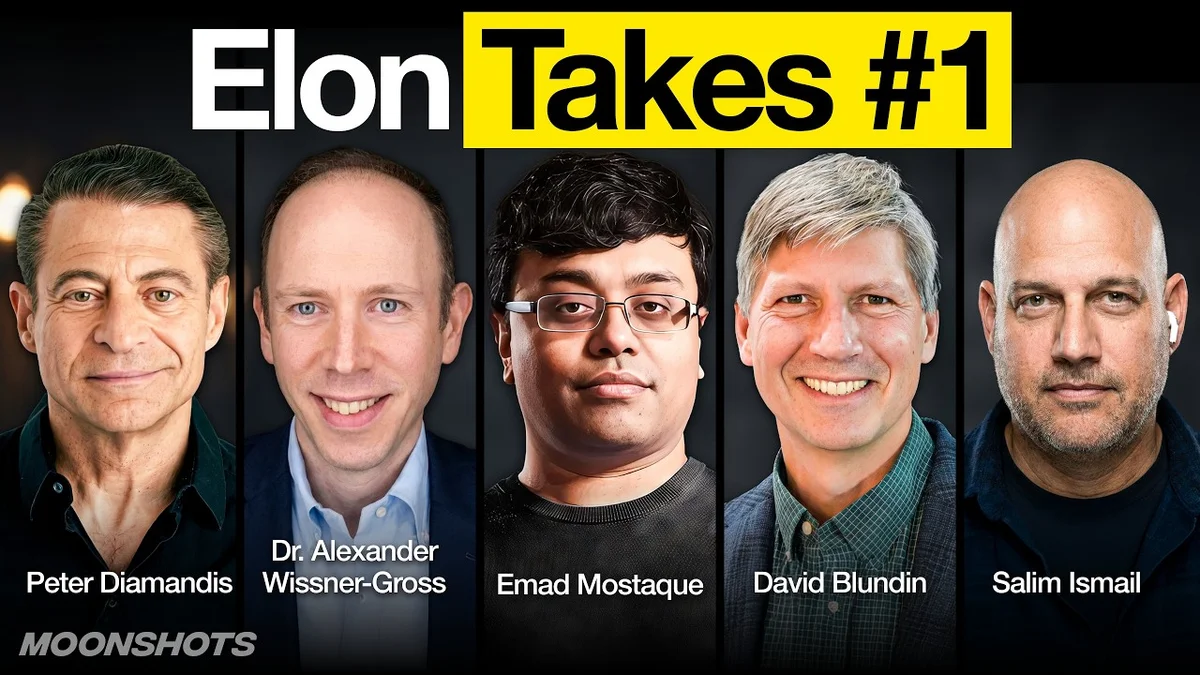
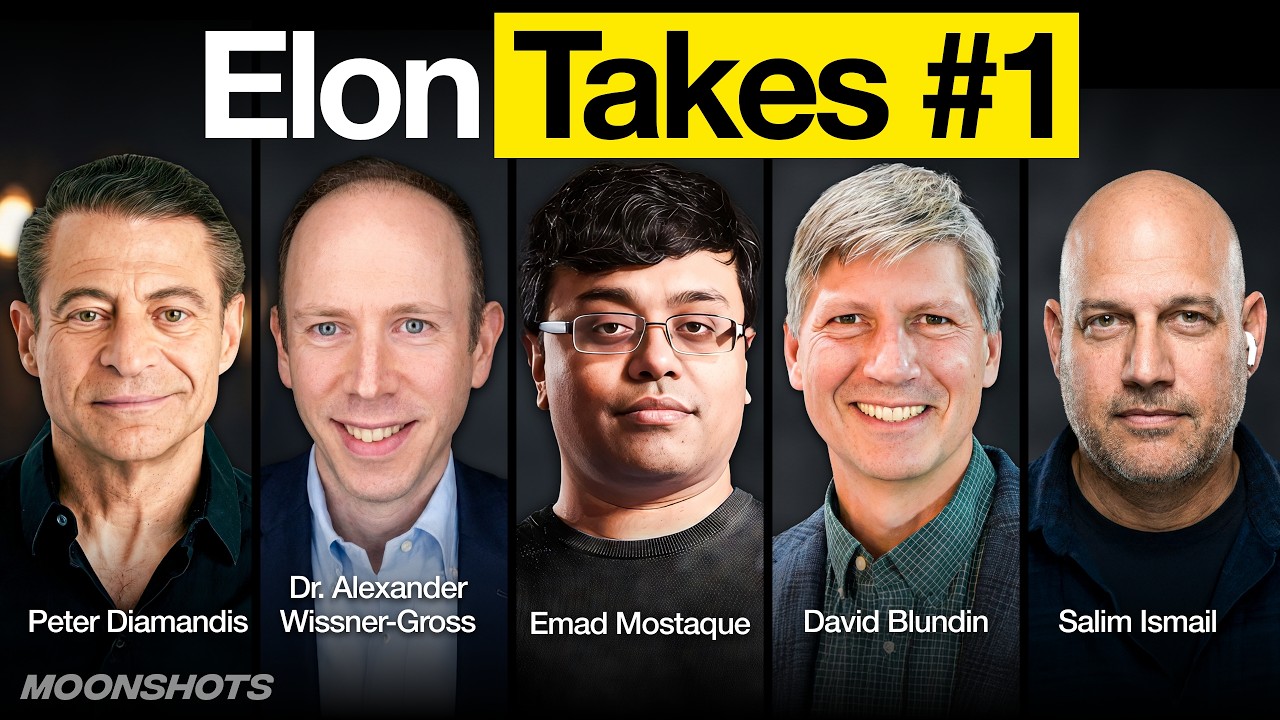
Panel discussion with Peter Diamandis, Alex, Dave Blondon, Salem Ismael, and Immad Mustaq discussing AI and technology.
A panel of experts discusses the latest in AI, finance, and longevity.· YouTube
Visual TL;DR
Bernie Demands AI PauseDriver
Sanders urges halt to AI development, citing a 'critical threshold' reached
Nvidia GPU BondsCore
Jensen Huang views GPUs as 'investable assets,' impacting tech valuation
AI Model PaceContext
From the article 5 mentionsThe rapid pace of AI model development was highlighted by the release of Grok 4.6 by Elon Musk's xAI.
AI-Generated MovieEffect
From the article 2 mentionsIn the realm of AI-driven media, a significant development was the creation of the first full-length AI-generated movie with licensed celebrity likenesses by Higgsfield.
Grok 4.7 ReleaseCore
xAI's new model rumored to leverage extensive SpaceX physics and engineering data
From the article 3 mentionsThe rapid pace of AI model development was highlighted by the release of Grok 4.6 by Elon Musk's xAI.
Compute as AssetContext
From the articleThe conversation also touched on the evolving nature of financial assets, with Nvidia's CEO Jensen Huang reportedly describing GPUs as "investable assets." This framing suggests a new perspective on compute power as a financial instrument, potentially impacting the valuation of exponential technologies.
SpaceX Data AdvantageEffect
From the articleReports suggest that an upcoming version, Grok 4.7, is rumored to be trained on extensive SpaceX physics and engineering knowledge, potentially offering a unique advantage.
AI's Broad ImpactOutcome
AI influencing financial assets, media creation, and calls for development pauses
Contents(4)

Nvidia CEO Jensen Huang is reframing how the AI industry values its core hardware: graphics processing units are not just chips, but investable financial assets comparable to infrastructure bonds. This GPU-backed financing framing is gaining traction as AI data center buildouts accelerate globally. Across the AI hardware and infrastructure companies StartupHub.ai tracks, this move to treat compute as a collateralizable financial instrument is a first at Nvidia's scale. The week also brought Senator Bernie Sanders formally writing to AI lab CEOs at Anthropic, Meta, and OpenAI to urge a development halt, alongside xAI releasing Grok 4.7 with reported training on SpaceX physics and engineering datasets.

Nvidia GPU Bonds: Jensen Huang Reframes Compute as Financial Asset

The conversation also touched on the evolving nature of financial assets, with Nvidia's CEO Jensen Huang reportedly describing GPUs as "investable assets." This framing suggests a new perspective on compute power as a financial instrument, potentially impacting the valuation of exponential technologies.

The rapid pace of AI model development was highlighted by the release of Grok 4.6 by Elon Musk's xAI. Reports suggest that an upcoming version, Grok 4.7, is rumored to be trained on extensive SpaceX physics and engineering knowledge, potentially offering a unique advantage.

In the realm of AI-driven media, a significant development was the creation of the first full-length AI-generated movie with licensed celebrity likenesses by Higgsfield. This $2 million production, completed in four weeks, utilized C-Dance 2.5 and open-sourced its workflow, demonstrating a dramatic reduction in cost and time compared to traditional filmmaking.

The dominance of Chinese companies in text-to-video model development was also noted, raising questions about the future of global cultural influence. Simultaneously, advancements in open-source video generation models like LTX 2.5, capable of running on consumer hardware, signal a democratization of creative tools.

The discussion also included the significant progress in longevity and healthspan research, exemplified by the $101 million Longevity X-Prize. With 800 teams entering, the competition focuses on reversing age-related functional losses, with human trials already in progress. The sentiment among experts is that the timing for such breakthroughs is ripe, aided by advancements in gene sequencing and AI measurement tools.

Key Figures and Perspectives

The panel featured a robust discussion with:

  • Peter Diamandis: Host and optimism amplifier, emphasizing a data-driven, abundance mindset.
  • Alex: Described as an in-house "super intelligence," providing analytical insights.
  • Dave Blondon: An investor and AI extraordinaire, sharing perspectives from MIT.
  • Salem Ismael: An "empressario of exponential organizations," discussing organizational shifts.
  • Immad Mustaq: Embodiment of the "intelligent internet," offering insights from the AI product space.

AI's Impact on Hollywood and Beyond

The conversation underscored the potential disruption of traditional Hollywood economics by AI. The ability to generate high-quality video content at a fraction of the cost and time of traditional methods could democratize filmmaking and create new avenues for creativity. The rise of AI-generated content also prompts discussions about intellectual property, celebrity likeness rights, and the future of acting.

Furthermore, the panel highlighted the convergence of AI capabilities across different domains, from generative media to robotics and autonomous driving, as Chinese models excel in learning fundamental physics and causality.

Longevity Escape Velocity and Future Potential

The discussion on longevity research emphasized the concept of "longevity escape velocity," the point at which scientific advancements add more than one year of life expectancy per year. The progress in healthspan research, particularly with the Longevity X-Prize, is seen as a catalyst for significant breakthroughs. The potential for adding 20 healthy years to human life could transform healthcare economics and global productivity.

The episode also touched upon the economic implications of extended healthspans, particularly concerning the business models of industries like religion, which traditionally "sell heaven." The idea of people living longer, healthier lives might challenge existing paradigms.

The Rise of AI Teammates

The release of Grok 4.6 and its focus on "long-running agents" was discussed as a move towards persistent AI teammates with lower reasoning costs. This shift suggests a future where AI is integrated as a coworker, capable of understanding and executing complex, multi-step tasks, and even digitizing company workflows.

The data-driven insights from StartupHub.ai indicate that while many AI startups are emerging, the landscape is competitive. Your company, with a StartupHub score of 71/100 and verified financials including an $80M Series A in 2023, is positioned strongly. Competitors like Perplexity AI (score 71/100) and OpenAI (score 84/100) are also significant players, while Google (score 74/100) represents a major established entity in the AI space.

© 2026 StartupHub.ai. All rights reserved. You may not republish this article in full without a license. Search engines and AI research tools may crawl and summarize for reference. Bulk reproduction or model training requires a license. See our terms.
Daniel Singer

Written by

Daniel Singer

Editor, StartupHub.ai

Daniel Singer is the editor of StartupHub.ai, a technology expert and thought leader on AI and its applications across sectors, from fintech and healthcare to developer tooling and consumer software. He writes and tests the tools covered here thoroughly and regularly, and built StartupHub.ai to give founders, operators and buyers a clearer read on what they are actually being sold.